


More news on this day
Monterrey’s Sistema de Transporte Colectivo Metrorrey is entering one of the most ambitious phases in its 35-year history, as new elevated lines, airport connections and updated passenger tools position the metro system as a central piece of mobility and tourism strategy ahead of the 2026 FIFA World Cup.
Get the latest news straight to your inbox!
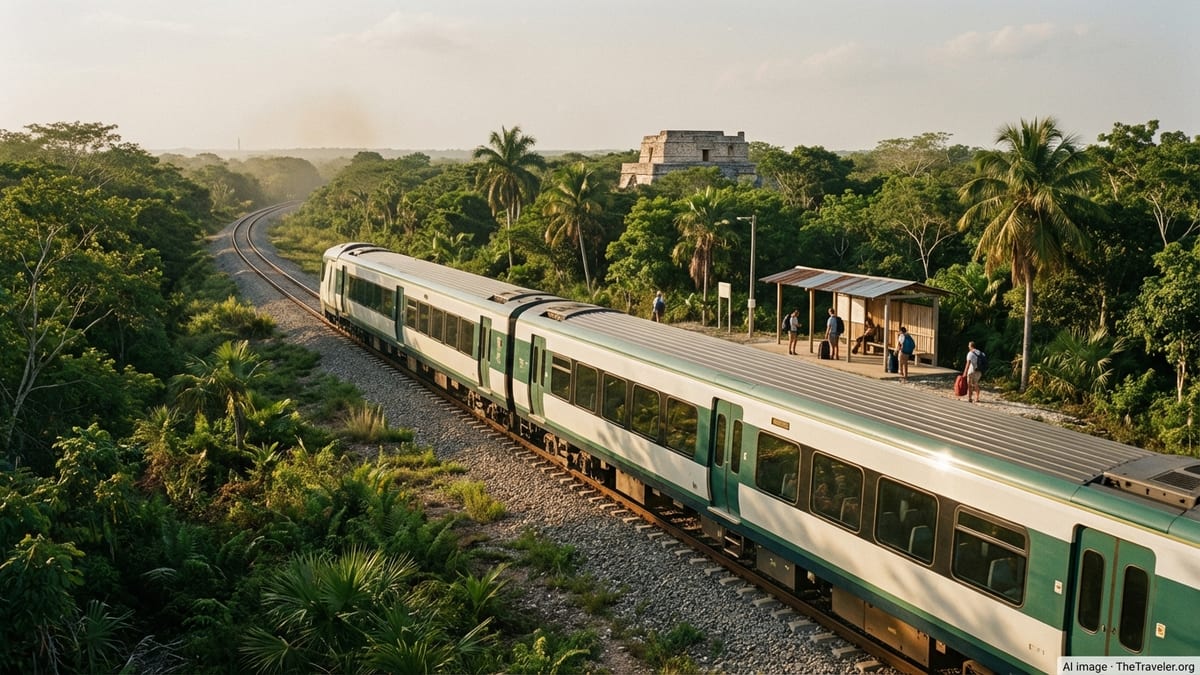
A compact three-line backbone serving Monterrey’s key corridors
Launched in 1991, Metrorrey currently operates three lines and around 40 stations that form the rail backbone of public transport across the Monterrey metropolitan area. Publicly available information describes the system as an urban rail network that crosses the city from west to east and from north to south, tying together dense residential districts with major parks, university campuses and intercity terminals.
Line 1, the original corridor, runs predominantly on an elevated alignment and links western neighborhoods with the historic center and the eastern municipality of Guadalupe. Line 2 adds a north–south axis serving residential and commercial zones, though recent technical reports have highlighted structural issues on part of its elevated viaduct, prompting works and timetable adjustments in recent years.
Line 3 is the newest operational segment, opened in 2021 after a prolonged construction period. The line connects the area around Hospital Metropolitano and Nogalar with Monterrey’s Barrio Antiguo and central districts, offering transfers to Line 1 at Félix U. Gómez and to Line 2 at Zaragoza. Travel guides note that this line has quickly become an efficient way for visitors to reach major cultural and leisure areas using rail instead of road traffic.
Across the three operational lines, route maps show connections to the city’s main bus terminal at Central de Autobuses, to the Ecovía bus rapid transit on Avenida Ruiz Cortines and to feeder bus services branded as Transmetro. This integration allows travelers to move between long-distance coaches, BRT and metro with a single urban hub at Central station.
Monorail Lines 4 and 6 set to reshape airport and west–east travel
The most visible transformation of Metrorrey is occurring on Lines 4 and 6, two elevated monorail corridors currently under construction. Official system maps label both as metro lines under the Metrorrey brand, although their technology differs from the existing steel-wheel routes. Planning documents and recent construction updates describe Line 4 as a dark green monorail running between the western municipality of García and central Monterrey, while Line 6 is being built to connect eastern districts and the international airport with the existing network.
According to recent public reports, work on Lines 4 and 6 has advanced to late construction and testing phases, with a global progress figure for both projects above two-thirds by late 2025. Social media posts and transit-community coverage over April 2026 point to testing runs on sections of Line 6, while imagery of large monorail stations rising above existing metro stops illustrates how the new corridors will intersect with the legacy system.
Regional planning material circulated in the run-up to the 2026 FIFA World Cup describes an objective of completing at least the first 12 kilometers of the new monorail network in time to move spectators between key zones and provide a rapid rail link toward Monterrey International Airport. Some commentary now indicates that full airport service is more likely to open after the tournament, but the partial operation of the new lines is still expected to significantly expand capacity and coverage.
Once both monorail lines are fully complete, projections suggest that the length of the Metrorrey network could roughly double compared with the current three-line system. That expansion would shift the perception of Monterrey from having a compact metro focused on a few corridors to hosting one of the more extensive rail networks in northern Mexico.
Tariffs, ticketing and what visitors can expect to pay
Recent fare information compiled by independent metro guides and updated through June 2026 indicates that a standard single trip on Metrorrey is priced in the single-digit peso range, remaining comparatively affordable by international standards. The system uses a mix of rechargeable smartcards and QR-based tickets, which can be purchased at station vending machines and ticket offices. Observers note that this combination is intended to speed boarding and reduce reliance on cash, particularly as passenger volumes grow.
For travelers who plan to explore several areas of the city in one day, the fare structure means that multiple hops across lines and transfers remain relatively inexpensive, especially when compared with ride-hailing services or airport taxis. The expansion of the network through Lines 4 and 6 is expected to increase the number of journeys made with electronic media, as more riders travel longer distances without leaving the rail system.
Local mobility sites report that the metro’s operating hours are similar to other Latin American urban rail systems, with early-morning starts and late-evening closures adapted to commuter patterns. Visitors are advised to check the latest timetables and any service notices, particularly in relation to ongoing maintenance on parts of Line 2 and the phased introduction of monorail segments.
In addition to regular fares, Metrorrey participates in broader public-transport integration efforts in Nuevo León, where tariffs and payment media are being gradually aligned across metro, BRT and buses. This reform process is designed to make intermodal journeys more seamless for both residents and tourists unfamiliar with local ticketing rules.
Tourism-focused tools highlight metro access to Monterrey attractions
Beyond its role as a commuter network, Metrorrey is being actively promoted as a gateway to key tourist attractions. A recent official tourist guide prepared by state entities focuses specifically on the metro and its integration with sustainable travel, mapping out how visitors can reach sites such as Parque Fundidora, the Macroplaza, Arena Monterrey and the Santa Lucía riverwalk using the rail system.
The guide outlines typical itineraries that combine walking with short hops on Lines 1, 2 and 3, framing the metro as a practical way to move between cultural venues, stadiums and shopping areas while avoiding traffic congestion. The same material highlights interchanges with Transmetro services, which extend the reach of the network into neighborhoods that do not yet have rail stations.
As construction progresses on Lines 4 and 6, tourism information has begun to incorporate planned monorail stations that will sit near hotel clusters and new development zones. For international visitors arriving for business or sports events, including World Cup matches, the promise of a rail-based airport connection is seen as an important shift away from an almost exclusive dependence on taxis and private vehicles.
Travel advisories compiled by independent transit enthusiasts also emphasize the visual experience of the network. Elevated sections offer panoramic views of Monterrey’s skyline and surrounding mountains, making some segments of Line 1 and the future monorail particularly attractive for visitors seeking an inexpensive way to see the city from above.
Challenges and opportunities in a fast-growing metro region
The rapid expansion of Metrorrey comes with a series of challenges that are closely watched by local residents and transport analysts. Structural concerns identified on parts of Line 2 have prompted discussions about asset maintenance and resilience, especially as heavier trains and higher frequencies are contemplated. Ensuring that older infrastructure can safely coexist with new monorail technology is emerging as a central technical and financial question.
There is also debate over the design of the network and its ability to provide convenient transfers. Commentators point out that some interchanges between existing lines and new monorail stations are separated by several blocks at street level, potentially complicating journeys for passengers unfamiliar with the city. Wayfinding, pedestrian safety and shelter from extreme heat are all issues that urban planners are being urged to address around key hubs.
At the same time, the expansion of Metrorrey is widely regarded as an opportunity to rebalance mobility in a city long dominated by private cars and heavy road traffic. By extending rail service toward the airport, western suburbs and new industrial zones, the system is expected to provide alternatives to highway travel and to reduce travel times for workers and visitors alike.
For travelers considering Monterrey in the coming years, the metro’s evolution means that trip planning will require close attention to the most up-to-date maps and service notices. Yet it also promises a more extensive, interconnected network that can transform how both residents and guests experience one of Mexico’s largest and most dynamic metropolitan areas.