

More news on this day
New cartel violence and fast-changing security alerts across Mexico are colliding with the 2026 spring break season, leaving many travelers wondering if their beach vacation is still a safe bet or a trip too far into a country in crisis.
Get the latest news straight to your inbox!
Cartel Turmoil Erupts Just Weeks Before Peak Travel
Mexico’s latest wave of cartel-related unrest has erupted at a delicate moment, with more than a million North American travelers expected to descend on the country’s resorts in March and April 2026. The immediate trigger was a Mexican military operation on February 22 in Tapalpa, Jalisco, that killed Nemesio Rubén Oseguera Cervantes, widely known as El Mencho, the powerful leader of the Jalisco New Generation Cartel. Publicly available reporting links the action to a surge of road blockades, vehicle burnings and armed confrontations across multiple states in the days that followed.
Analysts cited in international coverage describe the death of El Mencho as a potential turning point, warning that the resulting power vacuum could fuel violent realignments both within Jalisco’s cartel and among rival criminal groups. A Mexico-focused peace index released in 2024 and subsequent research have already noted how competition between large cartels has driven extreme homicide rates in parts of the country. The new instability risks entrenching those patterns even as national homicide data show a gradual downward trend since the late 2010s.
Despite the turmoil, Mexico’s federal government continues to emphasize falling overall homicide rates. Official figures presented in early January 2026 indicated a national rate of about 17.5 murders per 100,000 inhabitants in 2025, the lowest since 2016. Security specialists quoted in that coverage, however, cautioned that headline numbers may not capture localized spikes, nor the fear generated when spectacular cartel attacks disrupt everyday life or target highways and border crossings used by visitors.
This contradiction between macro-level improvement and high-profile violent episodes is at the heart of the dilemma facing spring break travelers: Mexico as a whole is statistically less deadly than a few years ago, yet certain regions appear more volatile than ever.
Embassy Alerts and Long-Running Travel Warnings
Foreign governments have responded with a flurry of advisories, focusing on specific hot spots rather than the entire country. The United States maintains a four-tier warning system for Mexico, ranging from “exercise normal precautions” to “do not travel.” Many states popular with tourists are currently listed at Level 2, signaling that visitors should exercise increased caution due to crime and kidnapping risks. Others, including Zacatecas, Tamaulipas, Michoacán and parts of Guerrero, carry Level 4 warnings that urge travelers to avoid all but essential travel because of widespread cartel violence and limited local security capacity.
The February 2026 military operation in Jalisco prompted unusually strong, short-term messaging. A security alert circulated by the U.S. mission in Mexico urged citizens in multiple states to shelter in place while security operations, road blockades and criminal activity were reported across the country. The list included Jalisco, Baja California, Quintana Roo, Nayarit, Sinaloa and portions of Guanajuato, Colima, Michoacán, Oaxaca, Nuevo León, Puebla, Veracruz and Zacatecas. Follow-up updates indicated that conditions normalized relatively quickly in many of those locations, but the episode underscored how swiftly the security picture can change.
Local officials along the U.S.–Mexico border have issued their own appeals. In late February, the mayor of Laredo, Texas, publicly urged residents to weigh the risks carefully before driving into the Mexican interior for spring break, citing the potential for retaliatory violence after the Jalisco operation. Canadian authorities have issued similar reminders that travel insurance, registration with consular services and situational awareness are essential for anyone heading to Mexico during a period of heightened cartel tensions.
For now, the broad framework of travel advisories remains steady. Long-standing “do not travel” designations for several interior states, first introduced when the current advisory system was rolled out in 2018, are still in place in early 2026. That continuity suggests that while the latest unrest has captured headlines, it is part of a longer security crisis rather than an entirely new phenomenon.
Tourist Hotspots: Relative Calm Amid National Violence
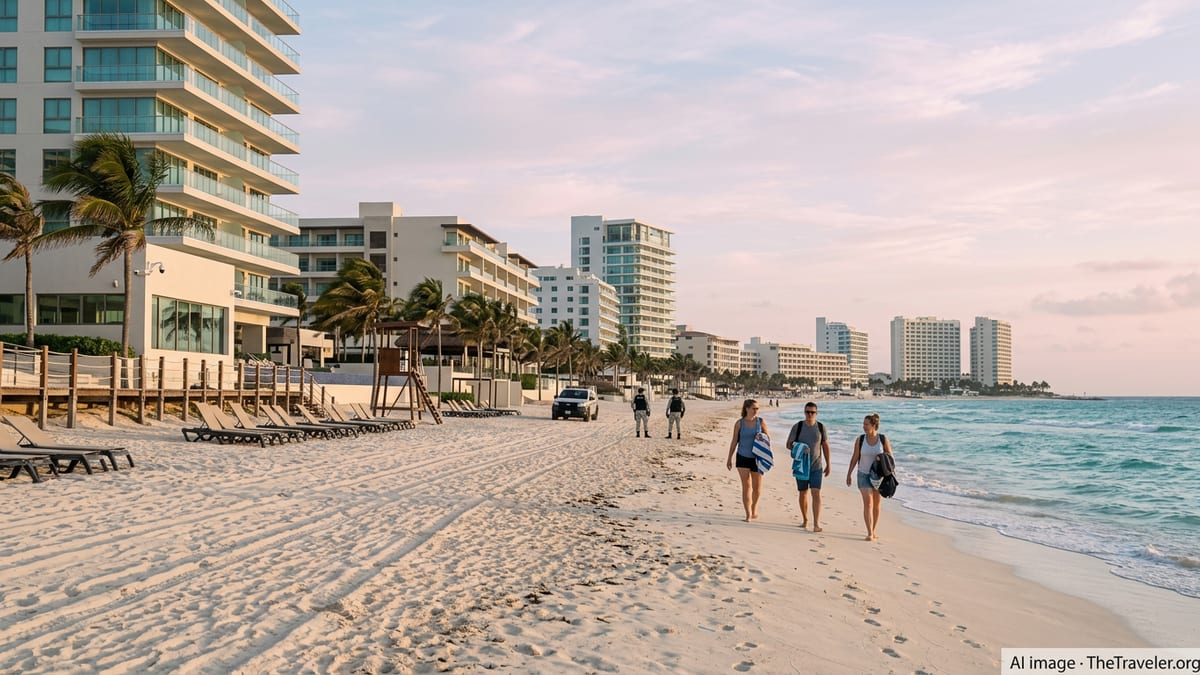
Against this backdrop, Mexico’s main resort corridors continue to project an image of relative calm. Travel-industry data and recent coverage highlight that destinations such as Cancún, Playa del Carmen, Cozumel and Tulum in Quintana Roo, as well as Los Cabos in Baja California Sur, have not experienced the levels of violence seen in cartel flashpoints like Colima, Zacatecas or certain border cities. Official crime statistics from recent years show significantly lower homicide totals in Baja California Sur compared with most other states, even as national violence has remained elevated.
Security experts interviewed by major outlets stress that geographic nuance is critical. Cancún and the Riviera Maya lie far from the Jalisco New Generation Cartel’s historic strongholds in western Mexico and northwestern corridors dominated by the Sinaloa Cartel. While there have been sporadic shootings and drug-related incidents near nightlife districts and in outlying neighborhoods, reports indicate that these episodes rarely spill into the tightly controlled hotel zones where most international tourists stay.
Similarly, Puerto Vallarta, Nuevo Nayarit and other Pacific beach towns have worked closely with tourism-focused police units and private security to manage perceptions and limit visitor exposure to cartel disputes in surrounding rural areas. Industry surveys and destination reports note that demand for flights and resort stays remains robust for spring 2026, suggesting that many travelers continue to view these enclaves as manageable risks compared with their relatively low prices and warm-weather appeal.
Nonetheless, the February shelter-in-place alert briefly included many of these same resort hubs, a reminder that even heavily policed tourist bubbles are not sealed off from national events. Temporary closures of highways, sporadic gunfire or burned vehicles along access roads can strand visitors or force rapid itinerary changes, even when violence is not directed at foreigners.
Where Travelers Face the Greatest Risk
The highest risks for visitors, according to security analyses and travel risk assessments, tend to lie away from resort complexes and into the country’s interior and borderlands. States such as Zacatecas, Michoacán, Guerrero, Tamaulipas, Colima and parts of Guanajuato consistently appear among those with the highest homicide rates, much of it linked to battles over drug routes, extortion territories and control of ports used for precursor chemicals.
Publicly available crime data compilations show that from 2018 to 2022, Mexico’s national homicide rate averaged close to 28 deaths per 100,000 people, with some hotspots recording rates several times that figure. Analysts note that a very high proportion of killings are categorized as organized-crime related, underscoring the central role of cartels and splinter groups in driving the bloodshed. In some contested states, ambushes, highway robberies and violent carjackings on intercity roads have become key concerns for residents and travelers alike.
Large inland cities and industrial corridors also pose different risks. Business travelers and tourists who rent cars to drive between Mexico City, surrounding State of Mexico and neighboring states such as Puebla or Morelos are frequently warned about vehicle theft and armed robbery, which remain stubbornly high despite periodic police operations. Night travel on secondary highways is widely discouraged by risk consultants, who point to patterns of hijacking, illegal checkpoints and cargo theft.
Even within relatively safer states, security can vary sharply between well-guarded tourist zones and outlying communities where local police capacity is thin. Visitors who venture beyond resorts for road trips, nightlife in non-tourist neighborhoods or late-night intercity bus journeys are more likely to encounter the kinds of conditions that underlie government warnings.
How Spring Breakers Can Reduce Their Exposure
Travel and security experts emphasize that for most visitors, the question is less whether to cancel a trip entirely and more how to manage risk intelligently. Public guidance from government agencies and industry associations converges on several core principles: know the advisory level for each state on your itinerary, stay current with embassy alerts in the days before departure and avoid nonessential travel through regions flagged as Level 3 or Level 4.
Within major resort areas, risk-reduction strategies often focus on limiting unnecessary exposure beyond established tourism corridors. Travelers are encouraged to arrange airport transfers through reputable hotels or licensed providers, rely on authorized taxis or app-based services vetted by local authorities, and avoid driving alone at night on unfamiliar highways. Many advisories recommend staying within well-lit, populated zones after dark, sticking to registered bars and clubs in recognized tourist districts and steering clear of offers to purchase drugs, which can draw unwanted attention from both criminals and law enforcement.
Experts also point to the value of practical preparations: sharing itineraries with friends or family at home, enabling location sharing on phones, carrying photocopies rather than originals of travel documents when going out at night and verifying that travel insurance covers medical evacuation or trip disruption related to civil unrest. Some travelers may opt to book guided excursions through established operators rather than exploring rural areas or remote beaches on their own.
Ultimately, the question of whether a Mexico vacation is “at risk” in spring 2026 has no one-size-fits-all answer. For travelers bound for the country’s main beach resorts who pay attention to advisories and exercise common-sense precautions, the likelihood of being directly affected by cartel violence remains relatively low. Those planning road trips through interior states or nightlife-heavy itineraries in regions with active cartel disputes face a more complex risk landscape, one that requires careful planning and a willingness to adjust plans quickly should the security situation change.