


More news on this day
Mexico, Latin America’s second-largest economy and a magnet for international travelers, is reshaping its infrastructure and politics while seeking to balance rapid growth with persistent security and social challenges.
Get the latest news straight to your inbox!
Geography, People and Political Landscape
Stretching from the deserts of the north to the tropical forests and Caribbean and Pacific coastlines of the south, Mexico covers nearly two million square kilometers and anchors the southern end of North America. Publicly available demographic estimates for 2026 place the population at around 133 million people, making it one of the most populous countries in the Western Hemisphere. The majority of residents live in urban areas, with the capital region around Mexico City forming one of the largest metropolitan zones in the world.
Mexico is a federal republic composed of 32 states, including Mexico City as a separate entity. It operates under a presidential system with a constitution that dates to 1917, established after the Mexican Revolution. Federal elections held in 2024 led to a political transition that brought a new administration into office in 2024 and 2025, setting the tone for the current policy agenda that emphasizes large public works, expanded social programs and continued security operations against powerful criminal organizations.
Reports from regional political observers describe a mixed picture of democratic resilience and institutional strain. Competitive multiparty elections and an active civil society coexist with debates over the concentration of power, the role of the armed forces in public life and ongoing concerns about violence against journalists and human rights defenders. These tensions form an important backdrop for understanding Mexico’s development trajectory through 2026.
Economic Profile and Trade Integration
Recent economic data compiled by national and international statistical platforms indicate that Mexico ranks among the world’s fifteen largest economies. Output is driven by a diverse mix of manufacturing, services, agriculture and energy. In manufacturing, the country has established itself as a global hub for automobiles, auto parts, electronics and aerospace components, with factories clustered along the northern border and in central states such as Nuevo León, Guanajuato and Querétaro.
Mexico’s deep integration with the United States and Canada through the United States–Mexico–Canada Agreement has underpinned trade-led growth. Nearshoring trends since the pandemic have encouraged multinational firms to move production closer to North American markets, contributing to record export values and heightened demand for industrial real estate along key corridors. Government statistics for early 2026 show an economically active population of just over 61 million people, highlighting both the scale of the labor force and the challenge of generating formal, well-paid employment.
The domestic policy agenda has also focused on state participation in the energy sector through the national oil and electricity companies, even as private investment in renewables, automotive electrification and logistics continues to expand. Analysts note that while macroeconomic management has remained relatively prudent, structural issues such as informality, regional inequality and security risks continue to weigh on long-term competitiveness and on the investment climate in parts of the country.
Tourism Powerhouse and New Gateways
Tourism is one of Mexico’s flagship industries. Data reported by the national tourism secretariat and international tourism bodies show that the country has consistently ranked among the top global destinations by international arrivals, placing around sixth worldwide in recent tallies. Visitor numbers rebounded strongly after the pandemic, with government figures indicating tens of millions of international arrivals each year and double-digit growth in early 2025 compared with the previous year.
Resort areas on the Caribbean and Pacific coasts, including Cancún, the Riviera Maya, Los Cabos and Puerto Vallarta, remain central to Mexico’s tourism identity, alongside cultural cities such as Mexico City, Oaxaca, Mérida and Guadalajara. Travelers are drawn by archaeological sites, colonial architecture, gastronomy and a diverse range of nature and adventure offerings. New infrastructure is reshaping access to these regions, including the Felipe Ángeles International Airport north of Mexico City and the newer international airport in Tulum, conceived as a major gateway to the Riviera Maya.
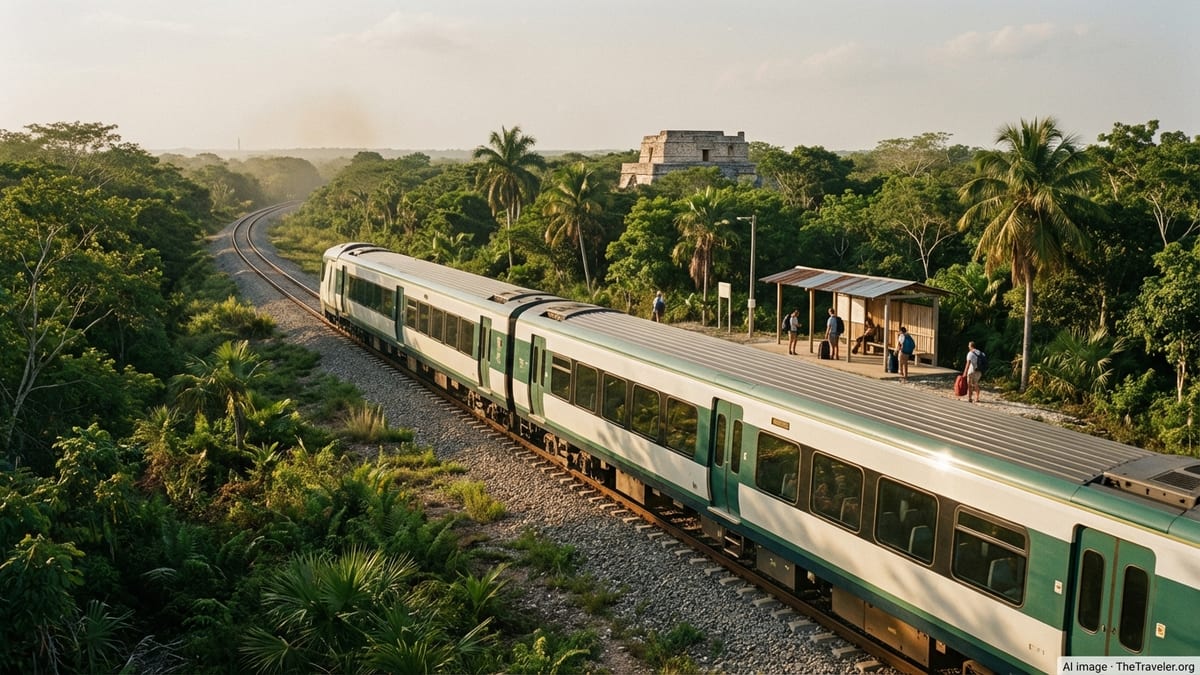
Tourism growth has also been linked to flagship rail projects. The Tren Maya, a large-scale passenger and cargo railway in the southeast, is designed to connect key destinations across the Yucatán Peninsula, with official project descriptions stating that it aims to stimulate economic development and tourism while improving connectivity between cities, archaeological zones and ports. Reports indicate that associated hotel developments and tourism packages are being marketed as part of a broader push to channel visitor flows deeper into the region beyond traditional resort hubs.
Infrastructure Megaprojects and Mobility
In recent years, Mexico has placed heavy emphasis on transportation infrastructure as a driver of regional development and national cohesion. Government project databases and public briefings highlight a series of megaprojects centered on rail and airports. The Felipe Ángeles International Airport, inaugurated earlier in the decade on a former military base north of the capital, is intended to relieve pressure on Mexico City’s aging main airport and to serve as a hub for domestic and select international flights.
In 2026, attention has focused on new rail links that strengthen connectivity to this airport and beyond. The Tren Felipe Ángeles, a suburban-style passenger service connecting Mexico City’s central Buenavista station with the airport, entered into service with early ridership figures in the hundreds of thousands during its first weeks of operation, according to official announcements and subsequent media coverage. The line is being extended toward the city of Pachuca as part of a broader plan to restore passenger rail links on historically freight-heavy corridors.
In the southeast, the Tren Maya remains one of the most ambitious public rail projects in the Americas. Official project documents describe it as a multi-state railway intended to move passengers and freight across Chiapas, Tabasco, Campeche, Yucatán and Quintana Roo while linking to a revived transisthmian corridor between the Gulf of Mexico and the Pacific. Supporters argue that the network can unlock investment, jobs and tourism in historically under-served regions, while critics in environmental and indigenous organizations have raised concerns about deforestation, cultural impacts and project transparency, highlighting the complex trade-offs inherent in such large-scale works.
Security, Social Challenges and Outlook
Despite its economic size and tourism appeal, Mexico continues to grapple with significant security and social challenges. Independent monitoring groups and international organizations document high levels of homicide and organized crime activity in several states, driven by drug trafficking, extortion and disputes between criminal groups. Civil society organizations have also reported persistent issues of gender-based violence, disappearances and attacks on journalists, underscoring the human cost of insecurity.
The federal government and state authorities have deployed military and National Guard forces in public security roles over the past decade, a strategy that remains the subject of active debate among legal scholars and human rights advocates. While some localities report reductions in particular crime indicators, others continue to experience elevated levels of violence, creating an uneven security landscape that travelers and investors monitor closely through travel advisories and business risk assessments.
On the social front, Mexico has expanded welfare programs covering older adults, students and low-income households, while continuing to invest in public health and education systems that were strained by the pandemic. Analysts note that outcomes vary widely between regions, with wealthier northern and central states generally posting higher indicators of income, schooling and health coverage than poorer rural areas in the south. How the country balances ambitious infrastructure spending, social investment and fiscal sustainability under the current administration will be a key storyline as Mexico moves through the second half of the decade.