

Mexico’s permanent residency category is a central pillar of its long-term immigration framework and a critical consideration for foreigners evaluating a relocation. Understanding how permanent residency is defined, who qualifies, what financial and documentary standards are applied, and what rights the status confers is essential for decision-grade planning. This briefing explains the core structure of Mexico’s permanent residency regime as of early 2026, focusing on eligibility mechanisms, economic solvency benchmarks, status characteristics, and practical implications for prospective long-term movers.
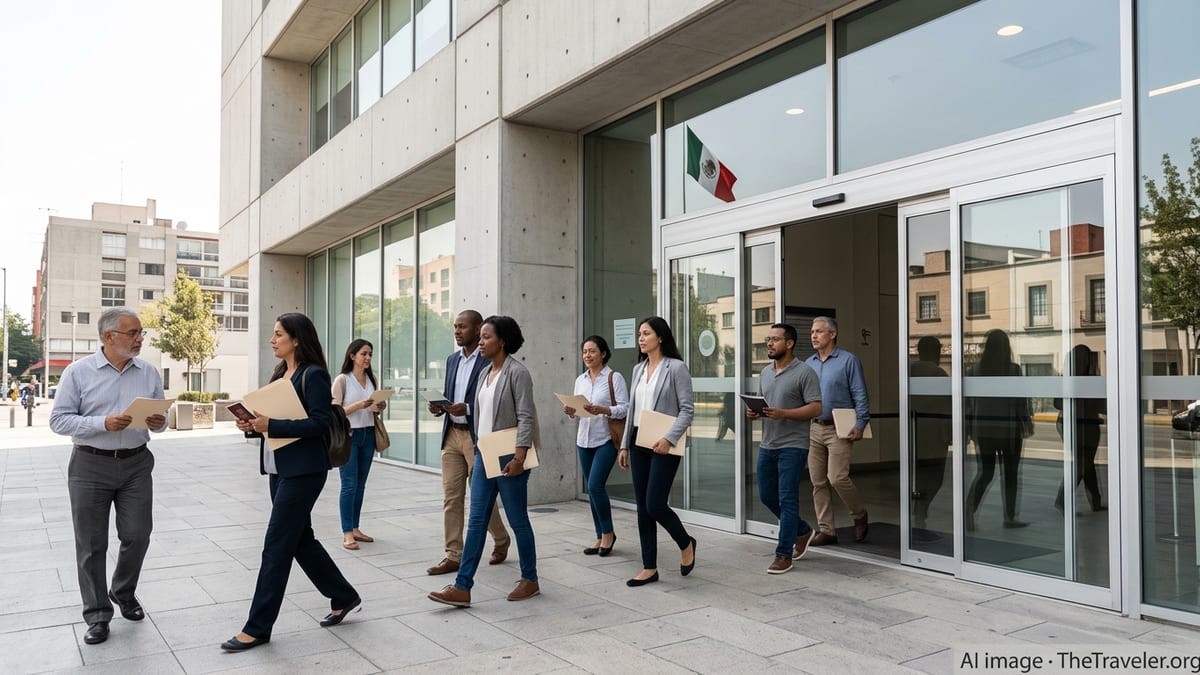
What Mexico Permanent Residency Is and How It Fits in the System
Mexico’s permanent residency status, officially known as residente permanente, is an open-ended immigration status that authorizes a foreign national to live in Mexico indefinitely. It differs from visitor or temporary resident categories, which are time-limited and subject to periodic renewal, by providing a stable, long-term right of residence without a defined end date once the status is granted.
In the Mexican framework, permanent residency can be accessed either directly from abroad through a Mexican consulate or as a progression from temporary residency after a prescribed period. In practice, the majority of economically qualified applicants begin with temporary residency and later convert to permanent status, while retirees or high-net-worth individuals may qualify for permanent residency from the outset. Family relationships with Mexican citizens or existing permanent residents also create specific pathways to permanent status under the “family unity” provisions of Mexican immigration law.
Permanent residency should be understood as an immigration status only. It is distinct from Mexican citizenship and does not automatically convert a foreigner into a Mexican national. Naturalization is a separate legal process, generally requiring several years of legal residence plus language and integration tests. However, permanent residency is often used as the primary long-term vehicle for foreigners who wish to reside in Mexico without committing to naturalization.
From a relocation planning perspective, the permanence of the status, the lack of an expiry date on the card, and relatively broad work permissions make Mexican permanent residency a comparatively flexible and durable long-stay option in the region, particularly when compared with more restrictive or investment-heavy residence programs in other countries.
Core Eligibility Pathways to Permanent Residency
Mexico’s permanent residency is not a single-track program. Instead, it can be obtained under several legal bases, each with its own conditions and documentation patterns. The primary pathways include economic solvency, family ties, and progression from temporary residency after several years of lawful stay.([consulmex.sre.gob.mx](https://consulmex.sre.gob.mx/tucson/index.php/b2friendly/498-permanent-visa?utm_source=openai))
The economic solvency route targets retirees or individuals with substantial passive income or assets abroad. Applicants demonstrate that they can support themselves without working in Mexico by meeting income or savings thresholds set with reference to Mexico’s Unidad de Medida y Actualización (UMA), the index used for many official calculations. These thresholds are periodically updated and may be interpreted differently by Mexican consulates in different countries, which leads to variation in the exact figures requested at interview.([mexlaw.com](https://mexlaw.com/residency-in-mexico-2026-economic-solvency-requirements-government-fees/?utm_source=openai))
The family-unity route allows certain close relatives of Mexican citizens or permanent residents to obtain permanent status with lower or no financial thresholds compared with the standard economic route. Typical beneficiaries include spouses, parents, and minor children of Mexican nationals, as well as, in some cases, relatives of existing permanent residents. These processes are often initiated with the National Migration Institute (INM) inside Mexico rather than at a consulate abroad and may involve a mix of relationship evidence and basic economic proof.([inm.gob.mx](https://www.inm.gob.mx/static/Tramites/en/CHANGE_OF_CONDITION_PERMANENT_RESIDENT_BY_FAMILY_RELATIONSHIP.pdf?utm_source=openai))
A third major pathway is progression from temporary residency. Foreigners who have maintained temporary resident status continuously for a statutory period, typically four years, can apply to change condition to permanent resident. In some scenarios, such as marriage to a Mexican citizen, the waiting period may be reduced, for example to two years of temporary residence. This route relies more on demonstrating continuous lawful stay than on meeting the higher economic thresholds required for a direct permanent application from abroad.([loscabosimmigration.com](https://www.loscabosimmigration.com/faq?utm_source=openai))
Economic Solvency Requirements and 2026 Thresholds
For applicants using the economic solvency route, financial capacity is the central decision factor. Mexico defines the required income and savings using multiples of the UMA. As of 2026 the UMA is approximately 117.31 Mexican pesos per day. Most consulates are applying permanent residency thresholds of 1,140 times the daily UMA for monthly income, and 45,850 times the daily UMA for savings or investments.([legalclarity.org](https://legalclarity.org/how-to-get-permanent-residency-in-mexico-steps-and-requirements/?utm_source=openai))
Translating these multipliers into peso figures for 2026 yields indicative benchmarks around 133,700 pesos in verifiable monthly net income over at least six consecutive months, or an average savings or investment balance of roughly 5.38 million pesos maintained over 12 months. At current exchange ranges this equates to approximately 7,000 to 7,500 United States dollars in monthly income or close to 290,000 to 300,000 dollars in liquid or investment assets, although the effective figures in dollars move with the exchange rate.([mexlaw.com](https://mexlaw.com/residency-in-mexico-2026-economic-solvency-requirements-government-fees/?utm_source=openai))
In practice, each consulate retains discretion on documentation and may ask for figures somewhat above or below the UMA-derived minimums. Reports from applicants show that some consulates require lower thresholds, while others, particularly in high-demand locations, interpret the requirements conservatively and ask for higher proof or additional supporting documents. The financial examination typically involves bank or brokerage statements, pension award letters, and in some cases tax returns or employer letters to corroborate the stability and origin of the income.([mexicorelocationguide.com](https://mexicorelocationguide.com/visa-requirements-for-mexico/?utm_source=openai))
For planning purposes, prospective applicants should treat published UMA-based calculations as the legal baseline and then verify the current consular practice at the specific post where they intend to apply. The steepness of the savings benchmark makes the income route more realistic for many retirees. Applicants who cannot meet these permanent-level figures often adopt a staged strategy by first qualifying for temporary residency under lower thresholds and then transitioning to permanent status after four years of residence.
Procedural Features and Status Characteristics
Mexico’s process structurally separates visa issuance abroad from the issuance of the physical resident card inside Mexico. An applicant typically first obtains a permanent resident visa sticker in their passport from a consulate, valid for a limited entry window. After entering Mexico using that visa, the applicant must visit an INM office within a defined timeframe to complete biometrics and receive the plastic permanent resident card, which is the operative proof of status.([consulmex.sre.gob.mx](https://consulmex.sre.gob.mx/tucson/index.php/b2friendly/498-permanent-visa?utm_source=openai))
Once issued, the permanent resident card currently has no expiration date printed on it and does not require periodic renewal in the way that temporary resident cards do. Holders are not obliged by immigration rules to spend a specific minimum number of days per year in the country to maintain the status, although very long absences can complicate certain downstream procedures such as naturalization or reissuance of a lost card.([savoryandpartners.com](https://www.savoryandpartners.com/blog/mexico-permanent-resident-benefits/?utm_source=openai))
Permanent residents are generally authorized to undertake most lawful economic activities in Mexico without obtaining an additional work permit, unlike some categories of temporary residents. This includes the ability to be employed by Mexican entities or to conduct independent business activities, subject to the usual registration and tax rules that apply to residents. The status also allows free entry and exit through Mexican borders without the need for visitor permits or repeated visa applications, which can be significant for individuals whose lifestyle or work involves regular international travel.([savoryandpartners.com](https://www.savoryandpartners.com/blog/mexico-permanent-resident-benefits/?utm_source=openai))
The status, however, does not by itself determine tax residency, social security entitlements, or access to all public services. Those aspects are governed by separate legal frameworks. Individuals who actually relocate to Mexico and spend substantial time in the country are likely to acquire tax residence based on physical presence or center-of-vital-interests tests, independently of their immigration label.([legalclarity.org](https://legalclarity.org/how-to-get-permanent-residency-in-mexico-steps-and-requirements/?utm_source=openai))
Rights, Limitations, and Long-Term Planning Implications
From a relocation-planning standpoint, permanent residency in Mexico offers a relatively strong set of rights when compared with many intermediate visas. Key advantages include the absence of renewal cycles, broad work authorization, and the ability to sponsor certain family members into derivative residency statuses. For many foreigners, these characteristics provide a stable platform for long-term residence, retirement, or cross-border work arrangements.
However, permanent residency is not equivalent to citizenship. Holders cannot vote in Mexican elections, do not hold Mexican passports, and may face restrictions in certain regulated professions or public-sector employment reserved for nationals. Access to some public benefits may also be differentiated. These limitations become relevant for individuals seeking deep political integration or specific career paths within state institutions.
In terms of travel, permanent residents enjoy facilitated entry to Mexico but do not automatically secure preferential access to third countries. Any visa waivers or obligations for other jurisdictions continue to be determined by the passport they hold rather than Mexican residence status. For globally mobile professionals, this distinction matters when evaluating Mexico as a base relative to jurisdictions whose permanent residence or citizenship offers wider visa-free travel.
Permanent residency can be a stepping stone to naturalization for those who wish to become Mexican citizens. While naturalization rules vary depending on circumstances such as marriage to a Mexican citizen or origin from a Latin American country, continuous legal residence as a permanent or temporary resident is a common prerequisite. For decision-makers, the potential path from permanent residency to citizenship adds an additional strategic dimension, particularly for those planning multi-decade attachment to the country.
Operational Considerations and Common Pitfalls
Applicants for Mexican permanent residency frequently encounter practical issues that stem from decentralized implementation. Each Mexican consulate abroad has authority to interpret the federal guidelines on documentation and economic solvency, and there is broad evidence that thresholds, accepted document formats, and procedural details vary substantially across posts. Some consulates accept a wide range of income sources, including self-employment and investment income, while others place more emphasis on pensions or formal employment.([yucalandia.com](https://yucalandia.com/answers-to-common-questions/new-rules-and-procedures-for-immigration-visiting-and-staying-in-mexico/?utm_source=openai))
The timing of application is another operational factor. Because UMA values are updated annually and have been trending upward, the peso thresholds and corresponding foreign-currency amounts required for permanent residency have risen over recent years. This dynamic can move financially borderline applicants from eligibility into non-eligibility if they delay their application. Conversely, those who already comfortably exceed the thresholds may still prefer to initiate the process earlier to mitigate the risk of future policy tightening or more restrictive consular interpretations.([mexlaw.com](https://mexlaw.com/residency-in-mexico-2026-economic-solvency-requirements-government-fees/?utm_source=openai))
Applicants must also plan for in-country processing time following entry to Mexico with a consular visa. INM workloads and local practices determine how quickly permanent resident cards are issued. Recent anecdotal reports indicate that same-day issuance is increasingly uncommon, with processing periods ranging from several days to multiple weeks in busy offices. This has implications for travel scheduling and for those who need a physical card quickly to undertake formal employment or administrative procedures inside Mexico.([reddit.com](https://www.reddit.com/r/mexicoexpats/comments/1mby3c0/residency_requirements_and_rules_changing/?utm_source=openai))
Finally, while permanent residency cards do not expire, card replacement procedures after loss or theft can be administratively demanding, particularly for holders who spend most of their time outside Mexico. Maintaining accurate records, reporting changes such as address or marital status where required, and keeping copies of key documents can reduce friction if replacement or status verification is needed in the future.
The Takeaway
Mexico’s permanent residency framework offers a comparatively robust and flexible long-term immigration status that is central to serious relocation planning. It combines indefinite residence rights with broad work authorization and the ability to build multi-year life plans in the country without recurring renewal cycles. For retirees and financially independent individuals, the capacity to obtain permanent status directly from abroad, subject to relatively high but clear financial thresholds, is a key feature.
At the same time, the system’s decentralized execution and rising UMA-based economic requirements mean that eligibility cannot be assessed in the abstract. Prospective applicants need to consider their specific financial profile, the practices of the consulate they would use, and whether a staged approach via temporary residency may be more realistic. Family ties and long-term residence as a temporary resident create additional, often more accessible, routes to permanent status that should also be evaluated.
For decision-makers weighing Mexico against other potential destinations, permanent residency should be analyzed not in isolation but as part of a broader legal and financial strategy. Its advantages are material and well-defined, but they interact with tax rules, long-term mobility goals, and personal risk tolerance regarding policy change. A structured, evidence-based assessment of eligibility and timing is therefore essential before committing to a relocation premised on Mexican permanent residency.
FAQ
Q1. What is the main difference between temporary and permanent residency in Mexico?
Permanent residency allows indefinite stay without renewal cycles, while temporary residency is granted for limited periods and must be renewed, usually up to a maximum of four years before upgrading to permanent status.
Q2. Can a foreigner apply directly for permanent residency without first being a temporary resident?
Yes. Certain applicants, especially retirees or high-net-worth individuals who meet higher economic solvency thresholds, as well as some family members of Mexicans or permanent residents, can obtain permanent residency directly through a consulate.
Q3. How high are the financial requirements for permanent residency in 2026?
Indicative federal guidance for 2026 links permanent residency to income around 1,140 times the daily UMA or savings of about 45,850 times the UMA, which converts to roughly 133,700 pesos monthly income or 5.38 million pesos in savings, though exact figures and their foreign-currency equivalents vary by consulate and exchange rate.
Q4. Does permanent residency in Mexico expire?
The current permanent resident card is issued without an expiration date and does not require renewal, although replacement is needed if the card is lost, damaged, or if key personal details change.
Q5. Are permanent residents allowed to work in Mexico?
In general, permanent residents may engage in most lawful employment or self-employment activities in Mexico without needing a separate work permit, subject to standard labor and tax regulations.
Q6. Is there a minimum number of days per year that permanent residents must spend in Mexico?
Immigration rules for permanent residents do not currently impose a formal minimum stay requirement to maintain status, but extended absences can influence other processes such as eligibility for naturalization.
Q7. Can permanent residents sponsor family members to join them in Mexico?
Yes. Permanent residents can in many cases sponsor close relatives, such as spouses and minor children, for residency under family-unity provisions, subject to relationship proof and any applicable economic solvency checks.
Q8. How long does it typically take to obtain a permanent resident card after arriving in Mexico with a visa?
Processing times vary by local INM office and workload, but applicants should anticipate a period ranging from several days to a number of weeks between biometrics and card issuance, rather than same-day delivery.
Q9. Does holding Mexican permanent residency change a foreigner’s tax obligations?
Immigration status and tax residency are related but separate concepts. Tax obligations depend primarily on physical presence and center-of-vital-interests tests, not solely on holding a permanent resident card.
Q10. Is permanent residency required to eventually apply for Mexican citizenship?
Many naturalization routes require a history of continuous legal residence, which can be accumulated as a temporary or permanent resident. Permanent residency is not always mandatory, but it is often the most practical long-term status for those intending to naturalize.