

More news on this day
As flights and tourism bookings recover across Mexico, a fresh wave of cartel-related violence and updated government advisories are reshaping how travelers weigh the promise of sun-soaked beaches against complex regional security risks.
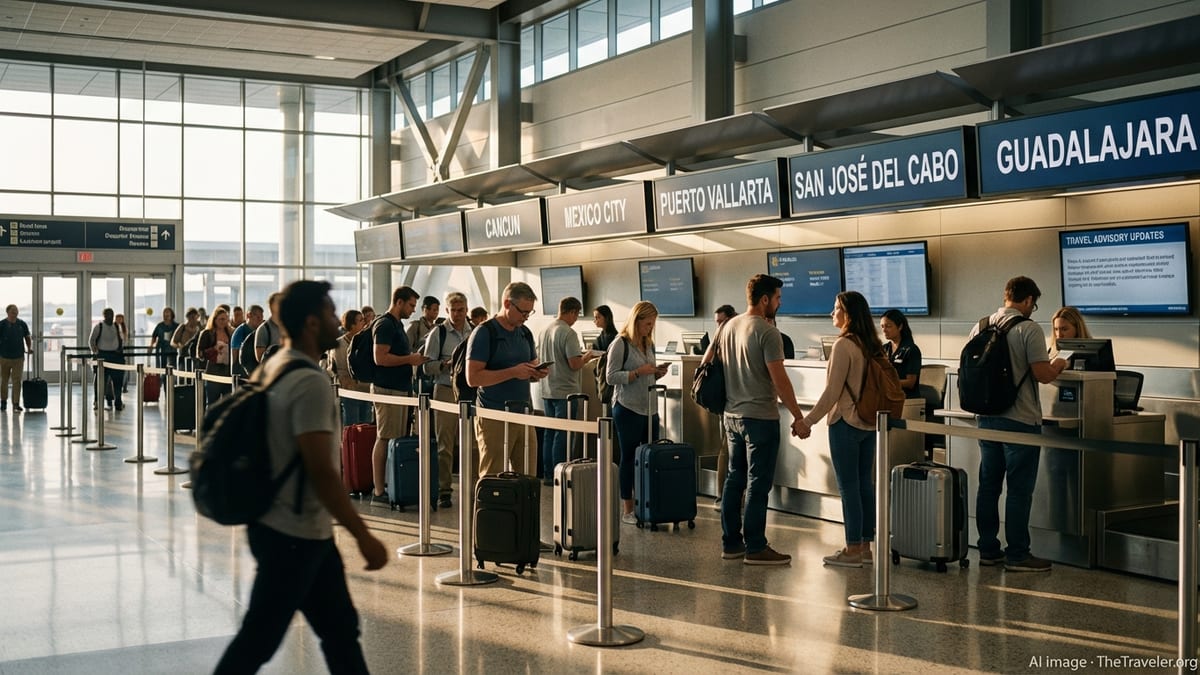
Flights Fully Restored After Safety Downgrade
The return of full commercial air service between the United States and Mexico is rooted in a quiet but significant regulatory shift. In September 2023, the U.S. Federal Aviation Administration restored Mexico to Category 1 in its International Aviation Safety Assessment program after more than two years at a downgraded level. That decision confirmed that Mexico’s aviation regulator once again met international safety standards, clearing the way for airlines to launch new routes, add capacity and expand codeshare agreements.
For travelers, that upgrade translated into a rapid rebuilding of the air bridge between the two countries. By 2025, most pre-pandemic frequencies had been reinstated on key leisure routes to Cancun, Los Cabos, Puerto Vallarta and Mexico City, with major U.S. carriers restoring or exceeding their previous schedules. Low-cost airlines on both sides of the border intensified competition, pushing down fares on off-peak travel dates and further stimulating demand.
Today, as spring and summer travel plans accelerate in 2026, Mexico’s skies are busy again. The restoration of full flight operations means that aviation safety itself is no longer the principal concern for U.S. visitors. Instead, it is conditions on the ground, particularly in states grappling with cartel power struggles, that are driving the latest wave of official warnings and traveler anxiety.
Advisories Tighten After Jalisco Cartel Operation
The most dramatic security shock in recent months came on February 22, 2026, when Mexican security forces carried out a major operation in the western state of Jalisco, killing Nemesio “El Mencho” Oseguera Cervantes, the long‑time leader of the Jalisco New Generation Cartel. The operation, centered near Tapalpa, triggered immediate and violent reprisals across parts of Jalisco and neighboring states, with road blockades, vehicle burnings and attacks on security forces reported.
In the days that followed, U.S. authorities urged Americans in affected areas to shelter in place while flights and intercity transport were temporarily disrupted, including around the Pacific resort of Puerto Vallarta and the inland hub of Guadalajara. Former U.S. drug enforcement officials publicly warned that the power vacuum within the cartel could fuel further infighting, increasing the risk of unpredictable flare‑ups even in areas frequented by tourists.
Those emergency measures have since been lifted, and normal flight operations to Jalisco’s airports have resumed. However, the episode prompted a fresh reassessment of risk. Travel experts note that while the violence largely involved confrontations between criminal groups and security forces, visitors can be caught in the wrong place at the wrong time, particularly on highways, in outlying neighborhoods or if traveling at night.
The U.S. State Department continues to advise against travel to several Mexican states where cartel activity and kidnappings remain acute, while urging increased caution in others that host major cities and some tourist infrastructure. Canadian authorities have issued similar guidance, recommending that travelers monitor conditions in real time and maintain flexibility in their itineraries.
Popular Beach Destinations vs High‑Risk Interior States
Despite alarming headlines, the security picture in Mexico is far from uniform. Tourism powerhouses such as Cancun, Playa del Carmen, Tulum, Los Cabos and parts of the Riviera Nayarit remain under an “exercise increased caution” tier of U.S. government advice. Authorities there have invested in visible security deployments, hotel‑zone patrols and improved emergency response, and crime statistics cited by officials point to a reduction in incidents targeting foreign visitors in some coastal areas.
That contrasts sharply with states that remain firmly in the highest‑risk categories, including areas along parts of the northern border and pockets of the Pacific and central highlands where rival cartels contest territory. Regions of Guerrero, Michoacan, Zacatecas and parts of Jalisco, among others, have seen spikes in violence, disappearances and attacks on local communities. In these places, the danger often stems from roadblocks, extortion and clashes that are not directed at tourists but can pose serious collateral risk.
Even within a single state, conditions can differ markedly. In Jalisco, for example, the international resort city of Puerto Vallarta and upscale coastal enclaves present a very different day‑to‑day reality from rural inland zones and the metropolitan outskirts of Guadalajara, which has been at the center of Mexico’s crisis of disappearances. For visitors, that patchwork of risk means that choosing not just a state but specific cities, neighborhoods and transportation routes has become more consequential than ever.
Travel advisers say demand for Mexico’s classic beach resorts remains robust, with many repeat visitors reporting trips that feel largely insulated from the worst of the national security crisis. Yet they also note a growing preference for staying within established tourist corridors, using airport or hotel‑arranged transport and avoiding spontaneous road trips into little‑visited interior regions.
What Governments and Airlines Expect From Travelers
With aviation connectivity largely normalized, both governments and airlines are emphasizing traveler responsibility as a key layer of risk management. U.S. and Canadian agencies urge citizens to read the full text of destination advisories, which often include neighborhood‑level detail and practical instructions, rather than relying solely on headline risk levels. Enrollment in traveler registration programs is recommended so authorities can push security alerts directly by text or email during fast‑moving crises.
Carriers, for their part, continue to run full schedules to Mexico’s most popular gateways but are fine‑tuning contingency plans after the February violence demonstrated how quickly conditions can change. That has included revisiting protocols for rerouting or canceling flights, coordinating with airports on passenger sheltering procedures and adjusting crew layover patterns in cities flagged for temporary unrest.
Industry insiders say they have not seen systemic targeting of aviation facilities linked to cartel disputes, but note that access routes to airports and bus stations can be vulnerable when criminal groups deploy blockades to demonstrate power. Travelers are therefore being urged to confirm same‑day ground transport with their hotels or trusted providers, allow extra time for airport transfers and avoid improvising journeys through unfamiliar areas, especially after dark.
Insurance companies are also recalibrating their policies, with some adding clearer language on civil unrest and security‑related disruptions. Specialists recommend that travelers scrutinize the fine print on trip cancellation and medical evacuation coverage, particularly for itineraries that include overland travel between high‑ and lower‑risk states.
Practical Safety Strategies for 2026 Travel
Security experts stress that informed preparation remains the single most effective tool for visitors who decide to travel to Mexico in 2026. They advise monitoring official advisories in the weeks leading up to departure and again just before flying, when sudden security operations or local political events can alter the risk calculus in specific cities.
On the ground, recommended precautions include sticking to well‑traveled areas, limiting nighttime movements off resort property, and relying on licensed taxis, ride‑hail services called from inside hotels, or pre‑arranged shuttles. Travelers are encouraged to keep family or friends informed of their daily plans, share live locations when possible and maintain a charged phone with local emergency numbers saved.
Veteran visitors often build in extra resilience by packing additional prescription medication, carrying backup copies of travel documents and budgeting time for potential delays. For some, particularly those uneasy about high‑profile security operations or the prospect of sudden lockdowns, the most prudent choice may be to postpone or redirect travel to alternative destinations.
For millions of others, however, Mexico’s beaches, cultural cities and culinary hubs will remain a cornerstone of their travel plans. As full flight capacity returns and advisories evolve, the balance between opportunity and risk will hinge less on aviation safety and more on how carefully individual travelers read, interpret and act on the detailed guidance now available.