

More news on this day
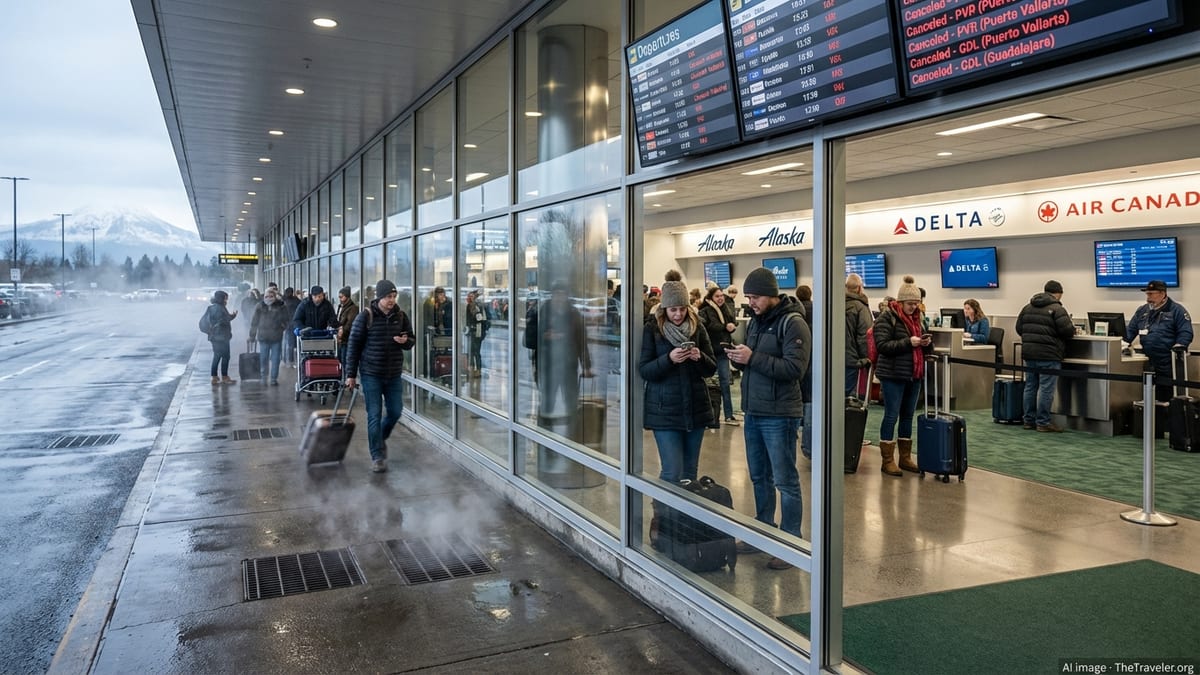
Civil unrest in western Mexico has triggered sweeping flight cancellations by Alaska Airlines, Air Canada, and Delta, abruptly severing key links between Portland and some of the region’s most popular sun destinations just as peak winter travel reaches its height.
Civil Unrest in Jalisco Spills Into the Skies
The latest round of violence in Mexico’s state of Jalisco, centered around Puerto Vallarta and Guadalajara, has quickly escalated from a domestic security crisis into a major disruption for international travel. Mexican authorities launched a military operation on February 22, 2026, that reportedly killed Nemesio “El Mencho” Oseguera Cervantes, the powerful leader of the Jalisco New Generation Cartel. In the hours that followed, gun battles, explosions, and vehicle fires broke out across the region, with road blockades and reports of attacks near major transport corridors.
Airport access became one of the most immediate travel casualties. Operators at Puerto Vallarta’s Licenciado Gustavo Díaz Ordaz International Airport reported the cancelation of international operations and most domestic services as security forces moved to secure surrounding roads and facilities. While officials stressed that no major violence had occurred inside the terminal itself, the combination of blocked highways, gunfire reports, and a wider security lockdown made it unsafe for passengers and crew to move in and out of the airport.
International governments responded swiftly. The United States Embassy in Mexico City issued a security alert advising citizens in affected states, including Jalisco, to shelter in place, while Canadian authorities updated travel advisories and warned of heightened risk in the Puerto Vallarta area. That guidance became a key factor in airlines’ decisions to pull back, even before the full scale of the operational disruption at Puerto Vallarta was clear.
By late February 22, the crisis had transformed from a local law enforcement operation into a multi-day logistical shock for airlines, airports, and travelers across North America, including those flying in and out of Portland International Airport.
Airlines Move Fast: Alaska, Delta, and Air Canada Cut Service
As reports of violence and transport blockades hardened, major North American carriers began canceling flights into western Mexico. Alaska Airlines, a key player in the Pacific Northwest leisure market, announced that it would cancel all flights to Puerto Vallarta for at least several days, citing security concerns and the inability to guarantee safe access to and from the airport. Routes from West Coast gateways, including those serving Portland travelers either nonstop or via Seattle connections, were among the first to be affected.
Delta Air Lines followed with a formal travel advisory specific to Jalisco, covering Puerto Vallarta and Guadalajara. The carrier warned that travel to, from, or through those cities between February 22 and 26 could be disrupted and that customers should check their flight status frequently. Delta activated a flexible rebooking policy, allowing passengers to change their flights without a fare difference if they traveled by March 7, or to apply the value of their ticket toward future trips if they chose to cancel altogether.
For Air Canada, the situation quickly moved from caution to a full halt in operations. Following an updated Canadian government warning about security risks in Puerto Vallarta, the airline suspended flights to the resort city until further notice. Company officials emphasized that passenger and crew safety outweighed the commercial importance of the route, which is typically one of Canada’s busiest winter leisure corridors.
Together, these decisions left hundreds of passengers with Mexico-bound itineraries facing abrupt cancellations, many of them connecting from or returning to Portland. With several carriers halting operations simultaneously, options to reroute through alternate Mexican gateways such as Cancun or Mexico City became limited and, in some cases, prohibitively expensive on short notice.
How Portland’s Mexico Links Were Hit
Portland International Airport has, in recent years, built a robust portfolio of leisure routes that connect Oregonians to Mexican beach destinations. Seasonal and year-round services to Puerto Vallarta, Guadalajara, and other Pacific coast cities have become staples of winter escape planning for travelers across Oregon and southwest Washington. Those routes, supported by carriers such as Alaska and Delta and by connecting traffic from Air Canada, are heavily concentrated on weekends and peak holiday windows.
The timing of the Jalisco operation and subsequent unrest could hardly be worse for Portland passengers. Many flights from Portland to Mexico operate at or near full capacity in late February, when Pacific Northwest weather is still at its darkest and demand for sun vacations is near its peak. As cancellations rippled through airline networks, the effect quickly manifested in full departure boards at Portland showing “canceled” or “delayed” next to flights involving Puerto Vallarta and connecting services through hubs like Seattle and Vancouver.
Travelers already in Mexico, particularly those vacationing in Puerto Vallarta and planning to return to Portland, have borne the brunt of the disruption. With airspace open but carriers unwilling or unable to operate, some have been told to shelter in place at hotels while airlines and tour operators work through rebooking options. Others have attempted to reach alternative airports by road, only to be advised against travel due to reports of blockades and sporadic clashes on major highways.
At Portland International Airport itself, the immediate impact has been more subtle but still significant. Airline counters and call centers have seen spikes in volume as passengers with upcoming trips ask whether their flights are still operating and what options they have if they prefer not to travel amid the uncertainty. For many, the answer depends more on their airline’s specific policies than on any single airport or government directive.
What Travelers With Existing Bookings Can Expect
Portland travelers holding tickets to Puerto Vallarta or Guadalajara in the coming days are encountering a patchwork of policies, waivers, and exceptions. Delta’s advisory for Jalisco allows customers traveling between February 22 and 26 to rebook into the same cabin by March 7 without paying a fare difference, provided they keep the same origin and destination. For changes beyond that date, fare differences may apply, but change fees are generally being waived for this event.
Alaska Airlines, which has issued similar waivers for other major disruptions in the past, is working case by case with customers whose flights have been canceled outright. Many are being offered the choice of rebooking at a later date, rerouting through different Mexican gateways where safety conditions allow, or accepting a credit toward future travel. Specific options can vary depending on how the ticket was purchased and whether it involves partner airlines or vacation packages.
Air Canada’s suspension of Puerto Vallarta service has created a different dynamic for Portland passengers who were connecting through Canadian hubs. In several instances, Air Canada has moved to proactively refund tickets on canceled routes or to shift passengers to alternative sun destinations where possible. However, because the airline does not operate nonstop flights from Portland, travelers may also have to coordinate with partner airlines that operate the U.S. domestic leg of their journey.
Across all three carriers, one consistent message is emerging: passengers should not attempt to travel to or from affected areas until airlines confirm that flights have resumed and that routes to airports are secure. Given the fluid security situation and the reliance on ground access, new cancellations may continue even after some flights reappear on schedules.
Safety First: Government Alerts and On-the-Ground Reality
For Portland residents considering whether to proceed with Mexico trips in the short term, the key reference points are official government advisories and embassy alerts. The United States government’s security messages for Jalisco carry significant weight with airlines and tour operators, and any elevation in risk level can prompt extended suspensions well beyond the initial wave of cancellations.
Canadian authorities have taken an especially cautious stance on Puerto Vallarta, reinforcing the decision of Air Canada to suspend its flights. That stance effectively sends a signal to other carriers serving shared resort markets that security concerns are serious enough to override the economic importance of maintaining winter schedules.
On the ground, reports from Puerto Vallarta and surrounding areas describe a city where normal tourist life has been interrupted by an atmosphere of apprehension. Images and eyewitness accounts show burning vehicles, damaged commercial properties, and heavily armed security forces in the streets. Even in areas where tourist hotels remain calm and physically untouched, the closure of transport links and the uncertainty of when flights will resume have created a sense of isolation for visitors.
For travelers and families back in Portland, the challenge lies in reconciling glossy pre-trip expectations with an evolving reality that involves shelter-in-place guidance, limited mobility, and the potential need to postpone or shorten vacations. Travel insurance, when in place, can help recover some costs, but the primary concern for most remains simple: getting home safely or deciding whether it is wise to travel at all.
Rebooking Strategies and Rights for Affected Passengers
With airlines stretched and call queues long, Portland travelers affected by the Mexico disruptions are being urged to take a proactive, organized approach to rebooking. The first step is to monitor flight status through airline apps or airport information screens and to wait for official notification that a flight has been canceled or significantly changed. Once that happens, most carriers will automatically unlock fee waivers and rebooking options in their digital channels.
Passengers should gather all relevant booking details, including confirmation numbers, ticket numbers, and any documentation of travel insurance, before contacting their airline. For those who booked through an online travel agency or a brick and mortar travel advisor, it is often quicker to work through that intermediary, particularly when itineraries involve multiple carriers. In some cases, agencies have direct access to airline exception policies and may be able to secure better alternatives than individual travelers can obtain on their own.
Consumer rights vary by carrier and fare type, but when a flight is canceled by the airline for security reasons, travelers are generally entitled to either a rebooking at no additional cost within a defined window or a refund of the unused portion of their ticket. Credits and vouchers may be offered as alternatives, but passengers who prefer cash refunds should be prepared to ask for them explicitly and to reference the fact that the cancellation originated with the airline, not with a voluntary change of plans.
For Portland travelers already abroad and unable to return as scheduled, keeping receipts for unexpected expenses such as extra hotel nights, meals, and local transport is essential. While airlines are not always obligated to reimburse these costs in security-related events, some will do so on a goodwill basis, and travel insurance policies may cover them when formal advisories are in place.
Planning Ahead: What This Means for Future Mexico Travel
The events unfolding in Jalisco are likely to reshape how Portland travelers think about winter trips to Mexico, at least in the near term. While Puerto Vallarta and Guadalajara have traditionally been seen as relatively stable compared with some other regions, the current unrest underscores that security situations can change rapidly, even in destinations with strong tourism infrastructure and long-established airline links.
In the months ahead, airlines may reassess the balance of their Mexico networks, potentially shifting capacity toward destinations less affected by cartel violence or perceived as easier to secure. That could mean more flights to Caribbean-side hubs such as Cancun and fewer to Pacific coast cities, at least until confidence returns. For Portland travelers, that shift would likely manifest as a different mix of seasonal routes and possibly more reliance on one-stop connections through larger hubs.
Travelers themselves are also likely to adapt. Many will start paying closer attention to security advisories when booking, rather than checking them only in the days before departure. Others may place a higher value on flexible tickets, robust travel insurance, and itineraries that allow for relatively straightforward rerouting if a specific airport becomes inaccessible.
For now, the immediate priority for airlines and passengers alike is managing the short-term disruption and ensuring the safety of those affected. But as winter turns to spring, the longer-term question for Portland’s Mexico market will be whether confidence rebounds quickly or whether this episode leaves a lasting imprint on where and how Oregonians choose to travel for sun, sand, and a midwinter reset.