


More news on this day
Ongoing airspace closures across parts of the Middle East are forcing EgyptAir to cancel, reroute and retime flights in early 2026, creating uncertainty for travelers connecting through Cairo and across the wider region.
Get the latest news straight to your inbox!
Which EgyptAir routes are being hit hardest
Since late February 2026, a cascade of airspace restrictions across Iran, Iraq, Israel, Bahrain, Kuwait, Qatar and segments of Gulf airspace has reshaped how airlines can move between Europe, the Middle East and Asia. Publicly available operational analyses describe this as one of the largest regional shutdowns on record, with multiple Flight Information Regions either fully closed or heavily restricted.
Reports focused on Egypt’s aviation sector indicate that EgyptAir has temporarily suspended or sharply reduced services to a cluster of Middle Eastern destinations most exposed to the closures and security concerns. These include select routes into the Gulf, as well as services that typically overfly Iranian and Iraqi airspace to reach South and East Asia.
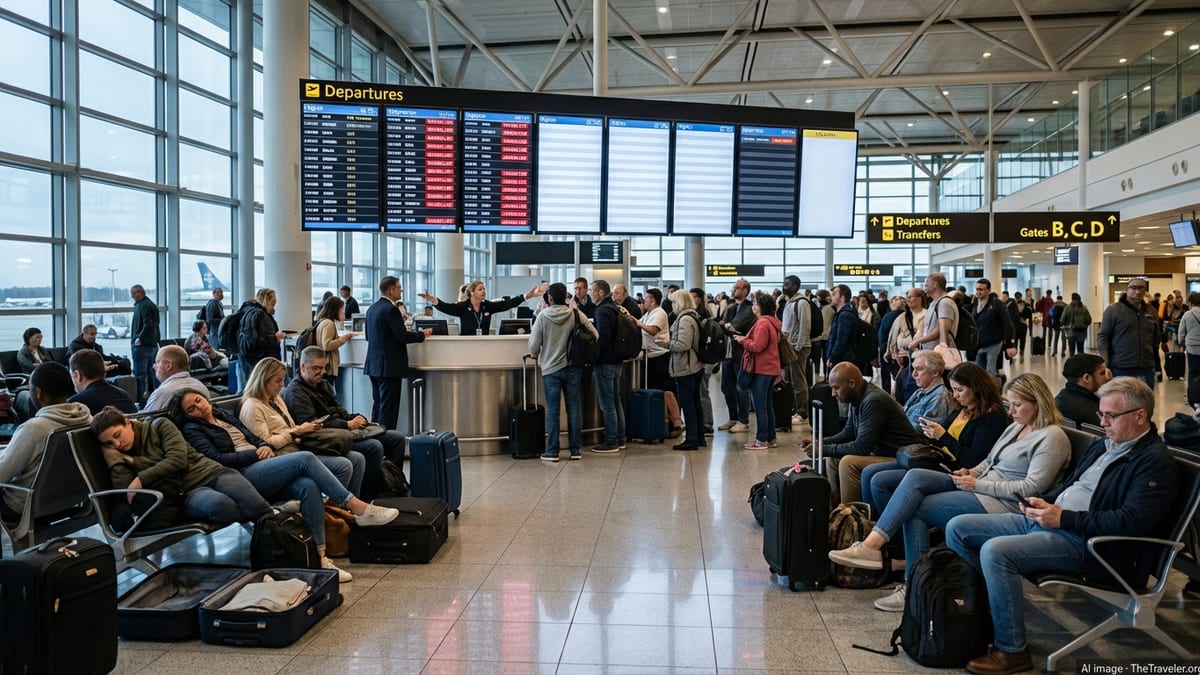
Industry briefings on Cairo International Airport in March and April 2026 describe mounting disruption, with dozens of daily delays and a rolling pattern of day-of-travel cancellations affecting EgyptAir alongside major foreign carriers. EgyptAir’s long-haul services connecting Europe to East Africa and Asia are particularly vulnerable when overflight corridors tighten, as aircraft must detour around closed airspace or operate on altered timings with limited slack in the schedule.
Despite these pressures, the carrier continues to operate the core of its short and medium haul network, including many services within Egypt, to North Africa and to key European hubs. Travelers, however, are being warned that even flights that remain on the timetable may face retiming, extended routings and last-minute equipment changes while the regional situation evolves.
How airspace closures are changing EgyptAir’s flight paths
Specialist aviation briefings on Middle East airspace in 2026 describe a compressed operating environment in which traffic that once crossed Iran, Iraq and parts of the Gulf must now be funneled through narrower corridors over Turkey, the eastern Mediterranean and portions of Egyptian and Saudi airspace. This has turned Egypt into a critical southern bridge between Europe and Asia.
For EgyptAir, this means that some eastbound flights that used to take the most direct path across the Gulf now track further south or north, adding flying time and fuel burn. Operational insight reports note that routes linking Europe to India and Southeast Asia via Cairo are among those requiring careful recalculation to avoid closed or high‑risk zones.
Longer routings have a knock‑on impact on scheduling. Aircraft spend more time in the air and less time on the ground, which can reduce the number of rotations a single jet can perform in a day. When combined with holding patterns at congested alternate corridors and stricter slot controls at key airports, these changes can push flights into delays and make it harder for EgyptAir to recover after a disruption elsewhere in the system.
Travel risk advisories also highlight that most closure notices have been issued on an open‑ended basis, with validity “until further notice.” Without clear reopening timelines, EgyptAir planners are relying on rolling assessments and forecast traffic flows rather than fixed reopening dates, a reality that travelers should bear in mind when planning onward journeys.
What happens if your EgyptAir flight is cancelled
When flights are cancelled because airspace is closed or severely restricted, EgyptAir’s options are narrower than in more routine disruptions such as minor weather events. In many cases, the airline cannot simply reroute on the same day if there is no legally or operationally viable air corridor available, resulting in full cancellation rather than short delay.
According to published travel guidance and regulatory summaries, passengers whose flights are cancelled in these circumstances are generally offered a choice between rebooking on the next available EgyptAir service on the same route, rerouting to a nearby destination in the same region, or requesting a refund. The exact options depend on the original ticket type, point of sale and any local consumer protection rules that apply to the journey.
Recent coverage of EgyptAir’s response to the 2026 disruptions indicates that the carrier has, for specific periods and destinations, introduced more flexible policies that allow travelers to change dates without traditional change fees, or to switch to certain alternative destinations within the network, provided travel takes place within a defined window. These waivers tend to be time‑limited and route‑specific, so what was offered in early March may not be identical to policies in place in May.
Travel law specialists note that compensation rights under European or other regulations often do not apply when cancellations are caused by extraordinary circumstances such as sudden airspace closures due to conflict. Passengers may still be entitled to a refund of the unused portion of their ticket and assistance at the airport, but not to additional cash compensation that would normally apply for airline‑caused disruptions.
How to rebook and reduce your risk of disruption
Consumer travel advisories issued in recent weeks emphasize that the most important step is to monitor your booking directly with EgyptAir before leaving for the airport. Schedules across the region remain fluid, and industry updates stress that departure times can change with little warning when new airspace restrictions are published or existing ones are extended.
Passengers typically have several channels for rebooking when a flight is affected, including EgyptAir’s website or mobile app, call centers, and ticket offices. During periods of heavy disruption, call wait times and airport queues can be long, so travelers are being encouraged to use digital tools where possible and to verify that updated itineraries have been ticketed before traveling to the airport.
Travel experts also recommend building in more connection time than usual when itineraries involve Cairo or other regional hubs, and considering overnight stops instead of tight same‑day connections on complex, multi‑segment journeys. For critical trips, some advisories suggest routing via alternative corridors that do not rely on heavily affected airspace, even if this requires additional transfers or slightly higher fares.
Insurance remains another layer of protection. Policies that include disruption or missed connection cover can help offset hotel and incidental costs if an EgyptAir service is cancelled due to regional instability. Travelers are being urged to check policy wording carefully, as some products exclude disruptions linked to armed conflict or known events.
What to watch in the coming weeks
The trajectory of EgyptAir’s schedule adjustments will closely follow any change in the regional security picture and in official notices to air missions. Analytical reports on Middle East aviation suggest that partial reopenings of certain corridors are possible in stages, which could allow EgyptAir to gradually restore suspended routes or reduce the length of detours.
At the same time, airline strategy briefings caution that carriers are likely to prioritize reliability over rapid expansion back into contested airspace. Even when some restrictions are lifted, EgyptAir may choose to keep conservative routings in place while assessing the stability of the new conditions and the cost of war‑risk insurance and operational safeguards.
For travelers, the key message is that conditions remain dynamic through at least the first half of 2026. Those planning trips that rely on EgyptAir services across or near the affected airspace are being advised to keep itineraries as flexible as possible, remain in close contact with the airline or their travel provider, and budget extra time and contingency funds.
While the evolving situation is challenging, current patterns suggest that EgyptAir and other carriers are finding workable alternatives on many routes via adjusted flight paths and schedules. The balance between maintaining connectivity and navigating one of the most complex airspace environments in recent memory will continue to shape the airline’s operations in the weeks ahead.