

More news on this day
Air travel across the Middle East is facing renewed disruption as a cluster of 19 flight cancellations and dozens of delays hits services operated by FlyDubai, Kenya Airways, EgyptAir, Air Arabia, Lufthansa and other major carriers, snarling key routes through the United Arab Emirates, Egypt and Kuwait.
Get the latest news straight to your inbox!
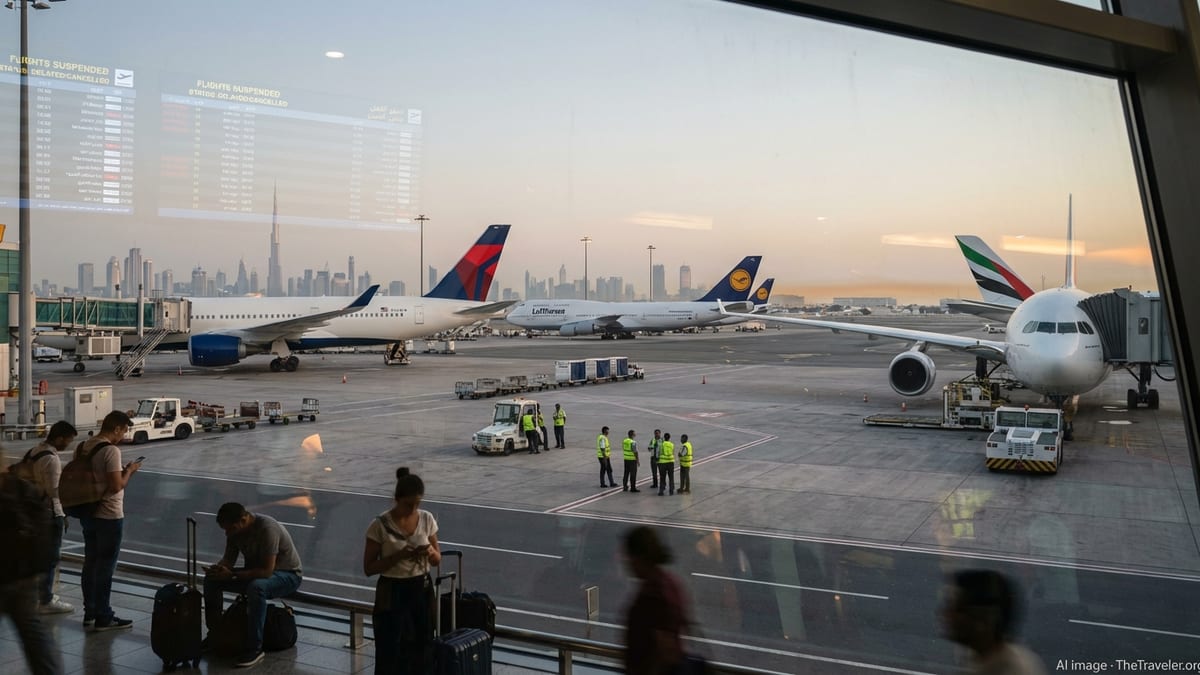
Fresh Wave of Disruptions Hits Regional Hubs
Publicly available flight-tracking and schedule data for early April 2026 indicate a new round of operational turmoil centered on Dubai, Cairo and Kuwait City, with airlines trimming schedules, rerouting services and scrapping select rotations altogether. The pattern follows weeks of instability in Middle East airspace that have already forced thousands of travelers to divert or delay their journeys.
Recent coverage of disruptions across the region shows that carriers serving the United Arab Emirates, Egypt and Kuwait have been particularly exposed to capacity constraints as they juggle changing routings, crew duty limits and tight aircraft availability. Reports indicate that on some days the cumulative effect has translated into double-digit cancellations and a significantly higher number of late departures and arrivals.
While individual airlines publish their own advisories, aggregated reports on regional performance point to a patchwork of last-minute changes rather than a single, coordinated reduction in service. This has left many passengers at major hubs in the Gulf and North Africa coping with rolling delays, missed connections and unplanned stopovers.
FlyDubai, Air Arabia and Regional Carriers Under Pressure
Low cost and hybrid carriers based in the Gulf, including FlyDubai and Air Arabia, are bearing a sizable share of the disruption as they operate dense networks linking secondary cities across the Middle East with major hubs in the UAE. Published airport statistics and industry compilations in recent days show FlyDubai among the airlines recording multiple cancellations and a noticeable spike in delayed rotations out of Dubai International Airport.
Air Arabia, operating primarily from Sharjah but with extensive links into Egypt and Kuwait, has been running a reduced schedule since widespread airspace constraints began earlier in the year. Travel industry roundups indicate that while operations have gradually increased compared with the worst days of March, the carrier is still cancelling select frequencies and posting extended departure holds, particularly on routes intersecting affected air corridors.
Kenya Airways and other African and Asian operators that route through Gulf and Egyptian hubs have also seen their schedules squeezed. Public timetables and operational summaries show isolated cancellations and retimed flights connecting Nairobi and other African gateways with Dubai and Cairo, reflecting the knock-on impact of congestion and limited slots at key transfer points.
EgyptAir and Kuwait Operations Feeling the Strain
In Egypt, Cairo International Airport continues to function as a major diversion and connection point for services avoiding the most constrained segments of Middle East airspace. According to recent performance snapshots, EgyptAir has faced a combination of outright cancellations and substantial delays on regional and medium haul sectors, including links to Gulf destinations and onward connections to Europe and Africa.
The current round of 19 cancellations includes a cluster of EgyptAir flights on high-demand regional routes, alongside services by other airlines operating in and out of Cairo. Punctuality data compiled by aviation analytics providers show that departure delays for some EgyptAir services have extended well beyond one hour, as ground teams work around revised routings and aircraft rotations.
Kuwait City is experiencing similar operational stress. Flight-disruption digests and airport overviews from early April point to a mix of delayed departures, elongated flight times and a smaller number of cancellations on services connecting Kuwait with Dubai, Cairo and points in Europe and South Asia. Regional carriers and international airlines alike have been forced to adjust timings, creating a ripple effect for passengers relying on tight connections through Kuwait International Airport.
Lufthansa and Other International Airlines Adjust Middle East Networks
European and Asian long haul airlines, including Lufthansa, have continued to recalibrate their Middle East operations as airspace restrictions and security considerations evolve. Policy updates and schedule notices published over recent weeks show Lufthansa maintaining a cautious approach on routes into key Gulf and Levant markets, with some services to Dubai and other regional destinations operating on modified schedules or remaining suspended for defined periods.
According to airline advisories and travel trade reporting, Lufthansa Group carriers are offering expanded rebooking and refund options to passengers ticketed to or from hubs such as Dubai and selected regional cities, reflecting the likelihood of further short-notice changes. These measures are designed to absorb disruption on affected days when cancellations, including those counted among the latest 19, remove capacity from the network.
Other international airlines from Europe and Asia have adopted similar strategies, trimming frequencies, rerouting flights around constrained air corridors and, in some cases, pausing operations entirely on specific city pairs. Publicly available information highlights that while some carriers have begun cautiously restoring capacity, they continue to warn travelers of potential operational adjustments on routes touching the UAE, Egypt and Kuwait.
Knock-On Effects for Passengers and Travel Planning
The immediate impact for travelers has been longer journeys, unpredictable departure times and an increased risk of missed connections across already busy hubs. Industry monitoring of on-time performance in early April shows a marked deterioration on select services through Dubai, Cairo and Kuwait City, even where flights have not been formally cancelled.
Airlines are advising customers through general public updates to check their flight status frequently, arrive at airports early and build additional time into itineraries that rely on Middle East connections. Travel agents and corporate travel managers are likewise incorporating longer minimum connection times and, where possible, choosing routings that avoid the most congested air corridors.
With 19 cancellations and numerous delays already recorded in the latest wave of disruption, and broader airspace conditions still unsettled, operational observers caution that schedules across the region are likely to remain fluid in the short term. For passengers transiting key gateways in the UAE, Egypt and Kuwait, the current environment demands flexibility, close monitoring of itineraries and a willingness to adapt travel plans at short notice.