

More news on this day
Hundreds of air travelers have been left stranded across the Middle East and Europe as a fresh wave of cancellations and delays ripples through regional networks, disrupting at least 17 flights and delaying nearly 200 more across carriers including Flydubai, Saudia, Etihad and IndiGo.
Get the latest news straight to your inbox!
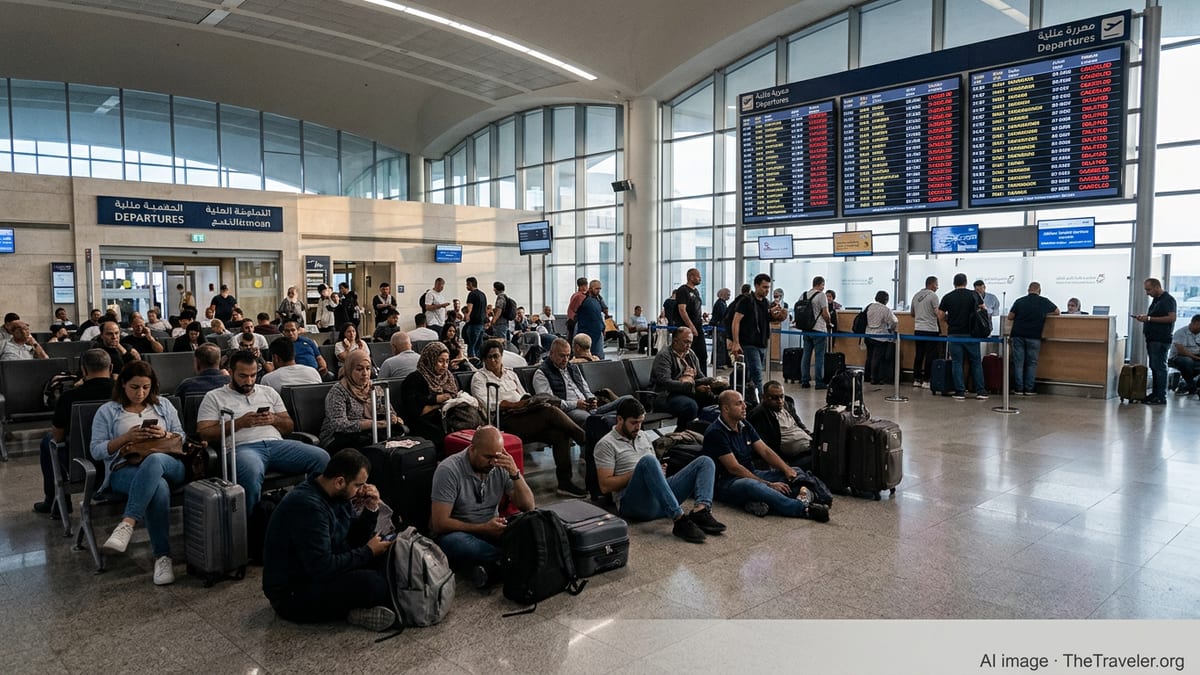
New Wave of Disruptions Hits Gulf and European Gateways
Publicly available airport and airline data from the past 48 hours indicate that airports in the United Arab Emirates, Saudi Arabia, Oman and neighboring states have again been forced to pare back operations, triggering a smaller but still disruptive round of cancellations and schedule changes. The latest tally points to 17 flights cancelled outright and around 195 delayed across the region and on connected routes.
The knock-on effects are being felt from Dubai and Jeddah to major European gateways such as Manchester and Barcelona. Passengers on both point to point and connecting itineraries have reported extended waits, missed onward connections and last minute rebookings as carriers adjust departure times and routings to fit within constrained airspace and limited airport slots.
While the current figures are far below the peak of disruption seen in early March, when thousands of flights were grounded as regional airspace briefly shut, the renewed instability underlines how sensitive Middle East aviation remains to changing operational and security conditions. Airlines have warned for weeks that even as main corridors reopen, schedules would remain fluid and subject to short notice change.
Travel trackers show that the affected flights span short haul regional services, South Asian routes and longer haul links between Gulf hubs and Europe, illustrating how even a modest number of cancellations can strand large numbers of passengers when they hit busy connecting banks.
Flydubai, Etihad, Saudia and IndiGo Among Affected Carriers
Low cost and full service operators alike are again on the front line. Flight status pages for Flydubai, Etihad Airways and Saudia show a pattern of rolling delays, retimed departures and selective cancellations on services linking the UAE and Saudi Arabia with India, Pakistan and several European cities. IndiGo, which relies heavily on Gulf routes for India bound traffic, has also seen select Middle East services curtailed or rerouted in recent days.
In the UAE, Flydubai has been operating on a trimmed schedule since late February, and its latest operational bulletins continue to warn that flight durations and transit times in Dubai may be longer than usual because of rerouting and altered flight paths. Etihad has maintained a reduced but growing network out of Abu Dhabi, with a flexible rebooking and refund policy still in place for tickets issued before the height of the crisis.
Saudia has begun restoring some links that were suspended earlier in the disruption cycle, including limited services from Jeddah to Dubai and Abu Dhabi, but the airline is still flagging that approvals, timings and frequencies remain subject to rapid change. Passengers on India and Pakistan bound itineraries that would typically use Jeddah or Riyadh as a transit point continue to face a heightened risk of missed onward connections when departure times shift at short notice.
IndiGo, which has had to navigate both regional constraints and its own separate scheduling pressures in recent months, is running a selective Middle East program. Publicly available information indicates that while many India–Gulf flights are operating, others have been cancelled or rescheduled, creating uneven capacity and leaving some passengers scrambling for alternatives, particularly on traditionally high demand routes into Dubai and Abu Dhabi.
Dubai, Jeddah, Manchester and Barcelona Feel the Strain
Dubai International remains the focal point of the disruption, acting as both an origin and transit hub for many of the affected flights. Airport information and local media coverage indicate that while large scale mass cancellations have eased since early March, clusters of delayed and cancelled departures continue to appear across the board, forcing airlines to consolidate loads, retime flights and occasionally route aircraft via alternative corridors.
In Saudi Arabia, Jeddah’s King Abdulaziz International Airport has seen its own share of turbulence, with Saudia and other carriers progressively rebuilding schedules that were heavily curtailed when regional tensions first spiked. Flights between Jeddah and the UAE, as well as onward services into Europe and Asia, remain a critical link for religious travel and labor traffic, magnifying the impact of even small schedule shifts.
Disruptions are also being felt well beyond the Middle East. In Manchester, public posts and airline updates describe passengers experiencing late night departure changes on Abu Dhabi and Dubai bound flights, along with altered arrival times that complicate downline connections to Asia and Australia. Some travelers have reported that flights which had already been moved once were retimed again closer to departure.
Barcelona, another popular European gateway for Gulf carriers, has likewise seen adjustments on services to and from the region. While most flights are departing, schedule changes and longer routings to avoid sensitive airspace have affected block times and connections, particularly for passengers using Barcelona as a jumping off point for North African or intra European itineraries.
Airlines Extend Waivers as Recovery Remains Uneven
Major Gulf based airlines have kept in place a range of temporary waivers to ease the impact of continuing uncertainty on passengers. Etihad and Emirates have both extended options for free date changes or refunds on tickets booked before late February for travel into April and May, giving travelers more flexibility to postpone or reroute journeys if they are uncomfortable with the current level of disruption.
In the low cost segment, Flydubai and Air Arabia are operating limited but expanding networks, with public travel advisories stressing the importance of checking flight status before leaving for the airport. Schedules continue to be rebuilt incrementally as air corridors stabilize and demand patterns become clearer, but airlines are signaling that they prefer to restore capacity cautiously instead of overpromising and then cancelling at the last minute.
Saudia has adopted a similar stance, gradually reinstating services to Dubai, Abu Dhabi and Amman while cautioning that these flights remain subject to operational review. Official communications from the airline and airport operators have emphasized that any further deterioration in regional conditions could again force rapid changes, underlining the fragility of the current recovery.
Industry analysts note that even as the headline number of grounded aircraft falls, the residual disruption continues to ripple through global networks. Aircraft and crew that spent days out of position during the peak of the shutdown are still being rotated back to their normal patterns, and as long as corridors over parts of the Middle East remain restricted, block times will be longer and on time performance under pressure.
Passengers Urged to Build in Extra Time and Backup Plans
Travel advisories from airlines, airports and consular services across multiple countries continue to urge passengers bound for or transiting through the Middle East to monitor their itineraries closely. Public guidance typically recommends checking flight status repeatedly in the 24 hours before departure, ensuring contact details in bookings are up to date and arriving at airports earlier than usual to accommodate potential schedule changes and longer security or immigration queues.
Consumer advocates point out that passengers affected by cancellations are often entitled to refunds or rebooking on the next available flight, and in some jurisdictions may qualify for additional compensation depending on the circumstances and governing regulations. However, the complex mix of security related restrictions and operational decisions in the current situation can make individual cases nuanced, leading many travelers to focus first on simply reaching their destinations.
For now, the combination of 17 new cancellations and close to 200 delays represents a reminder that the Middle East’s aviation recovery remains a work in progress. With airlines gradually rebuilding networks and airspace access evolving in step with political and security developments, passengers planning trips through hubs such as Dubai, Abu Dhabi and Jeddah are likely to face a period of heightened unpredictability in the weeks ahead.
Until schedules stabilize more fully, travel planners and frequent flyers alike are being encouraged by published guidance to maintain flexible arrangements, consider alternative routings where possible, and prepare for last minute changes when flying to or from the region’s key hubs.