


More news on this day
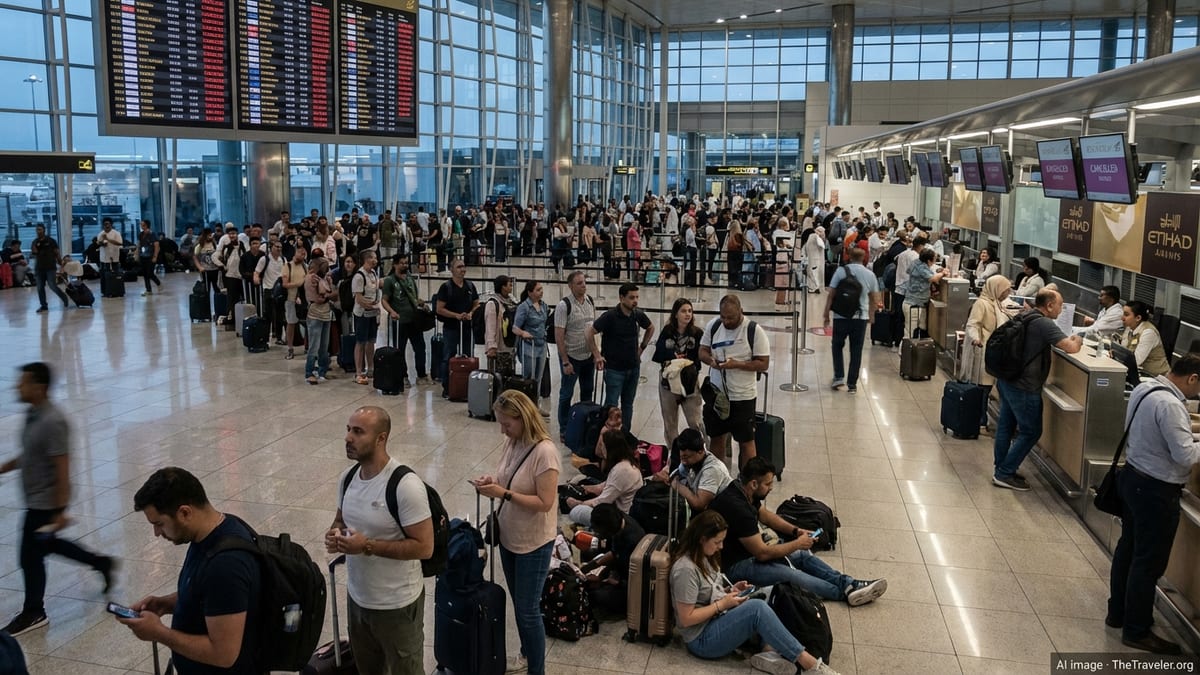
Hundreds of air passengers were stranded across the Middle East after a wave of disruptions in Saudi Arabia, Egypt, the United Arab Emirates and Türkiye delayed 1,029 flights and cancelled 21 more, snarling operations at major hubs including Istanbul, Dubai and Jeddah and affecting carriers such as Emirates, Turkish Airlines and EgyptAir.
Get the latest news straight to your inbox!
Wide-Ranging Disruptions Across Four Key Markets
Publicly available aviation tracking data and regional travel industry reports show that airports in Saudi Arabia, Egypt, the UAE and Türkiye collectively recorded 1,029 delayed departures and 21 cancellations within a single operational day, creating a fresh bout of instability for an already fragile Middle East aviation network. The disruptions hit some of the region’s busiest international gateways, with Dubai International, Istanbul, Jeddah and Cairo all reporting significant schedule dislocation.
The latest figures indicate that the operational strain was spread across multiple terminals and time bands, rather than confined to a single weather event or airport technical issue. Delays extended from early-morning bank departures into late-night long-haul waves, leaving passengers facing missed connections, improvised overnight stays and extended waits in crowded terminals.
While the number of outright cancellations remained comparatively limited next to the volume of delays, cancellations typically involved long-haul or trunk routes, magnifying their impact. For many travelers, even a single cancelled flight meant rebooking over congested alternative hubs or waiting for limited replacement services on subsequent days.
The pattern follows a series of recent disruption days in the region in which delay counts have routinely run into the hundreds. Previous operational snapshots this year have documented several instances where Middle Eastern airports collectively reported close to or above 1,000 delays in a day, underscoring the sensitivity of key hubs to airspace constraints, weather conditions and knock-on effects from network congestion.
Major Hubs in Istanbul, Dubai and Jeddah Under Pressure
Dubai, Istanbul and Jeddah once again emerged as focal points for the latest disruption episode, reflecting their central role in linking Europe, Asia and Africa. Dubai International and its sister airport in Sharjah saw waves of late departures on both regional and long-haul services, while Istanbul’s mega-hub reported congestion affecting flights operated by Turkish Airlines and partner carriers.
In Saudi Arabia, Jeddah’s King Abdulaziz International Airport and Riyadh’s King Khalid International Airport registered substantial delays as banks of inbound and outbound services stacked up. Previous disruption days in the Kingdom this year have already highlighted how quickly schedule slippage at these airports can radiate across domestic and regional networks, affecting connections onward to airports such as Dammam, Medina and smaller Gulf and Levant destinations.
Cairo also experienced heavy knock-on effects as EgyptAir and other operators struggled to maintain their timetables in the face of upstream delays. Euromed and sub-Saharan African connections relying on tightly timed transfer windows in Cairo and other Egyptian airports were particularly exposed when inbound flights arrived late from the Gulf or from Türkiye.
Operational updates from aviation-data providers in recent months have repeatedly flagged the vulnerability of these hubs to regional shocks. Earlier in the year, for example, Middle East hubs endured waves of cancellations and diversions linked to temporary airspace closures and conflict-related risk assessments, leading to thousands of flights being rerouted or withdrawn from schedules over several days. Those earlier events have left many airlines operating with thinner buffers and heightened sensitivity to any further disruption.
Airlines From Emirates to Turkish Airlines and EgyptAir Affected
The latest disruption wave affected a broad spread of carriers, reinforcing that the issue was systemic rather than confined to a single airline. Regional giants such as Emirates and Turkish Airlines, along with EgyptAir and other Middle Eastern and international operators, all reported delayed services, with a mix of short-haul, medium-haul and long-haul flights running behind schedule.
Earlier tracking snapshots from this year have shown Emirates, flydubai and EgyptAir among the most heavily impacted operators on several high-disruption days, with some events involving several hundred combined delays and a handful of cancellations concentrated on routes within and around the Gulf and Eastern Mediterranean. In other instances, airlines such as Saudia, Pegasus, Gulf Air and Air Arabia have also featured prominently in daily delay and cancellation tallies.
In the current episode, network carriers that rely on complex wave-based scheduling, particularly in Dubai and Istanbul, faced compounding operational challenges. A late arrival from Europe or Asia can cause a cascade of missed connections and delayed onward flights, as aircraft and crew are repositioned and passengers are re-accommodated onto already busy services.
Low-cost and hybrid carriers were not immune either. Aircraft utilization models that demand rapid turnarounds at multiple regional airports leave little room for recovery when slots are missed or airspace congestion builds. This can transform what would otherwise be modest operational issues into multi-airport bottlenecks over the course of a day.
Underlying Causes: Airspace Tensions, Weather and Network Strain
The specific mix of factors behind the latest 1,029 delays and 21 cancellations appears to include weather-related constraints, regional airspace management issues and lingering after-effects from earlier conflict-linked closures that have reshaped traffic patterns across the Middle East. Aviation risk advisories and analytics providers have, in recent months, repeatedly highlighted how temporary airspace shut-offs and rerouting around sensitive zones have lengthened flight times and reduced scheduling flexibility for airlines using Gulf and Levant corridors.
Industry data from earlier this year documented episodes in which thousands of flights globally were cancelled or rerouted after airspace restrictions affected corridors over parts of the Gulf and surrounding states. Such events not only disrupted direct flights to and from the region but also affected through-traffic, compelling airlines to reconfigure operations via alternate routings and hubs.
Weather has also remained a persistent complicating factor. Sandstorms, heavy rain and strong crosswinds have periodically reduced runway capacity or forced holding patterns at several airports in Saudi Arabia, Egypt and Türkiye. Even relatively brief weather interruptions can cause extended knock-on delays when they occur during peak departure or arrival waves, particularly at airports running close to their capacity limits.
At the same time, many airlines in the region have been rebuilding or expanding schedules against a backdrop of constrained aircraft availability and ongoing maintenance and staffing pressures. This has left networks more vulnerable to disruption, as there is less spare capacity to absorb irregular operations when several hubs are affected at once.
What Travelers Are Experiencing and How They Can Respond
For passengers caught in the latest disruption cycle, the most immediate impact has been long waits in terminals in Istanbul, Dubai, Jeddah, Cairo and secondary hubs, along with uncertainty around onward travel plans. Reports from recent disruption days describe crowded check-in halls, long queues at transfer desks and shortages of same-day rebooking options on popular routes, especially for those traveling in peak leisure periods.
Publicly available guidance from airlines and travel advisories in the region consistently urges passengers to monitor their flight status closely through official airline channels and airport information screens, particularly when wider regional disruption is reported. Travelers are also encouraged to build additional buffer time into itineraries that involve self-connecting between separate tickets or tight transfer windows through Middle Eastern hubs.
Consumer organizations and travel-rights commentators note that eligibility for financial compensation or care provisions can vary significantly depending on the airline’s home jurisdiction, the route and the cause of disruption. In several recent high-profile Middle East disruption events, analysts have pointed out that conflict-related airspace closures and certain severe weather events are often categorized as extraordinary circumstances, limiting entitlement to compensation under some regulations, even when airlines are expected to provide basic care such as refreshments and accommodation where feasible.
With the latest figures again highlighting the scale of volatility in Middle East aviation, many industry observers suggest that travelers transiting the region in the coming months should remain prepared for further schedule changes. Booking flexible fares where possible, keeping travel insurance details at hand and maintaining direct access to airline customer service channels can help passengers respond more quickly when sudden disruption strikes.