


More news on this day
Air travel across parts of the Middle East is facing renewed disruption as Kazakhstan’s Air Astana suspends services to the United Arab Emirates and Kuwait-based Jazeera Airways issues fresh travel guidance amid recent missile attacks and airspace uncertainty.
Get the latest news straight to your inbox!
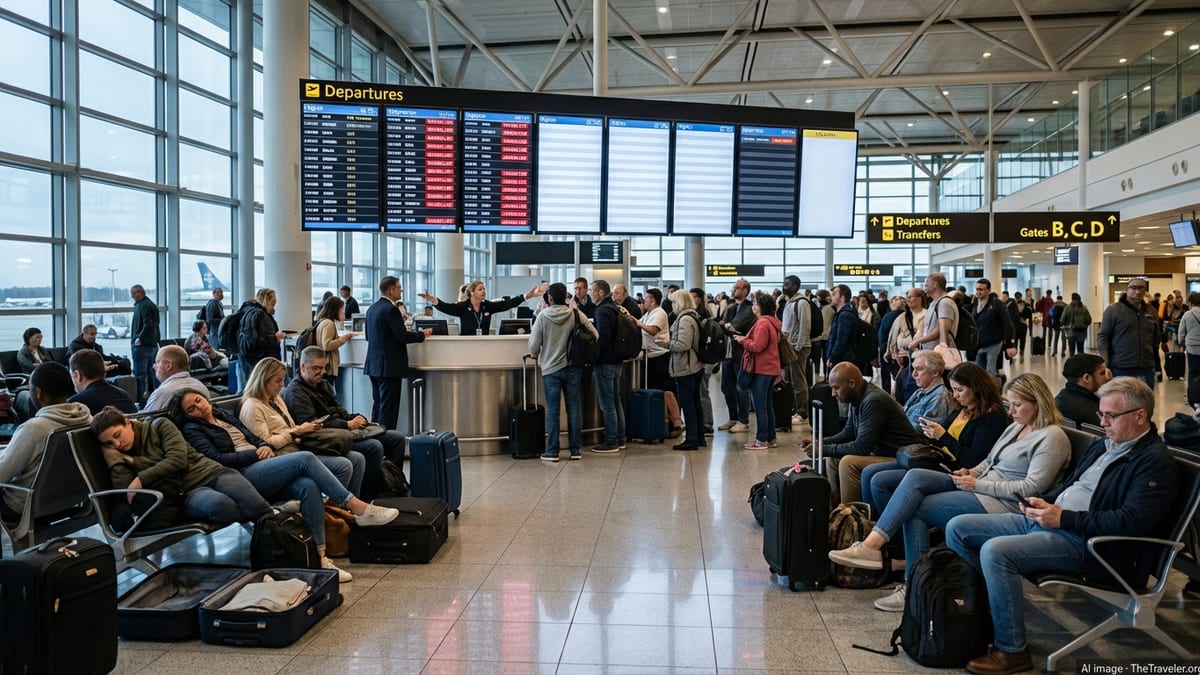
Air Astana suspends UAE flights amid heightened regional risk
Kazakhstan’s flag carrier Air Astana has halted passenger services between Kazakhstan and the United Arab Emirates following a new flare-up in regional tensions centered on the Gulf. Publicly available information from regional news outlets indicates that the airline has cancelled flights linking Almaty and Astana with Dubai after missile and drone attacks were reported across several Gulf states in mid-July.
Coverage from Kazakhstan-based and regional media shows that Air Astana initially cancelled Dubai flights scheduled for 12 July, then extended the suspension to include services on 13 and 14 July as assessments of airspace and operational risks continued. The pause affects both leisure travelers heading to the UAE’s tourism hubs and transfer passengers using Dubai as a connecting gateway between Asia, Europe and the wider Middle East.
Industry reports state that the airline had only recently rebuilt its Dubai network, bringing back nonstop services from Almaty in June and from Astana in early July after an earlier period of disruption tied to closures of Iranian airspace. The renewed halt illustrates how quickly airlines in the region can be forced to reassess routing and scheduling decisions when the security picture changes.
Air Astana has indicated through public updates that affected passengers are being offered options such as rebooking on later dates or requesting refunds, in line with standard industry practice when cancellations are driven by external events. Travelers holding tickets on Kazakhstan–UAE routes are being encouraged, through airline statements carried by news outlets and travel agents, to monitor flight status closely and stay alert for further schedule changes beyond mid-July.
Missile attacks deepen uncertainty over Gulf airspace
The airline decisions are unfolding against the backdrop of a volatile security environment in the Gulf. According to widely reported coverage by international and regional media, multiple Gulf countries, including the United Arab Emirates and Kuwait, reported intercepting missiles and drones in recent days after a new round of United States strikes on targets in Iran. Shrapnel from intercepted projectiles was reported in several locations, adding to public concern.
These developments follow months of intermittent disruption to air corridors around the Strait of Hormuz and across parts of the northern Gulf, where airspace routing has already been altered to avoid areas considered high-risk. Aviation analysts note that carriers have increasingly relied on longer detours and higher fuel burn to maintain schedules, with some operators suspending routes entirely when risk thresholds are exceeded.
Recent background reporting on the 2026 aviation season shows that earlier Iranian retaliatory strikes led to temporary suspensions and widespread cancellations at key hubs, including Dubai and Kuwait, after damage to airport facilities and short-term airspace closures. Although many operations have since resumed, the latest missile incidents have reinforced concerns among airlines over the potential for sudden restrictions or infrastructure damage.
Regulators and air navigation authorities across the region continue to update guidance for carriers, and publicly available notices show that some flight paths have been adjusted to maintain separation from conflict-affected areas. This evolving environment has made flight planning more complex and has contributed to a patchwork of suspensions, reroutes and rolling timetable changes affecting both regional and international passengers.
Jazeera Airways issues fresh travel advisory for Kuwait operations
Amid this broader backdrop, Kuwait-based low-cost carrier Jazeera Airways has published new travel alerts advising passengers to pay close attention to schedule updates and to avoid unnecessary trips to the airport when operations are disrupted. The airline’s travel advisory pages, updated in early July, outline changing arrangements for flights that have been affected by Kuwait’s airspace restrictions and the ongoing recovery of airport infrastructure.
Publicly available information on Kuwait’s aviation sector indicates that Kuwait International Airport has seen extended disruption this year following drone strikes and security incidents, with partial reopening for select destinations taking place only after several weeks of closure. During earlier phases of the crisis, Jazeera Airways temporarily shifted part of its operation to Qaisumah in Saudi Arabia, using ground transfers to move passengers between Kuwait and the alternative gateway.
The latest Jazeera advisories emphasize that passengers should check flight status through official channels before leaving for the airport and await direct communication from the airline in case of cancellations. Guidance also notes that flights may be retimed or rerouted at short notice depending on airspace clearance and capacity limits at Kuwait’s main terminals, which are still in the process of scaling back up after earlier damage.
Travel industry observers say Jazeera’s communication reflects a wider shift among regional carriers towards more frequent use of online alerts and app-based notifications during periods of instability. With Kuwait’s air traffic patterns still normalizing, the airline’s statements suggest that travelers should be prepared for a less predictable operating environment through the peak summer travel period.
Impact on passengers and regional connectivity
The combination of Air Astana’s suspension of UAE flights and Jazeera Airways’ evolving travel advisories underscores the fragility of air connectivity across the northern Gulf at a time of heightened geopolitical strain. Passengers traveling between Central Asia, the Gulf and South Asia rely heavily on hub airports such as Dubai and Kuwait for connections, meaning that individual route closures can have cascading effects across multiple itineraries.
Travel agents and online booking platforms are reporting a surge in itinerary changes, with some passengers opting to rebook through alternative hubs in Doha, Riyadh or Istanbul where schedules remain more stable. However, capacity constraints and longer routing to avoid sensitive airspace are contributing to higher fares and longer journey times, placing additional pressure on travelers seeking to reach family or make business trips during the busy summer season.
For Air Astana customers, the immediate concern is the lack of direct links to the UAE, a key leisure and shopping destination and a major connecting point for long-haul flights to Europe, North America and East Asia. For Jazeera Airways passengers, uncertainty centers on whether scheduled departures will operate as planned, and how quickly the airline can restore a consistent timetable from Kuwait as infrastructure and security conditions evolve.
Analysts note that while some Gulf carriers have developed extensive contingency plans after previous crises, the current mix of missile threats, shifting airspace restrictions and localized damage at airports introduces a level of complexity that is difficult to fully anticipate. As a result, travelers are being urged by airlines and travel intermediaries to build in additional time, maintain flexible plans and stay in close contact with carriers in the days leading up to departure.
What travelers should watch in the days ahead
Looking ahead, the key variables for passengers will be the pace at which airspace advisories are updated and whether the recent missile incidents prompt longer-term routing bans or infrastructure repairs at affected airports. Any decision by authorities to expand or extend airspace closures over parts of the Gulf would likely force further cancellations or diversions, particularly for airlines that rely on narrow performance margins on long-haul sectors.
Travelers with bookings on Air Astana’s Kazakhstan–UAE routes are advised, based on the pattern of recent announcements, to monitor airline statements for any extension of the current suspension beyond mid-July and to review options for rebooking via alternative hubs if travel is time-sensitive. It remains possible that the pause could be prolonged if regional tensions remain elevated or if overflight conditions along preferred corridors do not improve.
For those flying with Jazeera Airways, the carrier’s own travel alerts remain the primary source for operational updates, including terminal arrangements, bus transfers where applicable and any shifts in departure times. Given Kuwait’s experience with previous closures and partial reopenings, passengers may continue to see a higher-than-normal level of schedule adjustments through the remainder of the summer.
More broadly, the latest developments highlight how quickly regional security events can ripple through global aviation networks. For now, airlines serving the Gulf are walking a narrow line between maintaining vital links for residents and expatriates and responding prudently to changing risk assessments, leaving passengers to navigate a travel landscape marked by both resilience and ongoing uncertainty.