


More news on this day
Families flying in Europe are set to benefit from sweeping new protections as Germany lines up with Spain, Portugal and Italy behind upgraded EU air passenger rules that guarantee free seating for children with parents, curb controversial booking fees and tighten obligations on airlines to assist travellers when flights go wrong during the peak summer season.
Get the latest news straight to your inbox!
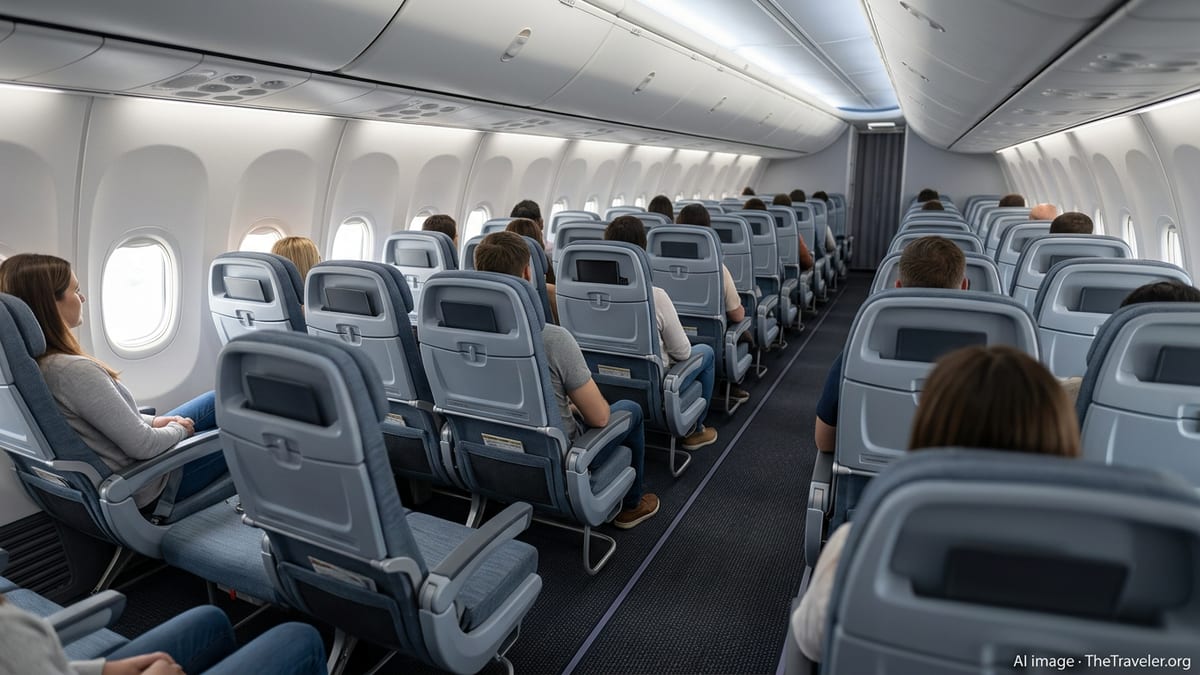
New EU deal locks in free family seating and name-fix fee ban
A political agreement between the European Parliament and EU governments on overhauling air passenger rights is reshaping what airlines can charge for in Europe. According to publicly available information from EU institutions, the updated framework clarifies long-contested practices around seating, baggage and add-on fees, while reinforcing care obligations in cases of delay and cancellation.
Central to the reform is a new requirement for airlines operating in the European Union to seat children under 14 next to a parent or accompanying adult at no extra cost. Guidance from EU transport authorities indicates that carriers will no longer be able to nudge families into paid seat selection simply to avoid separation, a tactic that has drawn sustained criticism from consumer groups.
The deal also targets another source of frustration for passengers by prohibiting airlines from charging to correct minor spelling mistakes in passenger names on tickets. Recent summaries of the agreement note that simple typographical errors must be fixed free of charge, limiting the scope for carriers to impose high amendment fees for what are essentially clerical corrections.
These measures are being introduced as amendments to the EU’s long-standing air passenger rights regime, first adopted in 2004. Legislative trackers show that, following the provisional accord reached in mid-2026, formal approval by both Parliament and Council is expected by early August 2026, with application scheduled after a transition period to give airlines time to adapt booking and seating systems.
Germany steps up enforcement alongside southern European pioneers
While the new rules will apply across all EU member states, Germany is emerging as a key supporter of tougher, coordinated enforcement, adding weight to efforts long driven by Spain, Portugal and Italy. German consumer organisations have recently highlighted the upcoming guarantee of family seating and no-cost name corrections in national guidance on the revised passenger rights framework, signalling a shift from debate to practical implementation.
Spain, Portugal and Italy have already used national consumer and aviation authorities to challenge practices such as charging for adjacent seats for families and vulnerable travellers. Spanish consumer authorities previously imposed multimillion-euro fines on several low cost airlines for practices that included surcharges for families wishing to sit together and for check-in related services, according to official announcements. In Italy, the national civil aviation authority has for several years warned airlines that children and passengers with reduced mobility must be seated near companions without extra fees, under threat of financial penalties.
Publicly available information from Spain’s European Consumer Centre indicates that a wider coalition of countries, including Germany and Portugal, has backed coordinated complaints over airline pricing of hand luggage and seating. By throwing its weight behind the new EU-level rules, Germany signals that those concerns are now being addressed through a common legislative route rather than isolated national actions.
The convergence of large markets such as Germany, Spain, Italy and Portugal around a stricter interpretation of consumer protection in air travel is expected to increase pressure on airlines to harmonise their policies across the bloc. Industry observers note that it will be harder for carriers to maintain different fee structures by country once the revised regulation is in force and national authorities begin applying aligned standards.
Stronger assistance for delays and airport disruption
The reform goes beyond fees to reinforce what happens when flights are delayed, diverted or cancelled, a recurring issue during Europe’s congested summer travel seasons. Briefings on the agreement state that airlines’ duty of care for stranded passengers is being clarified and, in some cases, expanded, with clearer thresholds for when meals, refreshments and accommodation must be offered.
Under the updated rules, travellers facing long waits are entitled to refreshments after relatively short delays and to meals as the disruption lengthens. For overnight delays, airlines are expected to provide hotel accommodation for up to three nights when problems are outside the carrier’s control, such as severe weather or air traffic control strikes, while maintaining more extensive support where the airline is responsible.
The package also addresses the needs of passengers with disabilities and reduced mobility. Summaries of the legislative agreement indicate that when such passengers miss a flight because airport assistance failed to bring them to the gate in time, they will have a clearer right to rerouting, assistance and compensation. This is intended to avoid gaps where responsibility moves between airport operators and airlines, a long-standing complaint among disability advocates.
National authorities in countries such as Italy and Spain, which have already taken a firm stance on family seating and mobility assistance, are expected to use the new EU framework to monitor how airlines and airports handle large-scale disruptions, particularly during peak holiday periods when support services are most strained.
Crackdown on opaque add-on pricing and baggage rules
The revised rules are also designed to address the growing complexity of airline pricing, where low advertised base fares are often followed by multiple charges for seat selection, check-in, baggage and payment methods. According to European Parliament documentation on the legislative process, the compromise text seeks to ensure that the total price, including unavoidable fees, is clear from the outset and that key elements of a standard journey cannot be unbundled into excessive extras.
One notable pillar of the reform is a move toward greater consistency on baggage. Parliament briefings and Council papers describe efforts to enshrine the right for passengers to carry at least one personal item on board at no extra cost, with reference to a bag such as a small backpack. The debate over minimum standards for cabin baggage dimensions and weight continues, but both institutions have signalled support for preventing airlines from effectively eliminating free carry-on options through restrictive size limits.
These changes build on earlier enforcement actions by Spain and allied countries that challenged fees for standard cabin bags on certain low cost carriers. With Germany and Portugal now fully aligned behind the EU-level solution, consumer advocates expect airlines to face closer scrutiny if they attempt to sidestep the spirit of the new rules through complex fare families or ancillary bundles.
Travel industry analysts note that carriers may respond by adjusting base fares upward to compensate for lost ancillary revenue, but passengers are likely to benefit from clearer comparisons between offers. Transparent rules on what is included in a ticket, together with firm bans on certain types of surcharges, are expected to make it easier for travellers to understand and assert their rights when disputes arise.
What travellers can expect before the next peak summer
The legislative timetable set out by EU institutions indicates that the upgraded air passenger rights regime still requires final legal checks and formal adoption by both Parliament and Council. Once that step is completed, the regulation will enter into force following publication in the EU’s Official Journal, with a subsequent implementation period for airlines and enforcement bodies.
Consumer agencies in Germany, Spain, Portugal and Italy are already updating guidance tools, including online claim calculators and advisory portals, to reflect the forthcoming changes. These materials emphasise that, once the new rules apply, passengers should no longer encounter seat selection surcharges to sit next to children under 14, nor be asked to pay simply to correct a minor spelling error in their name.
Travellers are being advised to retain booking confirmations, boarding passes and written communications from airlines when problems occur, as documentation will remain crucial to securing refunds, rerouting or compensation. Published information from EU bodies underlines that the modernised framework is intended to make it simpler and faster to process such claims, including in cross-border cases where passengers book through intermediaries.
For airlines, the months ahead will involve reconfiguring reservation systems, revising fare structures and retraining customer-facing staff to apply the new standards consistently across the single market. With major states led by Germany, Spain, Portugal and Italy signalling a readiness to enforce the rules robustly, the coming peak seasons are expected to test how quickly Europe’s carriers adapt to an environment where family seating, basic name corrections and core assistance obligations can no longer be monetised as optional extras.