


More news on this day
Air travel across the Middle East has been hit by a fresh wave of disruption as FlyDubai, Air India Express, El Al and Pakistan International Airlines suspend multiple flights and report extensive delays on key routes linking the United Arab Emirates and Israel, particularly services touching Dubai and Tel Aviv.
Get the latest news straight to your inbox!
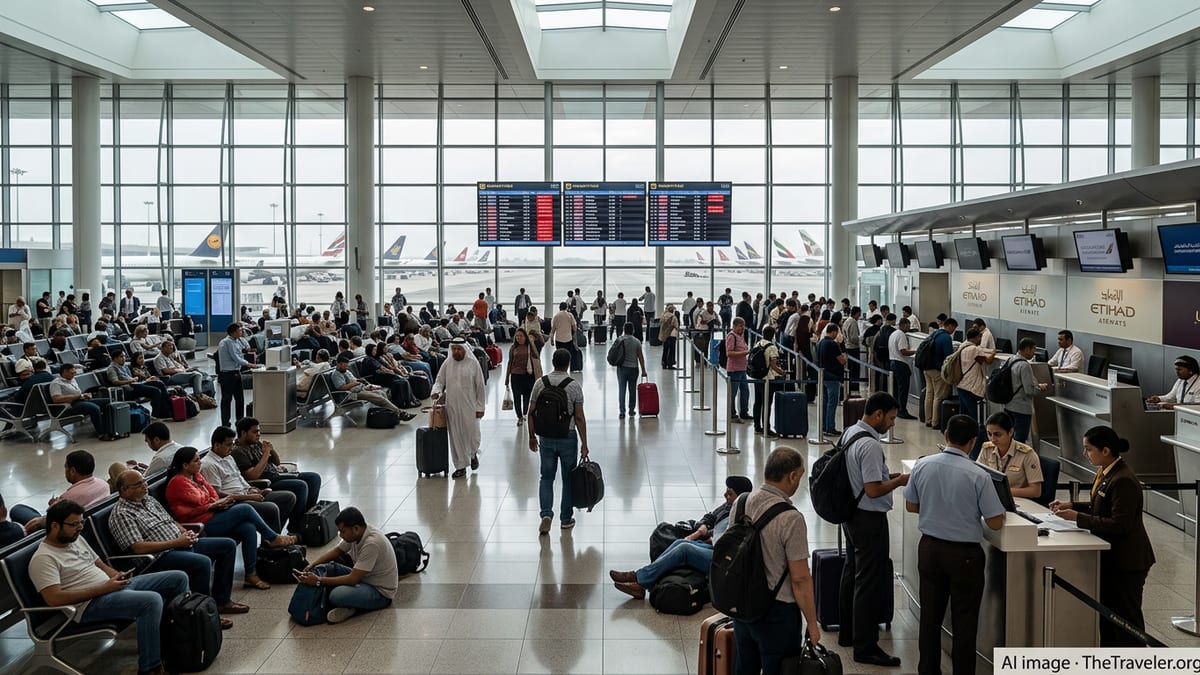
Seven Flights Scrapped and Schedules Cut Back
According to recent operational updates and regional media coverage, at least seven flights operated by FlyDubai, Air India Express, El Al and Pakistan International Airlines have been cancelled on short notice, with several more departures and arrivals facing rolling delays. The latest disruptions concentrate on services connecting Dubai with Tel Aviv and other regional hubs, compounding an already fragile network following months of airspace restrictions and security concerns.
FlyDubai, the Dubai based low cost carrier, has periodically trimmed its schedules to Israel and selected Middle Eastern destinations in response to shifting airspace availability and demand. Publicly available information indicates that the airline has consolidated some services and rerouted others, leaving gaps on previously frequent city pairs. Passengers booked on early morning and late night departures have been among the most affected as carriers seek to concentrate limited operations into the busiest daytime slots.
Air India Express has also reduced movements through Dubai and Tel Aviv following broader decisions by the Air India Group to curtail regular schedules across parts of the Gulf and Israel. Recent media notes show that the airline has leaned on ad hoc and rescue style flights rather than a full commercial timetable, resulting in cancellations on several previously advertised rotations. This has translated into a patchwork of service on certain India–UAE and India–Israel routes, with some flights operating one day and not the next.
El Al and Pakistan International Airlines have tightened their operations around Israel and the Gulf as well. El Al has focused on a reduced network structure to and from Tel Aviv, prioritising core markets and essential traffic while trimming marginal frequencies. Pakistan International Airlines, which maintains links to Gulf hubs used by South Asian travellers heading onward to Israel and Europe, has withdrawn a handful of rotations and warned of ongoing schedule volatility.
Dubai and Tel Aviv Bear the Brunt
Dubai International Airport and Ben Gurion Airport near Tel Aviv continue to absorb the largest share of the disruption. Both gateways sit at the centre of dense transfer networks, and when airlines suspend even a small number of flights, the impact ripples far beyond point to point traffic. Travellers connecting between Asia, Europe and Africa through Dubai have reported missed onward flights and last minute rebookings as altered departure times throw off tightly planned itineraries.
At Tel Aviv, a reduced number of international services has narrowed options for both outbound and inbound passengers. El Al’s limited schedule, combined with cutbacks by foreign carriers, means fewer daily departures to major cities. When flights are cancelled, re accommodation is often constrained to the next available service, which can be at a different time of day or even a different date compared with the original booking.
Publicly available airport data and airline statements suggest that departure banks at both airports have been reshaped into shorter, more concentrated waves of flights. This can create congested check in and security queues during peak windows while leaving off peak periods unusually quiet. For passengers, the result is a less predictable travel experience, with longer ground times and a higher likelihood of late notice gate changes.
For the wider region, the interruptions at Dubai and Tel Aviv also affect secondary airports that rely on connections through these hubs. Cities in India, Pakistan, Eastern Europe and the eastern Mediterranean that are primarily linked to global networks via Dubai or Tel Aviv may see reduced seat availability and higher fares as airlines work with slimmer schedules.
Security Tensions and Airspace Restrictions Underpin Disruptions
The latest cancellations and delays come against a backdrop of elevated security tensions across parts of the Middle East. In recent months, several regional airspaces have at times been restricted or closed, prompting airlines to divert, reroute or suspend flights. Published coverage from regional outlets highlights how carriers serving Dubai and Tel Aviv have repeatedly adjusted operations as air navigation authorities revise permitted corridors.
Even when airspace remains open, airlines have tended to adopt longer routings that skirt sensitive areas, adding flight time and complicating crew rostering. These operational challenges reduce the flexibility carriers normally have to recover from delays or aircraft rotations, making it harder to maintain punctuality. When disruptions cascade through a day’s schedule, cancellations can become the only viable option to reset operations.
In parallel, some airlines have reassessed the commercial viability of certain routes while uncertainty persists. Demand on leisure and discretionary business travel segments into conflict adjacent zones has softened at various points, leading carriers to prioritise routes with more resilient passenger flows. This has reinforced the focus on core hubs such as Dubai while thinning out frequencies to destinations that depend heavily on connecting traffic.
Regulatory responses have also played a role. Passenger caps and operational limits at key airports, introduced at times to manage safety or infrastructure pressure, restrict the number of movements carriers can schedule. When these caps tighten without much notice, airlines must choose which flights to protect and which to cancel, often resulting in short term suspensions similar to the seven flights currently reported as cut from schedules.
Knock On Effects for Travellers and Regional Tourism
The immediate consequence for travellers is a rise in uncertainty around departure and arrival times, even when tickets have been booked well in advance. Reports from travel agents and passenger forums indicate that many customers flying between South Asia, the Gulf and Israel have had to accept rebookings on alternative dates, routings through third country hubs, or itineraries involving overnight stays that were not part of the original plan.
For tourism and business travel into the United Arab Emirates and Israel, these irregular operations pose additional challenges. Tour operators reliant on predictable group arrivals into Dubai or Tel Aviv may face last minute itinerary changes, while conference organisers must plan around the risk that international participants could be delayed. Some travellers have opted for hubs less affected by the latest disruptions, such as Istanbul or certain European gateways, diluting traffic that would normally flow through the Gulf and Israel.
Regional tourism boards and hospitality businesses are monitoring developments closely, as connectivity is a critical driver of visitor numbers. While both Dubai and Tel Aviv retain significant air links compared with many cities in the region, any sustained period of cancellations and delays can influence how travellers perceive reliability and ease of access. This, in turn, can affect booking patterns for peak seasons and major events.
Insurance providers and corporate travel managers are also adapting policies to account for higher disruption risk on specific routes. Some companies have begun recommending longer connection times or alternative routings for staff flying through affected hubs, accepting modest increases in cost in exchange for a greater margin of operational safety.
What Passengers Should Do Now
For passengers scheduled to travel on FlyDubai, Air India Express, El Al or Pakistan International Airlines in the coming days, industry guidance strongly favours proactive monitoring. Travellers are advised to check the latest status of their flights through airline channels on the day of departure and to enrol in notification services where available so that any schedule changes are communicated quickly.
Those with time sensitive connections may wish to consider building additional buffers into their itineraries, particularly when transiting Dubai or Tel Aviv. Choosing slightly longer connection windows can provide protection against moderate delays and reduce the likelihood of missed onward flights. Where possible, flexible tickets that allow date or routing changes without heavy penalties can also help manage uncertainty.
Experts in the travel sector note that, despite the disruption, the vast majority of flights in and out of the region are still operating. However, the current environment rewards preparation. Having a clear understanding of airline rebooking rules, being familiar with alternative routing options and keeping essential items in carry on luggage can make an unexpected cancellation or delay easier to navigate.
With geopolitical and operational conditions in flux, further adjustments to Middle Eastern flight schedules remain possible. Travellers planning trips that involve Dubai, Tel Aviv or neighbouring hubs in the weeks ahead are likely to benefit from staying informed and maintaining flexible plans as airlines continue to adapt their networks.