


More news on this day
San Francisco International Airport experienced another day of severe disruption on June 26 as multiple carriers, including Air Canada, Southwest, SkyWest, and United Airlines, suspended several departures and logged well over 100 delays, stranding travelers and disrupting major routes across California and to New York.
Get the latest news straight to your inbox!
Wave of Cancellations Hits Key Short-Haul and Transcontinental Routes
Publicly available flight-status boards for San Francisco International Airport on June 26 showed a cluster of cancellations and long delays affecting at least seven departures and arrivals operated by Air Canada, Southwest, SkyWest, and United. The interruptions were concentrated on some of the airport’s most heavily used short-haul corridors within California, as well as transcontinental links to New York.
Disrupted services included regional connections to Arcata–Eureka, Burbank, Ontario, and Sacramento, alongside mainline flights to the New York area. Data from flight-tracking services indicated that several of these flights were either scrubbed outright or held for extended periods, leaving passengers facing missed connections and unplanned overnight stays.
The pattern aligned with a broader trend of operational strain at San Francisco International Airport in recent weeks, where delay averages have risen sharply compared with the same period last year. Travelers reported experiencing rolling departure-time changes and prolonged waits on aircraft that had already boarded.
While the exact number of affected passengers is not yet clear, the combination of cancellations and widespread delays on high-demand routes suggests that the impact likely extended well beyond the Bay Area, cascading through connecting hubs across the United States and Canada.
Construction, Capacity Limits, and Weather Combine to Slow Traffic
Recent months have seen San Francisco International Airport operating under a series of constraints that have reduced its capacity to handle peak traffic. Runway resurfacing and airfield construction, combined with tighter federal landing rules and recurring low ceilings along the coast, have significantly limited the number of arrivals the airport can process in a given hour.
Published advisories from aviation authorities describe ground delay programs and arrival flow restrictions that periodically force airlines to hold or meter flights before they depart for San Francisco. When arriving capacity falls, departures from other airports are slowed or capped, often triggering a cascading effect of missed rotations, crew timing issues, and late aircraft arriving for subsequent legs.
On short-haul routes such as San Francisco to Sacramento, Burbank, and Arcata–Eureka, this combination of operational pressures can be especially disruptive. These flights are typically scheduled tightly, with aircraft and crews cycling through multiple cities in a single day. A delay or cancellation early in the rotation can therefore ripple through several downstream flights, compounding the impact for travelers.
Weather continues to play a pivotal role. San Francisco’s well-known coastal fog, when combined with stricter arrival spacing requirements, frequently forces air traffic managers to reduce the arrival rate, prompting ground delays, diversions, and, at times, pre-emptive cancellations by airlines that see little chance of operating certain legs on schedule.
Air Canada, Southwest, SkyWest, and United Under Pressure
The disruptions on June 26 highlighted how exposed some of San Francisco’s largest operators are to even modest reductions in airport capacity. United, which uses the airport as a major hub, and SkyWest, which operates many United Express regional services, bore a significant share of the cancellations and long delays, particularly on shorter intra-California and Pacific Northwest routes.
Air Canada flights to and from San Francisco also experienced knock-on effects as inbound and outbound services struggled to align with revised arrival and departure slots. For passengers attempting to connect to long-haul itineraries, a delay of an hour or more on a San Francisco leg can mean missed evening departures from Canadian hubs and limited rebooking options.
Southwest, a dominant carrier on many short-haul California and West Coast routes, likewise faced schedule interruptions. Although the airline does not use San Francisco as a primary hub in the same way it does Oakland or other airports, its flights linking San Francisco with Burbank, Ontario, and Sacramento are an important part of the wider intra-state network, and disruptions there can reverberate through the broader system.
Operational data over recent months show that all four airlines have been navigating a challenging environment, with construction-related bottlenecks at San Francisco intersecting with summer travel demand. Even when airlines anticipate delays and build in additional buffer time, sudden ground delay programs or changing weather conditions can outpace those contingency plans.
Passengers Face Long Lines, Missed Connections, and Limited Alternatives
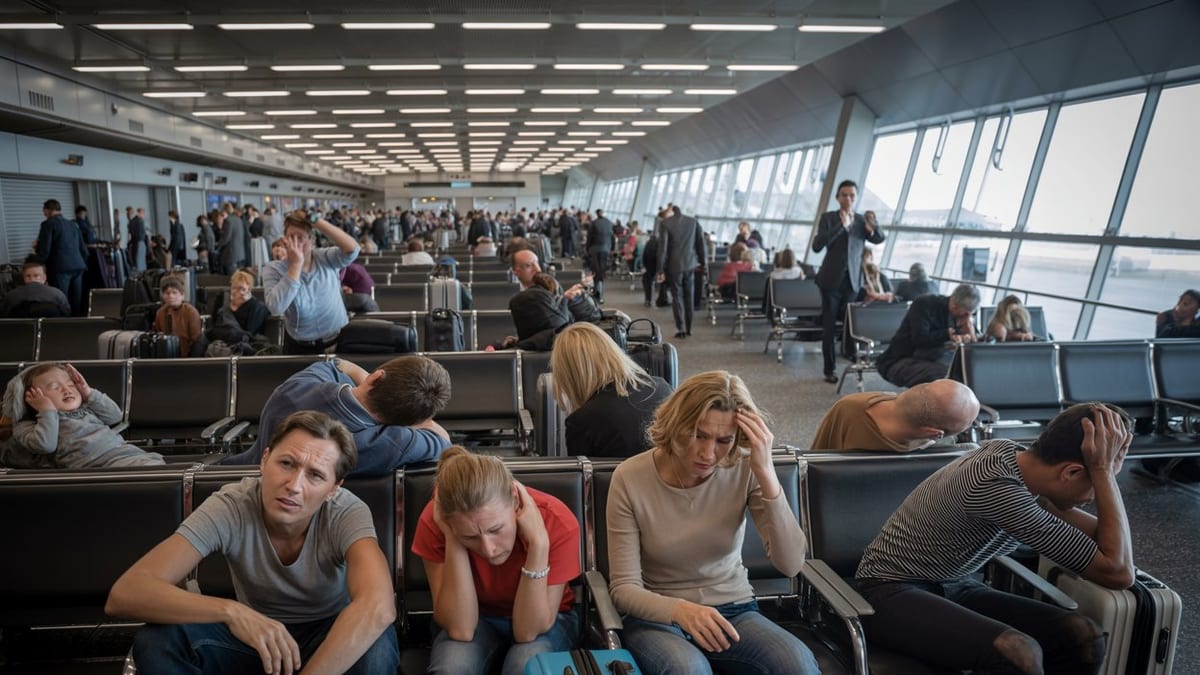
For travelers, the immediate effects of the June 26 disruptions were familiar but frustrating. Passengers described crowded gate areas at San Francisco International Airport, long queues at customer service counters, and difficulty securing same-day alternatives once their original flights were canceled or delayed beyond usefulness.
Those bound for regional destinations such as Arcata–Eureka often had few realistic options once flights were scrubbed. With limited daily frequencies and a small number of carriers serving those routes, many travelers faced the choice of waiting until the next available departure or seeking ground transportation that could involve hours on California’s coastal or inland highways.
On longer-haul routes to New York and other transcontinental destinations, missed connections posed a separate challenge. Travelers whose San Francisco departures slipped by 60 to 90 minutes found that onward evening flights from East Coast hubs were no longer viable, forcing involuntary overnight stays and rebookings into already crowded next-day services.
Reports from recent days suggest that some passengers have begun shifting, where possible, to alternative Bay Area airports such as Oakland or San Jose for certain itineraries, particularly when schedules allow for similar departure times with fewer reported delays. However, for many international and long-haul transcontinental journeys, San Francisco remains the primary gateway, leaving limited flexibility when large-scale disruptions occur.
Broader Questions Over SFO’s Reliability in Peak Season
The latest wave of cancellations and delays has intensified scrutiny of San Francisco International Airport’s reliability heading into the core summer travel period. Industry analyses and public discussion have increasingly pointed to the airport’s combination of airfield constraints, complex weather patterns, and heavy hub operations as a recipe for above-average disruption compared with other major U.S. gateways.
Travel data from recent weeks indicate that average delay times at San Francisco have climbed sharply year over year, even before accounting for days of particularly severe disruption. For passengers, the practical implication is the need to factor in larger connection buffers, earlier departures, or flexible travel dates when itineraries depend on San Francisco, especially for critical long-haul connections.
Consumer-rights organizations and travel experts have encouraged passengers to document delays carefully, monitor their flights through both airline and third-party trackers, and stay aware of any compensation or rebooking options that might apply under airline policies or cross-border regulations. While not all delays are compensable, detailed records can help travelers navigate claims processes when they are.
With ongoing construction and procedural constraints at San Francisco expected to continue impacting operations over the coming months, the events of June 26 may be less an isolated incident and more an indication of what travelers can expect throughout the busy summer season. For those planning trips involving San Francisco International Airport, the day’s disruptions serve as a reminder that building in extra time and backup options is increasingly essential.