

More news on this day
A fresh strike on Israel has triggered a cascading shutdown of Middle East airspace, crippling major Gulf hubs and leaving thousands of tourists stranded in Dubai as airlines race to contain one of the worst aviation disruptions since the pandemic.
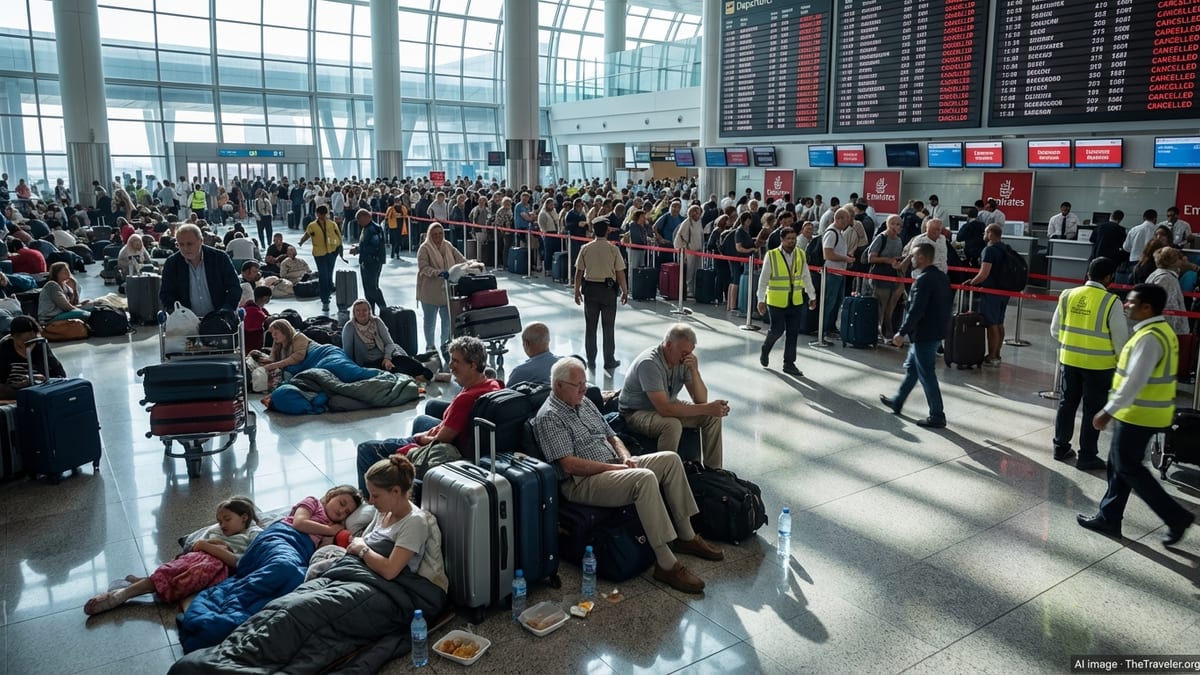
Airspace Shutdowns Spark Chain Reaction Across Gulf Hubs
The latest round of strikes on Israel, and subsequent retaliatory attacks across the region, has prompted authorities in the United Arab Emirates and neighboring states to tighten or fully close sections of airspace, forcing carriers to cancel or divert hundreds of flights in a matter of hours. Dubai International Airport, one of the world’s busiest hubs for international passengers, has been hit particularly hard as precautionary closures coincide with reports of missile activity and debris in the wider Gulf.
Data from regional aviation trackers and airline disclosures indicate that more than 2,600 flights scheduled to operate across key Middle East gateways over the past 48 hours have been scrapped, with Dubai, Abu Dhabi, Doha, Kuwait and Bahrain bearing the brunt of the disruption. Emirates, flydubai, Etihad Airways, Qatar Airways and other major carriers have announced rolling suspensions of services as they await clearer security guidance and updated flight corridors from civil aviation authorities.
While some airlines are still technically listing limited services in schedules, industry analysts caution that many of these flights may not depart as planned, given the fluid security environment and the difficulty of planning safe routings around closed or contested airspace. The result is an unprecedented level of uncertainty for travelers transiting through the Gulf, a region that has marketed itself in recent years as a reliable, high-frequency connector between Europe, Asia, Africa and the Americas.
Tourists in Dubai Face Packed Terminals and Scarce Options
Inside Dubai International, scenes of confusion and fatigue have unfolded as stranded tourists queue at customer service desks, crowd around departure boards filled with red "canceled" notices and search in vain for alternative routes home. Many had been using the city as a transit point only to find their onward connections abruptly canceled, leaving them stuck in a destination they had never planned to enter beyond a brief layover.
Travelers report waiting hours to reach airline call centers or rebooking counters, as ground staff attempt to re-accommodate passengers on future services that may themselves be subject to change. With Emirates and flydubai canceling the vast majority of departures over the weekend, rebooking options within the region have rapidly dried up, pushing some tourists to look at circuitous routings via South Asia, Europe or North Africa where limited capacity remains.
Hotel availability in Dubai has tightened sharply as airlines and tour operators scramble to secure accommodation for displaced passengers. Local authorities and tourism officials have urged visitors to remain in close contact with their carriers and embassies, while also emphasizing that hotels, transport operators and emergency services in the city remain operational despite the aviation shutdown.
Wider Middle East Tourism Engine Grinds to a Halt
The crisis strikes at a moment when Middle East tourism had been on a strong upward trajectory, with regional travel spending recently surpassing pre pandemic levels and Gulf states promoting ambitious long term visitor targets. That momentum has stalled almost overnight, as airspace closures and security concerns prompt mass cancellations of holidays, conferences and major events from the Eastern Mediterranean to the Arabian Sea.
Industry bodies report that bookings into Dubai, Doha, Muscat and Jeddah have effectively frozen since the strike and retaliatory attacks, with travel agents in Europe and Asia advising clients to postpone or reroute trips away from the region. Cruise itineraries with planned calls in Gulf ports are being hastily redesigned, and organizers of trade fairs, sporting fixtures and cultural festivals are reassessing whether delegates and spectators will be able to reach host cities in the coming weeks.
The knock on effects are being felt across the wider tourism ecosystem. Hotels that were preparing for a strong early spring season are now fielding waves of cancellations, while restaurants, malls and attraction operators report a sudden drop in international footfall. For destinations such as the United Arab Emirates and Qatar, where tourism is a central pillar of economic diversification, the scale and speed of the disruption have raised fresh questions about the sector’s vulnerability to geopolitical shocks.
Governments and Airlines Roll Out Emergency Measures
In response to the chaos, Gulf governments and airlines have begun to deploy emergency measures aimed at stabilizing the situation and protecting stranded visitors. Authorities in the United Arab Emirates have coordinated with major carriers to provide hotel rooms, meal vouchers and ground transport where possible, prioritizing vulnerable passengers such as families with young children, the elderly and those with urgent medical needs.
Several foreign ministries, including those of European and Asian countries with large numbers of citizens in the region, have activated crisis units to map the location of their nationals and explore potential evacuation options should the shutdown persist. Consular hotlines have been inundated with calls from travelers unable to secure new tickets or worried about expiring visas and insurance coverage as enforced stays lengthen.
Airlines, for their part, are offering flexible rebooking policies and, in some cases, full refunds for passengers due to travel through affected hubs over the coming days. However, executives acknowledge that until airspace restrictions are eased and clear overflight corridors are agreed with regional regulators, they are limited in how quickly they can restore regular schedules. Operational teams are working around the clock to design contingency routings that avoid high risk zones while remaining commercially viable.
Uncertain Outlook for Regional Travel and Safety
With military tensions still high and no clear timeline for a sustained reopening of regional skies, travel experts warn that the disruption could extend well beyond the immediate wave of cancellations. Even once airspace gradually reopens, airlines may adopt more conservative routings, longer flight times and reduced frequencies on certain corridors, with higher operating costs likely feeding through to ticket prices.
Tourists currently stranded in Dubai and other Gulf cities are being urged to monitor official travel advisories, register with their embassies where possible and keep close track of airline updates rather than relying solely on static booking confirmations. Insurance providers are also fielding a surge in claims inquiries, as policyholders seek clarity on coverage for conflict related disruptions, extended hotel stays and missed connections.
For prospective visitors contemplating future trips to the Middle East, the images of crowded terminals, grounded aircraft and rolling cancellations are likely to weigh heavily on decision making in the short term. While regional tourism has shown resilience to past shocks, industry leaders acknowledge that restoring traveler confidence after such a visible and widespread aviation breakdown will require not only restored connectivity, but clear assurances around safety, crisis response and contingency planning.