

More news on this day
Global long-haul air travel is being upended as the US-Israel-Iran war triggers sweeping airspace closures, mass flight cancellations and sudden fare spikes on key routes linking Europe, Asia, Africa and Australia, stoking anxiety among travelers and placing unprecedented strain on major carriers.
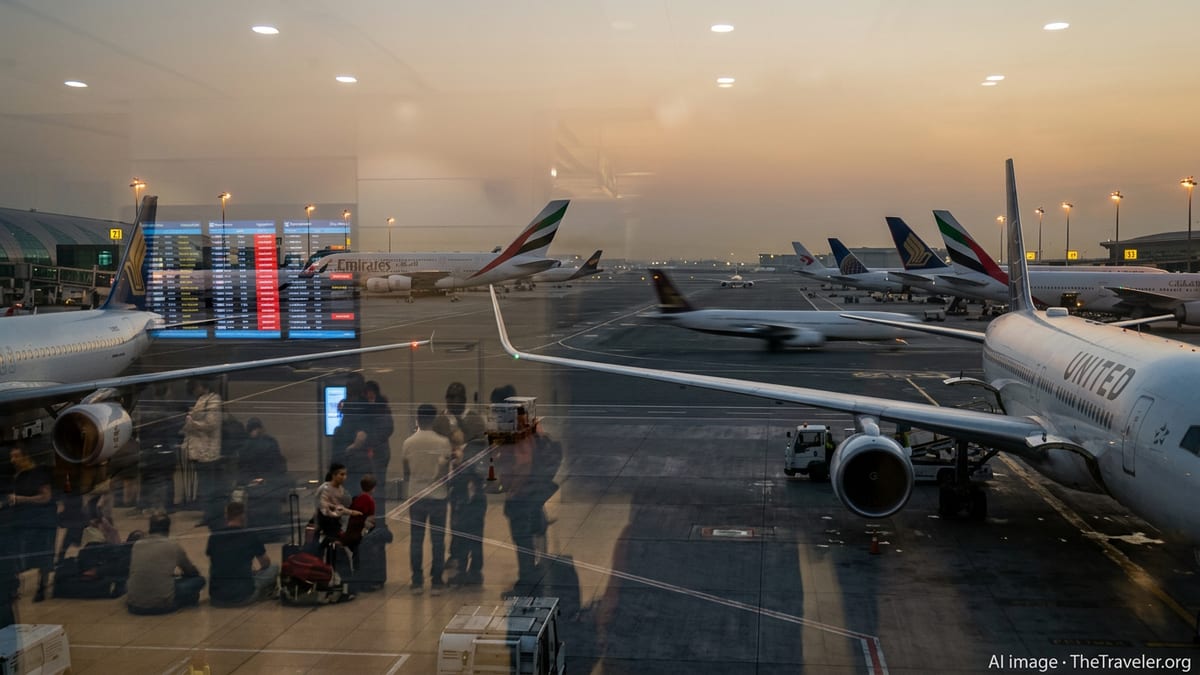
Long-Haul Networks Fracture as Hubs Go Dark
Since joint US and Israeli strikes on Iran began on February 28, large sections of Middle Eastern airspace have been closed or heavily restricted, abruptly severing some of the world’s most important long-haul corridors. Authorities in Iran, Israel, Iraq, Qatar, Bahrain and the United Arab Emirates have either shut or tightly limited civilian overflights, forcing airlines to cancel thousands of services and reroute many more over longer, costlier paths.
Key transit hubs in Dubai, Abu Dhabi and Doha, normally handling tens of thousands of connecting passengers each day, have seen large parts of their operations suspended at various points this week. Emirates, Etihad Airways and Qatar Airways, which together move around 90,000 passengers daily through their Gulf bases, have been forced to ground aircraft, consolidate schedules and prioritize evacuation and rescue flights while they await clearer guidance from regulators.
The result is a cascading disruption across long-haul networks. Flights that typically connect Europe and North America with destinations in South and Southeast Asia, Australasia and Africa through the Gulf are suddenly unavailable or severely reduced, squeezing capacity onto remaining routes via alternative hubs and sending prices sharply higher.
Flag Carriers Hike Fares as Capacity Vanishes
Major full-service airlines are rapidly adjusting pricing as they grapple with surging operating costs and evaporating capacity on their most lucrative long-haul routes. Emirates and Qatar Airways, whose business models depend on high volumes of connecting traffic over the Gulf, have sharply raised fares on the limited services still operating via alternative routings, while also introducing dynamic surcharges on itineraries that require significant detours.
European giants such as Lufthansa and British Airways are also under intense pressure. Lufthansa Group has suspended flights to a swathe of Middle Eastern destinations, including Tel Aviv, Beirut, Amman, Dammam, Erbil and Tehran, and has temporarily halted or reduced some services to the Gulf. With aircraft and crews tied up on elongated detour routes that skirt closed airspace, the carrier has less flexibility to maintain frequency, prompting steep price increases on remaining long-haul seats.
Singapore Airlines, which sits at a critical junction between Europe and Asia, has adjusted schedules and rerouted flights to avoid the conflict zone, lengthening flight times on some Europe bound services. Industry data and online booking screens show last minute business and premium economy fares between Asia and Europe jumping by several hundred percent in some cases, particularly for departures in the next two weeks, as travelers compete for scarce capacity.
Across alliance networks, fare rules are being tightened, discount buckets are disappearing and fuel and security surcharges are being updated in near real time. Aviation analysts say headline prices on certain long-haul routes have climbed by more than 200 percent compared to pre conflict levels, with some one way economy tickets now costing as much as typical round trips did only weeks ago.
Oil Shock and Detours Drive Unsustainable Cost Pressures
Behind the banner grabbing fare hikes lies a structural cost shock that airlines say is rapidly becoming unsustainable. The conflict has raised fresh fears over shipping security through the Strait of Hormuz, a chokepoint for global energy supplies, driving oil prices sharply higher and pushing up the cost of jet fuel, which already accounted for roughly 30 percent of airline operating expenses before the crisis.
At the same time, detours around closed airspace are adding hundreds to thousands of kilometers to some long-haul routes. Flights that once transited the Gulf now loop over Central Asia, the Caucasus or the Arabian Sea, increasing fuel burn, crew duty times and overflight fees paid to alternative states. Longer flight times also mean aircraft spend more hours in the air and fewer on the ground, reducing daily utilization and effectively shrinking fleet capacity.
Industry consultants warn that this combination of higher fuel costs, extra overflight charges and reduced utilization is forcing full service carriers to rethink which routes they can viably operate. Some marginal long-haul services have already been quietly dropped from schedules, while heavily trafficked trunk routes are seeing capacity concentrated into fewer, fuller flights with significantly higher average fares.
Executives at global airlines privately acknowledge that current pricing levels are politically and socially sensitive, but argue that without rapid fare adjustments they would simply not be able to cover the new cost base created by the war driven disruptions. Many also caution that if the conflict persists for weeks or months, today’s emergency surcharges may have to be built into standard pricing.
Travelers Face Panic, Sold Out Routes and Limited Alternatives
For travelers, especially those with urgent family, business or study commitments, the sudden dislocation of long-haul networks has quickly turned into a crisis. Over 20,000 flights have been canceled in a matter of days, stranding hundreds of thousands of passengers in and around the Middle East and forcing others to rebook at punishing prices or wait indefinitely for space on repatriation flights.
Popular long-haul routes between Europe and Australia, India, Southeast Asia and Southern Africa have been among the hardest hit. With most Gulf connections off the table, passengers are scrambling for itineraries via Singapore, Hong Kong, Istanbul or European and North American hubs. Many services in the coming week are either sold out or offer only a handful of premium seats at eye watering fares, fueling a sense of panic among those trying to reach or leave affected regions.
Reports from major airports describe chaotic scenes at airline service desks, with lines of travelers seeking rerouting, refunds or emergency accommodation. While carriers such as British Airways, Lufthansa and Singapore Airlines have introduced temporary change fee waivers on some routes, the sheer scale of the disruption means that even flexible policies cannot conjure up additional seats. In many cases, travelers are being told to delay non essential trips or accept complex multi stop itineraries involving overnight layovers and significant detours.
Consumer advocates warn that passengers are also running into the limits of standard travel insurance coverage, which often excludes wars and acts of conflict. This leaves many paying out of pocket for hotels, new tickets and incidental expenses, even as they confront some of the highest fares seen since the post pandemic rebound.
Aviation Ecosystem Braces for Prolonged Turbulence
The shock waves from the conflict are rippling far beyond airlines and passengers, shaking the broader aviation and travel ecosystem. Airport operators in the Gulf, whose business models depend on high volumes of connecting traffic, face sharp drops in passenger numbers and retail revenue. Ground handlers, duty free retailers, catering firms and airport hotels report sudden cancellations and significantly reduced footfall.
Aircraft leasing companies and financiers are closely monitoring exposure to affected carriers and routes, wary that prolonged disruption could weaken balance sheets already stretched by the pandemic and a rapid post crisis expansion. Cargo operators are also scrambling to adjust, as many long haul passenger flights that carry freight in belly holds are canceled or rerouted, squeezing capacity for high value shipments between Asia, Europe and North America.
Regulators and international aviation bodies are in near constant contact with airlines as they assess evolving security risks and work to map out temporary safe corridors. Industry leaders caution that even if airspace restrictions are partially eased in the coming days, restoring reliable, cost efficient long-haul connectivity will take considerably longer. Scheduling aircraft and crew, repositioning fleets and rebuilding passenger confidence in affected routes are all complex, time consuming tasks.
For now, the global aviation sector is operating in emergency mode. Emirates, Qatar Airways, Lufthansa, British Airways, Singapore Airlines and their peers are effectively managing a rolling crisis, balancing safety imperatives against intense commercial pressure. With oil markets volatile and the military situation fluid, neither airlines nor travelers have clarity on when long-haul fares and routes might return to something approaching normal.