


More news on this day
The long-planned extension of Milan’s driverless M5 metro line to Monza has reached financial close, with regional and local approvals aligning around a funding package of nearly 1.9 billion euros that clears the way for tendering and construction preparations.
Get the latest news straight to your inbox!
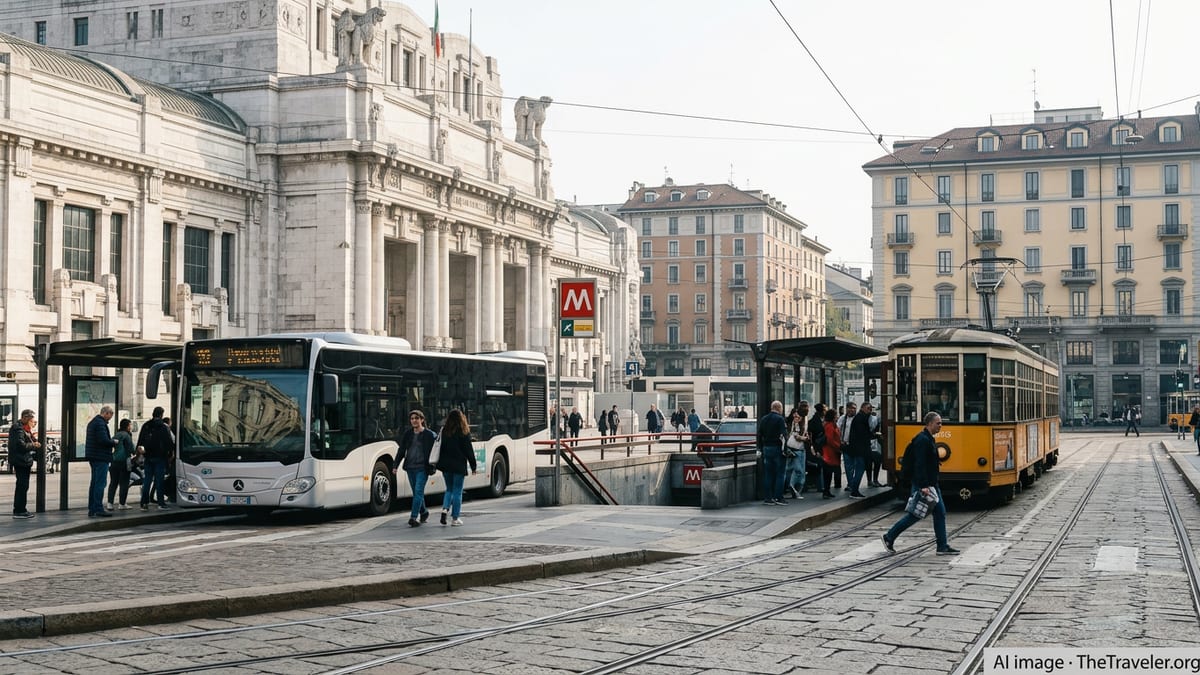
Financing package locks in nearly 1.9 billion euros
Recent budget documents and regional deliberations indicate that the M5 extension to Monza now has a defined financial framework of about 1.89 billion euros, covering design, civil works, systems and contingencies. The updated economic framework was approved in stages by the Lombardy Region and participating municipalities, allowing the project to move from feasibility and political negotiation into the implementation phase.
The financing structure combines national transport funds, regional resources and local contributions that were gradually assembled over several budget cycles. Public information on infrastructure spending shows that earlier allocations originally earmarked for other metropolitan projects were partially reallocated to ensure full coverage of the M5 Monza corridor, reflecting the line’s strategic priority within the wider Milan mobility plan.
With the financial close in place, the project sponsors can now rely on a stable cost estimate and a multi-year disbursement schedule. This framework is regarded as a prerequisite for launching major design-and-build contracts and for coordinating the extension with other rail and metro schemes in northern Milan and Brianza.
Reports also highlight that the approval of the updated budget has helped to absorb recent cost pressures, including inflation in construction materials and the complexity of tunnelling under dense urban districts. The current figure is significantly higher than initial projections made several years ago, but planners present it as consistent with similar European metro extensions of comparable length and depth.
Route, stations and travel-time gains
The extended M5 will add approximately 12.6 kilometres of new track to the existing “lilla” line, pushing the automated system beyond its current northern terminus at Bignami and into the municipalities of Sesto San Giovanni, Cinisello Balsamo and Monza. Once completed, the full line is expected to reach around 28 kilometres in length, creating a continuous driverless corridor from the western sections of Milan through the northern suburbs to the new Monza terminus.
Planning documents and recent press coverage describe a corridor with 11 new stations, including stops designed to serve dense residential quarters, retail areas and major road junctions. The final station, often referred to as Monza Polo Istituzionale or Monza Brianza in local coverage, is intended to become a key interchange between the metro network, suburban buses and regional rail services.
For travellers, the extension is expected to cut journey times between central Milan and northern municipalities by offering a direct, high-frequency alternative to existing suburban rail and road-based transport. The fully automated operation of the M5, with short headways and platform screen doors, is projected to provide a more predictable connection to Monza on match days, trade fairs and large events that now generate heavy demand on regional trains and roads.
The alignment is largely underground, which limits visual and noise impacts at street level but increases technical complexity. Engineering studies anticipate careful coordination with utilities, existing buildings and road infrastructure, especially in Sesto San Giovanni and Cinisello Balsamo, where the tunnel will pass under already congested corridors.
Key milestones and next steps toward construction
According to recent coverage, the definition of the new financial framework was followed by the formal approval of the convention between the project partners, a step that unlocked national funds and clarified governance responsibilities. This set the conditions for moving ahead with tender documentation and the launch of the main works contracts.
Municipal announcements from Monza and Milan indicate that the call for tenders covers the executive design and construction of civil works and non-system installations for the new section. The process is expected to attract major Italian and international consortia experienced in automated metro systems, reflecting the scale and technical demands of the project.
Timelines reported in local transport analyses suggest a phased schedule in which design activities and preparatory works would occupy the next few years, followed by full-scale construction. While an exact opening date has not been fixed, planning horizons referenced in public documents place the entry into service well into the next decade, taking into account both tunnelling times and systems integration with the existing M5 line.
Observers note that the financial close also enables more detailed coordination with other projects, such as the extension of Milan’s M1 line and planned upgrades to regional rail. This is considered important to avoid overlapping construction sites and to manage temporary disruptions to existing traffic flows in the northern metropolitan belt.
Regional mobility impacts for Milan and Brianza
Transport studies and local commentary describe the M5 Monza extension as a central component of a broader shift toward rail-based mobility in the Milan metropolitan area. By linking Monza and neighbouring municipalities directly to the metro grid, the project is expected to reduce car dependence for daily commuting and offer an alternative to congested radial highways connecting the two cities.
The corridor crosses some of the most densely populated urban areas in Lombardy, where current public transport relies heavily on buses feeding into existing metro and suburban rail nodes. A high-capacity, high-frequency driverless line is projected to reshape these patterns, enabling faster, one-seat rides to several employment and education hubs in Milan, as well as improved access to Monza’s historic centre and sports venues for visitors.
Analyses carried out for previous planning stages anticipate an increase in public transport ridership and a potential reduction in road traffic volumes, particularly during peak hours. The extension is also seen as an opportunity to accelerate urban regeneration around future station areas, where municipalities are discussing changes to land-use plans, parking policies and cycling infrastructure.
From a wider travel perspective, the project aligns with efforts to make access to northern Italy’s cultural and sporting attractions less car-dependent. For international visitors arriving in Milan, a through metro ride toward Monza could eventually complement existing regional trains, offering more flexibility when major events coincide with busy holiday periods.
What the extension means for travelers and future links
For residents and visitors, the financial close on the M5 Monza extension signals that a long-discussed project is moving into a more concrete phase. Although construction and commissioning will take years, the confirmation of funding allows transport agencies and tourism operators to start planning around a future in which Monza is directly linked to Milan’s automated metro network.
Travelers who currently rely on regional trains from Milan’s main stations to reach Monza may eventually gain an alternative route from several metro interchanges across the city. This could prove especially relevant during major sporting fixtures at the Autodromo Nazionale di Monza, concerts and large events, when existing rail and road links are often saturated.
Looking further ahead, the extension is frequently mentioned alongside other planned improvements to Milan’s metro, tram and suburban systems, including the M4 line and a possible sixth metro line. Publicly available planning material presents these projects as mutually reinforcing, with the M5 to Monza helping to create a more ring-like structure that distributes demand more evenly around the metropolitan area.
While many detailed decisions on station design, urban integration and construction phasing remain to be finalized, the closure of the financing gap marks a key turning point. For the travel and tourism sector, it underlines a long-term trend toward more seamless, rail-focused access across one of Italy’s busiest economic and cultural corridors.