


More news on this day
As Austria’s flagship Koralmbahn high speed rail line approaches full operation, ÖBB is pressing ahead with a large scale reforestation and ecological restoration program designed to leave the corridor greener and more climate resilient than before construction began.
Get the latest news straight to your inbox!
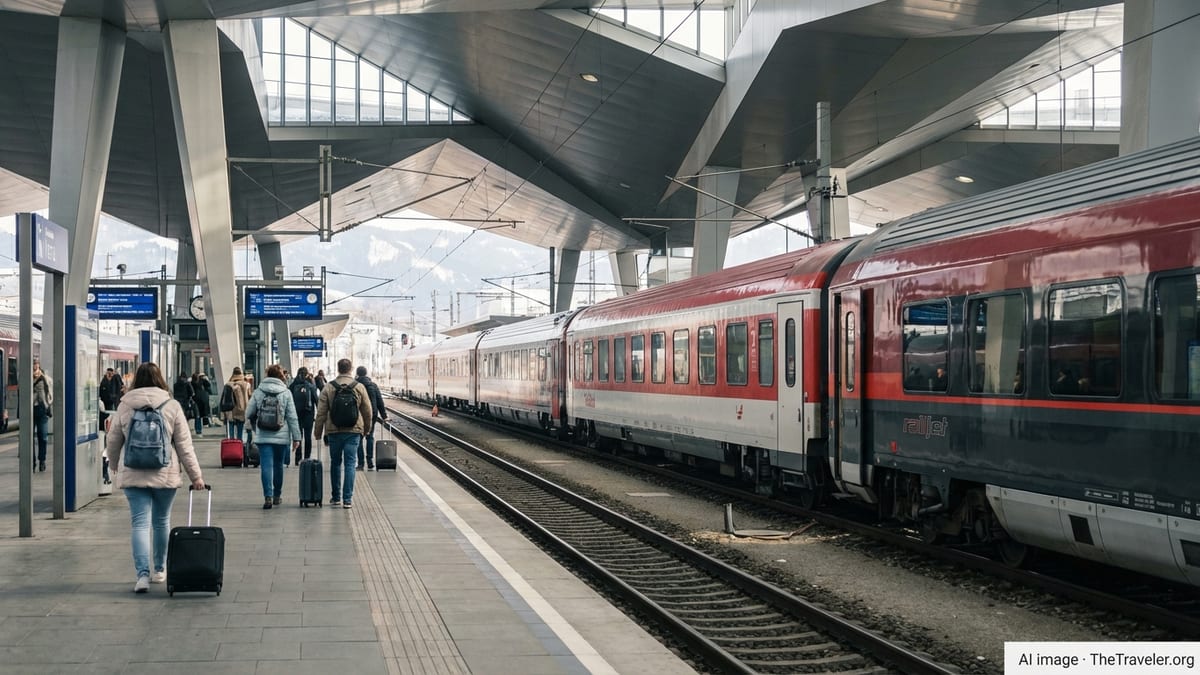
Long term green strategy for a new high speed corridor
Publicly available project information shows that the 130 kilometer Koralmbahn between Graz and Klagenfurt has been framed not only as a transport upgrade but as a long term environmental investment. Alongside tunnels, bridges and new stations, ÖBB has committed to extensive reforestation, habitat creation and landscape restoration in the areas affected by the new line.
The railway traverses forested slopes in the Koralpe region, river valleys such as the Lavanttal and densely used agricultural land. During the lengthy construction phase, large areas were cleared for tunnel portals, access roads, work sites and permanent infrastructure. Reforestation along the route is intended to re establish forest cover, stabilize slopes and gradually restore the visual character of the landscape once the heavy civil engineering work is complete.
According to recent ÖBB infrastructure publications, the Koralmbahn was structurally completed in 2024, with full commissioning of the line and the 33 kilometer Koralm Tunnel scheduled around the 2025 timetable change. As this transition from construction to operation progresses, tree planting and ecological compensation measures are being stepped up as part of the final project phase.
Project documents indicate that the reforestation initiatives are financed through the wider Koralmbahn investment package, supported by the federal rail infrastructure program and the provinces of Carinthia and Styria. For ÖBB, the work is presented as both environmental compensation and an integral part of the railway’s long term resilience strategy.
Rebuilding forests and stabilising sensitive slopes
The Koralmbahn corridor crosses some of the most technically demanding terrain in Austria’s rail network, including steep, erosion prone slopes near tunnel portals and deep cuttings. Reforestation here serves several purposes: restoring forest cover, protecting against landslides and rockfall, and creating climate resilient woodland that can better withstand hotter, drier summers.
Planning documents and corporate reporting describe a focus on mixed native species instead of monocultures, reflecting updated forestry practice in the Alpine region. A diversified mix of broadleaf and conifer species is intended to increase resistance to storms, pests and extended drought periods that have become more frequent in recent years.
Where permanent infrastructure now occupies former woodland, planting is being concentrated on adjacent slopes, embankments and replacement areas along the line. In some sections, newly created forest strips also act as visual and sound buffers between the high speed trains and nearby communities, complementing technical noise protection walls.
Engineers involved in the project have highlighted in technical literature that replanting on disturbed ground requires careful soil management and staged planting over several years. The ongoing nature of the work along the Koralmbahn indicates that ÖBB sees reforestation as a multi season effort rather than a one off intervention timed to coincide with the opening of the line.
Beyond trees: ecological corridors and water restoration
While the current focus is on large scale planting, ÖBB’s broader strategy along the Koralmbahn includes a range of ecological measures that go beyond forests alone. Earlier project descriptions point to new habitats created through stream relocations, wetland restoration and the construction of wildlife crossing structures designed to maintain migration routes despite the new transport barrier.
In Carinthia’s Lavant valley, for example, the upgrading of the regional Lavanttalbahn in parallel with the Koralmbahn has been accompanied by river habitat projects and bank renaturation. Publicly available information indicates that fish and invertebrates were relocated during construction and then reintroduced to newly structured river sections once works were completed, with the aim of improving both water quality and habitat diversity.
Along the main line, cut and cover sections and open trackbed areas have been designed with drainage systems that seek to manage heavy rainfall events and protect adjacent ecosystems from runoff. Replanted riparian strips and grassed embankments help filter water and reduce erosion, adding another layer of environmental protection to the reforested slopes.
Ecological connectivity is a recurring theme in background material on the project. Forest patches, hedgerows and small wetlands created or restored as part of the compensation measures are intended to function as stepping stones for wildlife, linking existing habitats on either side of the new railway. In this way, the reforestation program becomes part of a broader network of green infrastructure along the Koralmbahn.
Climate goals and carbon balancing along the route
ÖBB has repeatedly positioned the Koralmbahn as a central pillar of its climate and energy strategy, arguing that shifting long distance travel from road and air to electrified high speed rail can significantly cut transport emissions over the coming decades. The reforestation program along the line is presented as a complementary measure that can store carbon, protect soils and support regional adaptation to climate change.
Corporate sustainability reporting for recent years highlights large scale investments in green traction power and the decarbonisation of operations. Within this context, planting and caring for new forests in the Koralmbahn corridor is described as a way to lock in additional carbon sinks over the long term, even though the primary climate benefit of the project remains the expected reduction in fossil fuel use once the timetable is fully implemented.
Balancing construction related impacts with long term environmental gains is a key challenge for major infrastructure. Public documents related to the Koralmbahn stress that compensation areas and reforestation sites are subject to monitoring and maintenance obligations that extend beyond the official completion of the project. This is intended to ensure that planted areas actually develop into resilient forests rather than remaining as short lived plantations.
Observers note that the Austrian Court of Audit has taken a close interest in the financial and scheduling aspects of the Koralmbahn, underscoring the scale and visibility of the project. Against this background of scrutiny, ÖBB appears keen to demonstrate that environmental commitments, including reforestation, are being fulfilled alongside operational milestones.
Local regions look to tourism and quality of life benefits
For the regions of Styria and Carinthia, the Koralmbahn’s reforestation and landscape restoration measures are intertwined with hopes of new tourism potential and quality of life improvements. Once the full service pattern between Graz and Klagenfurt is in place, travel times are expected to fall to around 45 minutes, opening up new options for day trips, commuter flows and cross regional tourism products.
Local authorities and tourism boards have previously promoted the Koralmbahn in combination with hiking, cycling and nature tourism in the surrounding mountains and valleys. A greener, carefully restored railway corridor is seen as an asset rather than a scar on the landscape, particularly in areas where forest edges, trails and viewpoints are being re integrated into the environment after construction.
In Carinthia, the restructured S Bahn and regional services connected to the Koralmbahn are already changing how residents move within the state. Public information on the regional network shows that electrified rail links and modernized stations are being marketed with an emphasis on their low environmental footprint. The continuing reforestation along the line strengthens this narrative of a cleaner, more sustainable mobility backbone.
For international rail travelers, the Koralmbahn is emerging as a new piece of the north south axis between the Baltic region and the Adriatic. As more services begin to use the route in the coming years, the visibility of its reforested slopes and restored habitats is likely to grow, offering a tangible example of how large scale rail investments in Europe are increasingly expected to deliver both transport capacity and environmental repair.