

Milwaukee is a city built on water and culture, where Lake Michigan’s wide horizon frames a downtown of festival grounds, breweries, and historic brick neighborhoods. Long known as a hardworking Great Lakes port, it has quietly evolved into a destination for food, arts, and urban outdoor life. This guide introduces Milwaukee’s lakefront energy, cultural landmarks, and distinctive districts so you can plan a trip that balances museum time, neighborhood wandering, and breezy moments on the waterfront.
Understanding Milwaukee: A Great Lakes City with Grit and Soul
Milwaukee sits on the western shore of Lake Michigan about 90 miles north of Chicago, and the lake shapes almost every aspect of the city’s identity. The shoreline parks, harbor, and river channels remind you that this is a maritime place, with weather that can shift quickly and wide-open water never far from view. At the same time, Milwaukee’s compact downtown, historic industrial corridors, and dense neighborhoods make it feel approachable for a weekend visit or a longer stay.
The city’s population is diverse, with strong German, Polish, Mexican, African American, and Hmong communities reflected in neighborhood festivals, food traditions, and local businesses. Visitors will notice the pride people take in their corner taverns, family-owned restaurants, and long-standing churches. Many of Milwaukee’s must-see attractions sit within walking distance of one another, yet a short ride will take you into residential districts where restored brick cottages, Victorian mansions, and sturdy duplexes coexist on tree-lined streets.
Milwaukee’s climate is distinctly four-season. Summers are warm, sometimes humid, and ideal for outdoor concerts, beer gardens, and long lakefront walks. Autumn brings crisp air and changing colors in the city’s extensive parks system. Winters are cold with snow, but the city continues to function, with winter markets, ice skating, and cozy bars drawing people together. Spring is variable, often cool near the lake, but a good time to experience the city before peak festival crowds arrive.
For travelers, Milwaukee offers a blend of big-city amenities and small-city ease. You will find nationally regarded arts institutions, professional sports, an evolving dining scene, and a year-round calendar of events, yet traffic is usually manageable and major sights are concentrated along the river and lakefront. It is realistic to explore multiple neighborhoods in a short trip, and you can often move between cultural attractions, parks, and dining districts without long detours.
Lakefront Highlights: From Artful Architecture to Festival Grounds
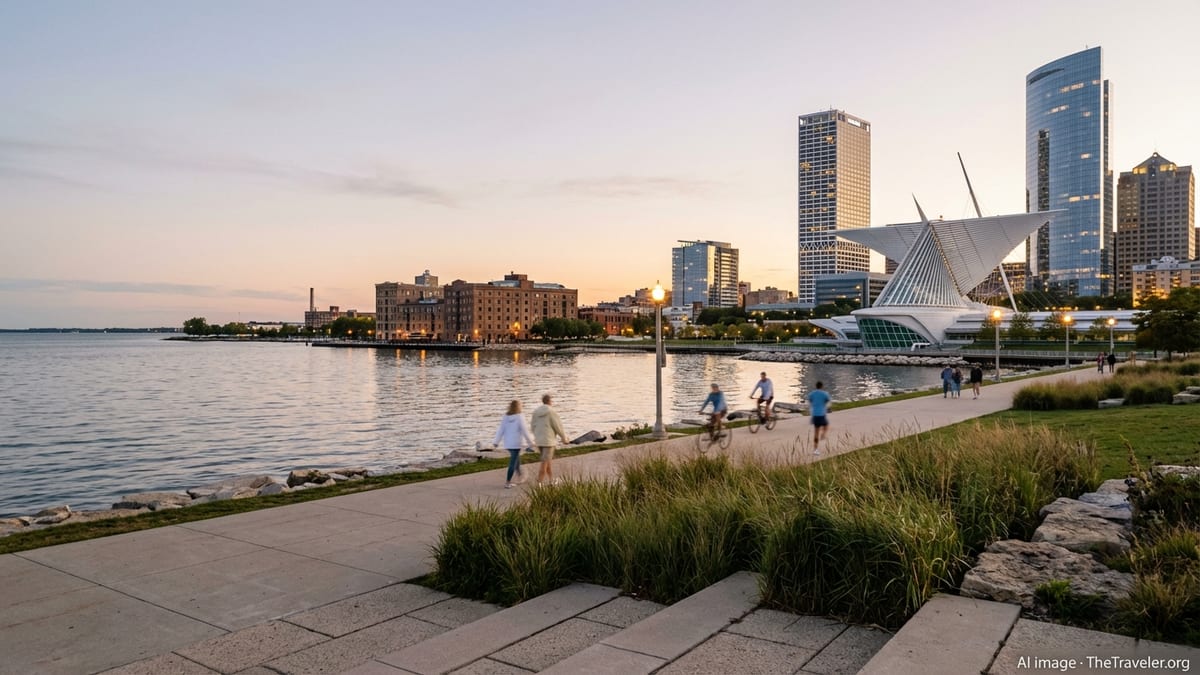
Milwaukee’s lakefront is the city’s calling card, an accessible stretch of parks, trails, and cultural institutions that runs just east of downtown. One of the most recognizable landmarks is the Milwaukee Art Museum, known for its striking addition designed by Santiago Calatrava. The building’s white, wing-like sunshade and dramatic glass-enclosed reception hall overlook Lake Michigan, and its collection includes European and American paintings, decorative arts, photography, and contemporary works. Even if you are not planning a full museum visit, the grounds and nearby pathways are worth a stroll for their views of both city and water.
Directly south of downtown, Henry Maier Festival Park hugs the lakefront and hosts some of the city’s biggest events. Summerfest, often described as one of the world’s largest music festivals, typically spreads over several weekends in early summer, drawing major touring acts and regional performers to multiple stages. Throughout the warmer months, the same grounds host a rotating lineup of cultural and heritage festivals celebrating everything from Polish and Irish traditions to Mexican and German culture. Even when no event is taking place, walking or cycling near the park’s perimeter gives a sense of Milwaukee’s role as a festival city.
North of downtown, a string of parks such as Veterans Park and McKinley Park offer open lawns, lagoons, and access to the paved multiuse path that lines the shoreline. This path connects into the wider Oak Leaf Trail network, giving cyclists and runners a way to move between lakeside overlooks, marina views, and wooded ravines further north. On windy days, you may see kite flyers and sailboats in the harbor, while calmer days are ideal for leisurely walks and picnics with the skyline as a backdrop.
Closer to the central business district, smaller green spaces like Juneau Park sit on bluffs above the lake, providing framed views of the water through mature trees. From here, it is easy to drop down toward Lakeshore State Park, an island park connected by pedestrian bridges that feels surprisingly removed from traffic. Its gravel paths loop around prairie plantings and shoreline rocks, making it a quiet spot for sunsets, bird-watching, or simply catching your breath in the middle of a busy day of sightseeing.
Downtown & The Riverwalk: Urban Core on the Water
Milwaukee’s downtown is anchored by the Milwaukee River, which cuts through the city before meeting the harbor. Along its banks, the Milwaukee Riverwalk creates a mostly continuous pedestrian corridor linking restaurants, bars, public art, and residential buildings. Sections of the walkway have distinct identities, from the historic warehouse feel of the Third Ward segment to the more contemporary high-rises and office towers upstream. Strolling the Riverwalk at different times of day reveals changing light and activity, from morning joggers to evening diners on patio decks.
Downtown’s street grid is straightforward, with a mix of older stone and brick office blocks, midcentury towers, and newer glass-fronted development. Public art installations, small plazas, and riverside terraces help soften the urban landscape. The Bronze Fonz statue, a nod to the television show set in Milwaukee, is a frequently photographed stop on many walking routes along the river. Just a few blocks away, you will find civic buildings, smaller theaters, and the main branch of the public library, each contributing to a sense of a functioning regional hub rather than a purely tourist district.
The Hop, Milwaukee’s modern streetcar, runs through parts of downtown and into adjacent neighborhoods. At the time of writing, the system remains free to ride, with cars typically running from early morning until late at night on most days. Routes and operations have been the subject of local debate, and service patterns, including seasonal festival-oriented adjustments, can evolve. It is wise to check current schedules when planning your movements, but in general, the streetcar offers an easy, accessible way to travel between downtown hotels, the Historic Third Ward, and the lakefront when it is operating.
Beyond the river, downtown leads into the Westown and East Town districts, each with their own character. Westown includes event venues, hotels, and developments near the basketball arena, which hosts professional games as well as concerts and family shows. East Town, closer to the lake, has a mix of historic churches, apartment buildings, and offices, plus access to pocket parks and the Streetcar’s northern reaches. Both areas are convenient bases for visitors who want walkable access to key sights, dining, and nightlife without long commutes.
Historic Third Ward & Walker’s Point: Warehouses, Dining, and Design
South of downtown, the Historic Third Ward stands out as one of Milwaukee’s most distinctive neighborhoods. Once a warehouse and wholesaling district, it retains rows of late nineteenth and early twentieth century brick buildings that have been converted into lofts, boutiques, galleries, and restaurants. The streets are tight and walkable, with restored façades, sidewalk patios, and a mix of local and national brands. The district is recognized on the National Register of Historic Places, and you can still sense its industrial past in the scale of the structures and the rail spurs and loading docks incorporated into modern design.
The Third Ward is also home to a popular public market, where vendors sell local cheeses, baked goods, seafood, prepared foods, and specialty items. It is a practical place to grab coffee or lunch while browsing for regional products that travel well. A short walk away, you will find the neighborhood’s arts presence in galleries, small theaters, and the campus of a local art and design school. On event nights, streets fill with people heading to shows or dinners, and the nearby Riverwalk and lakefront paths provide scenic routes back to downtown hotels.
Just west and south of the Third Ward, the Walker’s Point and Walker Square areas have become hubs for dining, nightlife, and creative businesses while remaining connected to working-class roots. Here, older industrial buildings and modest houses stand near distilleries, breweries, and restaurants that highlight everything from Mexican and Latin American flavors to modern Midwestern cuisine. Visitors can experience both traditional family-run spots and newer chef-driven ventures, often within the same few blocks. As you explore, you may notice bilingual signage, street murals, and community spaces that reflect the area’s longstanding Latino population.
These river-adjacent neighborhoods are excellent for evening outings, especially if you appreciate walkable, atmospheric streets. However, they are active, living communities, so it is thoughtful to remain aware of your surroundings, respect residential areas, and support local businesses in ways that align with neighborhood rhythms. If you are planning a brewery or distillery crawl, consider the timing of your visit and how you will return to your lodging, whether by rideshare, taxi, or public transit.
East Side, Bay View & Bronzeville: Neighborhoods with Character
Beyond the downtown core, several neighborhoods offer deeper insight into Milwaukee’s identity. On the East Side, north of downtown and close to the main university campus, a mix of student housing, historic mansions, and apartment buildings lines tree-shaded streets. Here you will find casual cafés, record shops, small cinemas, and neighborhood bars that give the area a relaxed, youthful atmosphere. Parks such as Lake Park and Riverside Park drop down toward the river and lake, threading wooded ravines into the urban fabric and connecting to the Oak Leaf Trail.
Farther south along the lake, Bay View has grown into one of Milwaukee’s most talked-about neighborhoods for both residents and visitors. Centered roughly on Kinnickinnic Avenue, it blends corner taverns, bakeries, and longstanding shops with newer restaurants, music venues, and boutiques. The vibe is creative but grounded, and side streets reveal a mix of modest houses, duplexes, and small apartment buildings. Along the water, green spaces and former industrial sites offer views across the harbor, making this an appealing area for a half-day of wandering, especially for travelers who prefer local feeling over polished downtown settings.
To the north of downtown, the Bronzeville area has historic significance as a center of Black culture and business in Milwaukee. Like many such districts in American cities, it experienced decades of disinvestment, but recent years have brought renewed attention, arts activity, and small business growth. Visitors will find cultural institutions, galleries, and eateries that tell stories of the neighborhood’s past while pointing toward its future. Events, performances, and public art projects often anchor the sense of place here, and spending time in Bronzeville can offer context on Milwaukee’s broader social and cultural landscape.
Each of these neighborhoods is reachable in a relatively short drive or transit ride from downtown, yet they reward slower exploration. Walking a few blocks off the main commercial strips reveals the housing styles, local schools, and small parks that define daily life in Milwaukee. For respectful visitors, these areas are not just backdrops for dining and nightlife but communities with histories and ongoing conversations about development, affordability, and identity.
Culture, Beer, and Festivals: What Milwaukee Does Best
Milwaukee’s cultural institutions reflect both its industrial past and evolving artistic energy. In addition to the lakefront art museum, the city hosts science and natural history collections, children’s museums, and specialty institutions focused on local history and industry. Many of these are clustered near downtown and the lakefront, allowing you to combine multiple visits in a single day. Rotating exhibits bring in traveling shows and contemporary work, while permanent displays highlight regional stories, from Native history to the growth of manufacturing.
The city’s brewing heritage remains central to its image. Historic brewery complexes dot the landscape, some converted into offices or residences, others still involved in beer production. A wave of craft breweries has joined the legacy brands, and visitors can tour facilities that range from small, neighborhood-focused operations to larger producers with spacious taprooms. Some breweries occupy converted factories or riverfront warehouses, adding atmosphere to tastings and tours. Without fixating on brand names, it is safe to say that beer enthusiasts will find a wide spectrum of styles and approaches here, including traditional lagers, experimental ales, and nonalcoholic options.
Festivals are another pillar of Milwaukee’s identity. Summerfest is the most famous, but the calendar is filled with ethnic festivals, street fairs, neighborhood celebrations, and seasonal markets. Many of these events take place at the dedicated lakefront grounds, but others occur on blocked-off city streets or in neighborhood parks. Music, food, and beer are reliable through-lines, with stages for polka, rock, hip-hop, and folk music, and food stalls selling everything from pierogi to elote. Checking an up-to-date events calendar before your trip can dramatically shape what you experience.
Smaller cultural venues and performance spaces round out the picture. Theater companies, dance troupes, symphony performances, and jazz clubs give locals and visitors a wide range of options on any given weekend. Because Milwaukee supports multiple colleges and universities, you will also find student productions, galleries, and lectures open to the public. If you are staying several days, set aside at least one evening for live performance, whether in a grand historic theater or a low-key neighborhood club.
Getting Around & Practical Tips for Visitors
Milwaukee is relatively straightforward to navigate. The downtown grid is compact, and many key attractions, including the riverfront, lakefront parks, art museum, festival grounds, and Historic Third Ward, are within walking distance of one another for reasonably active travelers. Sidewalks are generally in good condition, and crosswalk signals are clear. However, winter weather can affect walking conditions, so appropriate footwear and layers are important outside of the warmest months.
Public transit is centered on the Milwaukee County Transit System bus network and The Hop streetcar. Buses serve the wider metro area, including university districts and some suburban destinations. Fares are typically paid using exact change, reloadable fare cards, or a mobile app, with daily cost caps that keep frequent riders from overpaying. The Hop supplements this system in the downtown core and adjacent neighborhoods, and at present operates as a fare-free service. Because funding and long-term plans for the streetcar have been subjects of local discussion, it is wise to confirm current routes, hours, and any planned changes close to your travel dates.
Rideshare services and taxis are available, and many visitors find them practical at night or when carrying luggage. If you plan to drive, keep in mind that downtown and lakefront parking can be tight during major events or festivals, with higher rates in central garages and near the arena. Neighborhood parking is more relaxed but often governed by time limits or permit rules on side streets, so always read posted signs carefully to avoid tickets.
Cycling is another appealing option in good weather. The city’s bikeshare system, with stations scattered across central neighborhoods and near major attractions, allows short point-to-point rides. The extensive Oak Leaf Trail and other multiuse paths connect parks and districts in ways that may be more pleasant than riding alongside traffic. Helmets are strongly recommended, and lights are essential if you expect to ride after dark. As with any city, staying aware at intersections and respecting pedestrian areas keeps everyone safer.
Planning Your Stay: Seasons, Safety, and Responsible Travel
Choosing when to visit Milwaukee depends on what you hope to experience. Summer is the peak season, with long days, frequent festivals, and outdoor dining in full swing. Temperatures can be warm, and lakeside breezes help moderate the heat. This is the time when hotel rates and crowds are highest near the lakefront and downtown. If your visit coincides with a major event, such as a large-scale music festival or sporting milestone, booking accommodations well in advance is a smart move.
Spring and autumn offer milder weather and fewer visitors. Early spring can feel chilly near the lake, but late spring brings flowering trees and greener parks. Fall highlights the changing colors in ravine parks and along river corridors, and it remains a good season for walking and cycling. Winter brings snow and cold, sometimes for extended periods, yet the city adapts with indoor events, cozy nightlife, and winter recreation in parks and nearby areas. If you visit in the colder months, factor extra time into your schedule for weather-related slowdowns and dress for wind off the lake.
Like any urban center, Milwaukee has areas of concentrated nightlife and some districts where visitors should remain attentive, particularly late at night or when moving between venues. Basic precautions apply: travel with companions when possible, keep valuables out of sight, be cautious with alcohol consumption, and rely on trusted transportation options after dark. Hotel staff and local tourism offices can provide current, nuanced guidance on where to go and how to return safely.
Responsible travel in Milwaukee also means being sensitive to the city’s ongoing conversations about development, equity, and affordability. Many of the neighborhoods that now attract visitors have histories of displacement or disinvestment. Supporting locally owned businesses, attending community-based cultural institutions, and engaging with the city beyond its most polished surfaces can make your visit more meaningful while contributing to local economies. Simple things, such as following neighborhood guidelines, respecting residential quiet hours, and properly disposing of trash, help ensure that tourism and everyday life can coexist smoothly.
The Takeaway
Milwaukee rewards travelers who are curious about both place and people. The lakefront provides sweeping views and big events, yet just a few blocks inland, brick warehouses, corner taverns, and leafy streets reveal a city that is still very much itself. You can spend a morning among landmark architecture at the art museum, an afternoon walking the Riverwalk or cycling lakefront trails, and an evening sharing plates in a converted factory or listening to live music in a neighborhood bar.
What sets Milwaukee apart is the way its history and present-day creativity meet in everyday settings. The same river that once carried industrial cargo now frames public art and riverside patios. Historic districts that once served as logistical hubs have become stages for galleries and independent boutiques. Communities that endured difficult decades are asserting their stories through cultural festivals, murals, and local entrepreneurship.
As you plan your visit, think less in terms of checking off a list of must-sees and more in terms of connecting the lakefront, river, and neighborhoods into your own narrative. Whether you come for a festival-filled weekend, a quiet off-season escape, or a family trip centered on museums and parks, Milwaukee offers enough variety to shape a trip that feels personal. Spend time near the water, seek out local voices, and let the city’s layered character unfold at its own pace.
FAQ
Q1. How many days do I need to visit Milwaukee?
Most visitors find that two to three full days are enough to see key lakefront sights, explore a couple of neighborhoods, and sample the food and brewery scene without feeling rushed.
Q2. Is Milwaukee walkable for tourists?
Downtown, the lakefront, the Historic Third Ward, and parts of the East Side are quite walkable, with many major attractions connected by sidewalks, the Riverwalk, and relatively short distances.
Q3. Do I need a car in Milwaukee?
You can comfortably explore the central city without a car using walking, buses, The Hop streetcar when operating, rideshares, and bikeshare, though a car can be helpful for outlying attractions.
Q4. When is the best time to visit Milwaukee?
Late spring through early fall offers the most pleasant weather and the busiest festival schedule, while winter visits appeal to travelers who enjoy cold-weather city breaks.
Q5. Is The Hop streetcar still free to ride?
At the time of writing, The Hop operates as a fare-free service, but visitors should check current information close to their trip in case policies or routes change.
Q6. What should I pack for a trip to Milwaukee?
Layered clothing, comfortable walking shoes, and a light jacket or windbreaker are useful in most seasons, as temperatures and lakefront breezes can change quickly.
Q7. Is Milwaukee safe for solo travelers?
Many solo travelers visit Milwaukee without issues by sticking to busy areas, staying aware of their surroundings, and using reliable transportation, especially at night.
Q8. Can I swim in Lake Michigan in Milwaukee?
In summer, designated city beaches are typically open for swimming when conditions and water quality are suitable, but visitors should follow local advisories and posted flags.
Q9. How accessible is Milwaukee for travelers with mobility needs?
Major attractions, The Hop streetcar, and city buses are designed with accessibility in mind, though older buildings and uneven sidewalks in some historic areas can present challenges.
Q10. What is Milwaukee known for besides beer?
Beyond its brewing heritage, Milwaukee is known for its lakefront setting, major festivals, distinctive neighborhoods, art and cultural institutions, and strong food traditions rooted in many communities.