

More news on this day
A minor freight train derailment in Morgan County, Tennessee, has renewed attention on rail safety and outdoor travel in the region, coming only weeks after a separate crash in the same county spilled large quantities of alcohol products and disrupted recreation along the Emory River.
Get the latest news straight to your inbox!
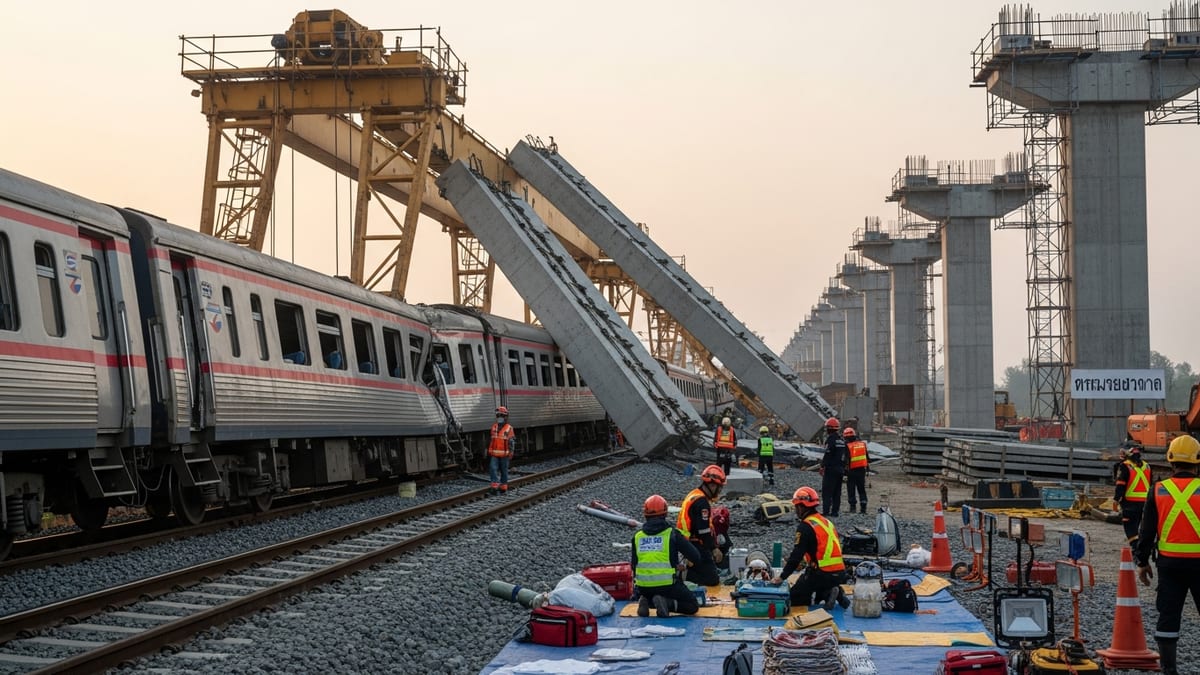
Second Incident in Weeks Along Key East Tennessee Rail Corridor
Recent coverage from regional outlets indicates that the latest derailment occurred near the community of Oakdale in Morgan County, involving a freight train that left the tracks but did not cause significant damage or injuries. Reports describe the episode as a minor derailment, with railcars coming off the rails at low speed and remaining largely intact.
Publicly available information suggests that the affected line is a busy freight corridor through the Cumberland Plateau, used by trains hauling a mix of consumer goods and industrial products across East Tennessee. The Oakdale incident did not trigger evacuations or long term closures, but it has drawn attention precisely because it follows a far more serious crash elsewhere in the county.
Travelers heading to nearby outdoor destinations, including popular river access points and hiking areas, have been monitoring regional news for updates on rail activity and cleanup timetables. While rail operations around Oakdale appear to have resumed without major disruption, local coverage notes ongoing questions about inspection practices and infrastructure conditions along the route.
Rail safety data from federal agencies show that Tennessee has recorded multiple derailments so far this year, mirroring a broader national pattern in which many incidents are classified as minor but occasionally involve hazardous or flammable cargo.
Earlier Alcohol Spill Left Lasting Imprint on Emory River Recreation
The renewed scrutiny stems from a separate derailment on June 11 near Lancing, also in Morgan County, in which tank and freight cars carrying ethanol and other alcohol products left the tracks and burned for an extended period. News reports indicate that more than a dozen cars derailed, several of them loaded with alcohol, triggering fires and a plume of smoke visible across the rural valley.
According to published coverage, that earlier crash released a substantial volume of alcohol into the environment and prompted an hours long evacuation of homes and campgrounds. The Tennessee Emergency Management Agency and environmental regulators subsequently focused on air and water monitoring, particularly along the Emory River corridor that attracts paddlers, anglers and campers from across the region.
State environmental officials issued a temporary contact advisory for portions of the Emory River following the spill, urging people to avoid direct contact with the water until testing showed conditions had improved. Days later, follow up reports noted that monitoring for ethanol and related compounds was continuing and that at least one riverside campground remained closed as crews worked on cleanup and site stabilization.
The alcohol fueled fire and lingering concerns about fish and aquatic life along the Emory River have given the June derailment an outsized impact on how travelers view the area. Guides, outfitters and campground owners have faced weeks of uncertainty as they track test results and adjust operations around closures and advisories.
Minimal Damage This Time, but Public Confidence Under Pressure
In contrast, publicly available information on the most recent Morgan County derailment near Oakdale indicates there was no significant cargo spill, no fire and no reported injuries. Early descriptions emphasize that track damage and equipment impacts were limited, and that crews were able to rerail or remove affected cars without large scale disruption to nearby communities.
Even so, the proximity in time and geography to the earlier alcohol spill has shaped public reaction. For residents and visitors who watched images of burning railcars and riverbank response teams in June, news of another derailment in the same county, however minor, has reinforced the perception of a corridor under strain.
Travel focused commentary has highlighted a tension that often emerges in rail dependent regions. Freight lines provide critical economic links through mountainous terrain, yet many of those same valleys also support tourism, fishing, paddling and camping. When derailments cluster in a short period, perceptions of risk can spread more quickly than official test results or infrastructure assessments.
Railroad incident statistics show that minor derailments are far more common than headline grabbing disasters, and most do not involve hazardous releases. Nonetheless, after a high profile spill, subsequent events, even limited ones, can erode confidence among visitors deciding where to spend weekends or vacations.
Environmental Monitoring and Outdoor Access Still in Focus
Weeks after the June alcohol spill, environmental monitoring along the Emory River and its tributaries remains a central concern for travelers who plan boating or swimming trips in Morgan County. State agencies have continued to post updates on water quality, and news outlets in the Knoxville market have tracked developments such as temporary advisories and campground closures.
Reports on conditions indicate that air quality readings around the original crash site have generally remained within what regulators describe as reasonable levels, while water testing has been more complex because river conditions shift with rainfall and temperature. The presence of dead fish reported along some stretches of the Emory in late June added to public unease, although investigators have not yet delivered a definitive link between those observations and the earlier spill.
For outdoor travelers, the situation translates into a patchwork of open and restricted locations. Some access points and hiking trails have stayed busy, while specific campgrounds or river segments closest to the June derailment have seen reduced activity or temporary closures. Visitor decisions are being shaped by a combination of official advisories, local tourism messaging and word of mouth updates from paddlers and anglers.
The minor Oakdale derailment has not led to similar environmental actions, but its appearance alongside ongoing monitoring efforts has reinforced calls from advocacy groups for more transparent reporting on rail cargoes and response plans near sensitive waterways.
What Travelers to Morgan County Should Know Right Now
For travelers considering trips to Morgan County in the coming weeks, publicly available information points to two parallel realities. Rail operations continue along the corridor, with the latest derailment categorized as minor and cleanup largely complete. At the same time, some recreation sites downstream of the June alcohol spill are still subject to intermittent advisories and close observation.
Prospective visitors who plan paddling or fishing outings on the Emory River are watching local and state updates on water quality and access status. Many outfitters recommend checking the latest advisories before setting out and being prepared for possible changes in put in locations or recommended routes.
Travelers who focus on hiking, scenic drives and small town exploration in Morgan County are likely to encounter few direct impacts from the rail incidents beyond occasional work crews near track crossings. However, the visual presence of ongoing cleanup equipment around the June crash site and the high profile coverage of both derailments serve as reminders of the corridor’s recent challenges.
As federal and state reviews proceed, the two Morgan County derailments have become part of a broader national conversation about how freight rail safety intersects with tourism, outdoor recreation and rural economies. For now, the latest incident appears to be a near miss, but its timing ensures that rail activity through this stretch of East Tennessee will remain under close public observation.