

More news on this day
MSC Cruises has mounted a large-scale airlift from Dubai, arranging flights for more than 1,500 guests who had been stranded on board MSC Euribia amid escalating conflict in the Middle East, in a move that highlights both the cruise line’s operational resilience and its growing clout in global cruise tourism.
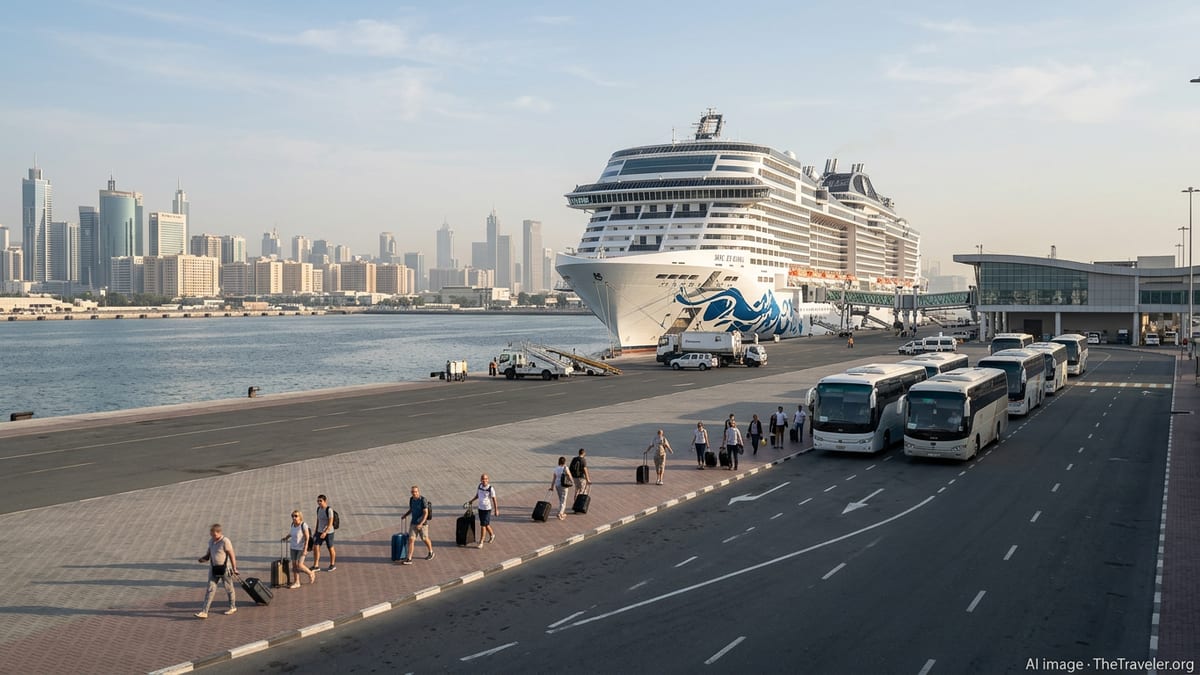
Complex Repatriation Effort Out of a Key Gulf Hub
The operation follows the sudden halt of MSC Euribia’s Gulf itineraries after regional tensions flared on February 28, closing airspace and disrupting commercial schedules across parts of the Middle East. The ship has remained in port in Dubai while MSC worked with airlines and authorities to secure safe routes home for passengers.
Since the limited resumption of flights, the company has orchestrated a mix of charter services funded by MSC Cruises and seats on scheduled commercial services, primarily with Emirates and flydubai. According to statements from the line and regional travel media, at least seven flights carrying Euribia guests had departed the region by the morning of March 6, with more departures planned as capacity becomes available.
Some national governments have complemented these efforts with their own repatriation flights, adding further options for affected travelers. While most of those allocated seats have now left the United Arab Emirates, a smaller number of guests remain in Dubai as airlines work through a backlog of demand created by days of cancellations and diversions.
MSC executives described the undertaking as a highly complex logistical exercise that required close coordination between onboard teams, shore-based operations centers and aviation partners to match guests to rapidly changing flight inventories.
Charter Flights Signal Scale and Resilience of MSC Operations
Central to the response has been a dedicated charter program launched by MSC Cruises to supplement scarce commercial capacity. The initiative initially involved at least five charter flights and quickly expanded into a broader bridge between Dubai and major source markets in Europe and the Americas as the company committed to underwrite the cost of extra services for its guests.
Industry observers note that chartering multiple widebody aircraft at short notice illustrates both the financial strength and operational depth MSC has developed as it vies with global competitors in the contemporary cruise segment. The company’s ability to pivot from cruise logistics to aviation planning in a matter of days is being seen as a stress test of its emergency planning and risk management frameworks.
MSC’s leadership has publicly praised the collaboration with airline partners and regional authorities, citing what it called unparalleled support in securing slots, permits and clearances for the special flights. The line has also emphasized that all onboard services on MSC Euribia have remained available while guests awaited confirmation of their onward journeys.
Travel analysts say such rapid crisis measures are increasingly important as cruise lines expand into geopolitically sensitive regions, where itineraries can be upended by sudden security developments and airspace restrictions that extend far beyond any single port of call.
Impact on Middle East Cruise Tourism and Dubai’s Role
The disruption around MSC Euribia comes at a pivotal time for cruise tourism in the Gulf, where Dubai has positioned itself as a regional hub for winter sailings linking the United Arab Emirates with Qatar and other neighboring destinations. The cancellation of the ship’s remaining March departures from Dubai, Abu Dhabi and Doha has led to an immediate shortfall in expected cruise arrivals, affecting hotels, attractions and shore excursion operators across the region.
Ships homeported in Dubai typically deliver thousands of high-spending international visitors each week, and the suspension of MSC Euribia’s program underscores how quickly flows of tourism revenue can be interrupted by regional instability. Port authorities and tourism boards in the UAE and Qatar are now contending with reduced vessel calls just as they have been investing heavily in new cruise terminals and destination marketing.
At the same time, the orderly evacuation of more than fifteen hundred guests is being watched closely by local stakeholders. Successful repatriation is seen as vital to maintaining traveler confidence in Dubai and the wider Gulf as safe and reliable cruise gateways, even when itineraries must be adjusted or curtailed for security reasons.
The episode is also prompting discussions among regional tourism officials about closer contingency planning with cruise operators and airlines, including pre-agreed frameworks for charter capacity and passenger handling in the event of future airspace closures or port restrictions.
Guest Experience and the Human Side of a Maritime Disruption
For guests on MSC Euribia, the days spent unexpectedly in Dubai have brought a mix of anxiety, uncertainty and appreciation for the support provided on board. Some passengers, interviewed by international media, described watching the unfolding news from the safety of the ship and expressing a single overriding wish: to get home as quickly and safely as possible.
MSC has said it has maintained full access to onboard dining, entertainment and wellness facilities during the interruption, aiming to preserve a degree of normality while staff worked around the clock to secure flights. Regular briefings, app notifications and written updates have been used to keep guests informed as new charter services and commercial seats became available.
The situation has highlighted the importance passengers place on transparent communication and practical assistance when travel plans are disrupted, particularly in conflict-adjacent areas. Industry commentators note that how lines respond in such moments can shape brand perceptions long after voyages have ended, influencing repeat bookings and word-of-mouth recommendations.
Travel insurers and consumer advocates are also examining the episode as a case study in how coverage responds to geopolitical events, including the extent to which trip interruption, additional accommodation and alternative transport are covered when airspace restrictions and security advisories come into play.
Strengthening MSC’s Global Profile Amid Rapid Fleet Growth
The MSC Euribia operation unfolds against the backdrop of rapid expansion at MSC Cruises, which has grown into one of the world’s largest cruise brands with a fleet heavily focused on Europe but increasingly deployed across the Middle East, Caribbean and Asia. Euribia itself, a Meraviglia Plus-class ship with a capacity of more than 6,000 guests, has been central to the company’s strategy of offering environmentally advanced vessels on marquee itineraries from the Gulf to Northern Europe.
By moving swiftly to organize flights for such a large number of guests across multiple continents, the line is seeking to reinforce its image as a global operator capable of managing crises on the same scale as its better-known rivals. Executives have publicly thanked crew members and shoreside teams for their response, framing the airlift as evidence of a corporate culture that prioritizes safety and guest welfare alongside commercial considerations.
Looking ahead, MSC is expected to further refine its deployment plans and contingency playbooks for regions subject to rapid geopolitical shifts. While some itineraries have been cancelled or re-routed in the near term, the company has reiterated its long-term commitment to the Middle East as a growth market, suggesting that future Gulf seasons will incorporate lessons learned from this disruption.
For global cruise tourism, the events in Dubai serve as a stark reminder that growth into new regions brings both opportunity and exposure. For MSC Cruises, the successful organization of flights for more than fifteen hundred Euribia guests may prove to be a defining example of how large cruise operators respond when global events test their resilience.