

More news on this day
MSC Cruises has canceled the first European sailing of MSC Euribia after the ship’s repositioning from the Middle East was delayed, highlighting ongoing disruption for cruise operations in the region.
Get the latest news straight to your inbox!
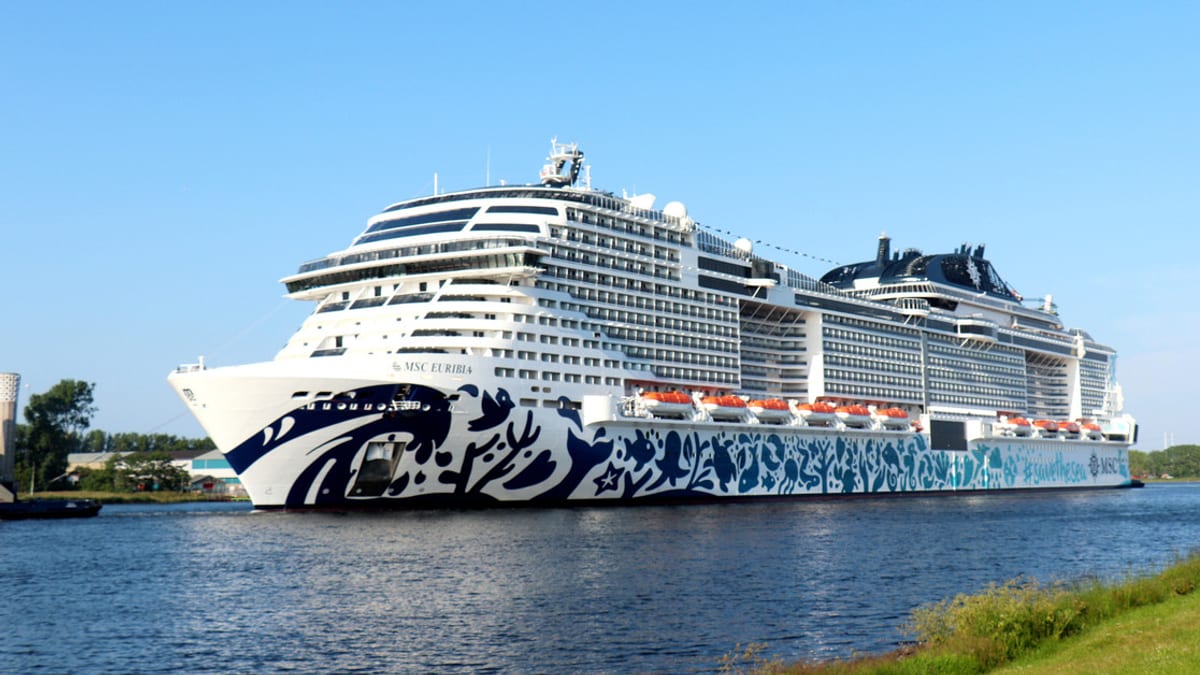
First Northern Europe Sailing From Kiel Called Off
Publicly available information shows that MSC Cruises has withdrawn MSC Euribia’s first scheduled cruise of the 2026 European season, a round-trip itinerary from Kiel, Germany, that was due to depart on May 2. The voyage was intended to mark the start of the ship’s summer deployment in Northern Europe, with itineraries visiting ports around the Baltic and Norwegian coasts.
Reports indicate that the cancellation is directly linked to delays in moving the ship out of the Middle East, where it has been laid up following the suspension of Gulf sailings earlier this year. The vessel had been due to reposition via the Red Sea and Suez Canal in April, but the evolving security situation and navigation restrictions in key choke points have disrupted those plans.
According to published coverage in specialist cruise media, affected guests are being offered alternative options on other MSC Europe departures, along with compensation measures in line with the line’s standard disruption policies. However, the loss of the high-profile season opener from Kiel underlines how fragile long-haul deployment plans remain for ships currently blocked in the region.
The canceled cruise also narrows choices for German and Northern European travelers who had selected MSC Euribia specifically for her newer-ship features and LNG-powered profile. For many, the voyage was booked months in advance as the centerpiece of a spring or early summer holiday.
Ship Still Stuck In Gulf Ports Amid Regional Tensions
Cruise industry reports state that MSC Euribia remains in the Arabian Gulf, alongside several other large cruise vessels unable to exit towards Europe because of security concerns in the Red Sea and surrounding waters. The ship’s Middle East program for late winter and early spring was first curtailed as tensions escalated and regional travel advisories hardened.
Coverage from travel and cruise outlets describes how access to key routes toward the Suez Canal has become increasingly constrained, affecting commercial and passenger shipping alike. For cruise operators, the risk profile associated with lengthy open-water transits near active conflict zones has become difficult to reconcile with guest-safety expectations and corporate duty-of-care standards.
In MSC Euribia’s case, this has translated into a prolonged lay-up in Gulf ports and the suspension of her remaining Middle East sailings. Earlier communication shared with travel media detailed dedicated flight operations to repatriate guests when the ship’s cruises were first cut short, leaving the vessel without passengers while decisions were made on next steps.
With no firm date yet published for a safe departure route to Europe, planners have had to accept that the original spring repositioning timeline is no longer achievable. The cancellation of the Kiel departure is widely seen as the first tangible scheduling casualty of that delay on the European side of the ship’s program.
Knock-On Effects For Guests And Regional Cruise Ports
The stranded status of MSC Euribia in the Middle East has practical consequences both for booked guests and for ports expecting the ship’s arrival this spring. Travelers who were due to embark in Kiel now face rebooking challenges, as alternative cabins on comparable early-season itineraries across the industry are limited after months of strong advance sales.
Many cruise passengers build their trips around fixed vacation windows, connecting flights and nonrefundable hotel stays. Published reports highlight concerns among guests about rearranging these elements at relatively short notice, particularly when traveling from long-haul markets into Europe.
For ports and local tourism operators in Northern Europe, the loss or delay of a large-capacity ship such as MSC Euribia can translate into fewer day visitors at the very start of the season. Shore-excursion providers, guides, restaurants and retailers in turn see lower-than-forecast early-season volumes, which can be significant in destinations where cruise calls form a key slice of tourism income.
Industry observers note that while one canceled cruise represents only a fraction of a full European season, it adds to a series of ship-movement disruptions that are reshaping port calendars from the Arabian Gulf to the Baltic. If further repositioning voyages are pushed back, more early-season adjustments in Europe may follow.
Middle East Disruptions Hit Multiple Cruise Operators
MSC Cruises is not alone in dealing with ships caught in the Middle East. Travel industry reports list at least half a dozen large cruise vessels from several brands that remain effectively trapped in the Arabian Gulf, with repositioning plans toward Europe or the Red Sea on hold pending clearer security conditions.
Coverage from European and North American outlets indicates that other lines have canceled or reworked itineraries through April and into May, including schedules from Doha, Dubai and Abu Dhabi. Celestyal Cruises, TUI Cruises and regional newcomer Aroya Cruises are among those referenced as managing significant Middle East schedule upheaval.
The ripple effect runs beyond ocean cruising. River cruise operators with Egypt and Red Sea-linked itineraries have also pulled back or paused 2026 departures while monitoring developments, according to sector reporting. Collectively, these moves illustrate how quickly a regional security crisis can cascade through multiple travel segments.
For MSC, MSC Euribia’s predicament overlaps with broader strategic decisions about whether to maintain, scale back or fully withdraw planned Middle East deployments in coming seasons. Trade publications have recently detailed how the company has reoriented some future capacity away from Gulf homeports, pivoting ships instead to the Caribbean, Mediterranean and South America.
What Comes Next For MSC Euribia And Her Europe Season
As of early April 2026, no updated public schedule has confirmed a new repositioning date for MSC Euribia or a revised start for her European program. Cruise watchers suggest that any eventual route back to Europe will depend on both maritime security assessments and the reopening of safe corridors through the Red Sea and Suez Canal or the identification of a viable alternative routing.
Once the ship does leave the Middle East, itinerary planners face the challenge of compressing or restructuring the European season. Options could include adding extra one-way repositioning legs, shortening some voyages, or redeploying the vessel to a different regional pattern altogether, depending on when she can realistically reach Northern waters.
Passengers with bookings later in the summer are being advised in public-facing updates to monitor communication channels from MSC and from their travel advisors. Industry commentary stresses that while the first Kiel sailing has been canceled, operators typically seek to preserve peak-season departures wherever possible, making later cruises more likely to proceed if the ship can be moved in time.
For now, MSC Euribia’s continued presence in the Middle East stands as one of the most visible examples of how geopolitical instability is interfering with cruise deployment on a global scale. The cancellation of her first European cruise underscores how closely linked far-flung regions have become in the modern cruise network, where a ship stranded thousands of kilometers away can quickly disrupt vacation plans and port economies across an entire continent.