


More news on this day
Heavy monsoon rain and strong winds in Mumbai on July 6 have significantly disrupted operations at Chhatrapati Shivaji Maharaj International Airport, with reports of cancelled flights, widespread delays and fresh travel advisories from multiple airlines urging passengers to check schedules before heading to the airport.
Get the latest news straight to your inbox!
Runway Disruptions Follow Weather Turbulence Over Weekend
The latest disruption comes on the heels of a difficult weekend for Mumbai’s main airport, where intense showers and poor visibility forced a temporary suspension of runway operations and a series of diversions. Publicly available data from flight tracking platforms indicates that on Sunday, runway movements were halted for about an hour in the morning as visibility dropped below operating minima.
Local media coverage reports that more than a dozen arriving flights were diverted on Sunday to airports such as Surat and other nearby cities, while departure banks experienced rolling delays across the afternoon and evening. Average delays of around three quarters of an hour were recorded on some services as aircraft waited for weather conditions to stabilize.
As the monsoon system intensified overnight into Monday, the pattern of disruption extended into the new week. Early morning arrivals faced extended holding patterns over the Arabian Sea and the wider Mumbai terminal area, while departures were pushed back as air traffic control sequenced flights through short weather windows.
These operational challenges come at the height of the busy monsoon travel period, when domestic and regional demand through Mumbai remains strong, leaving airlines with limited slack in their schedules to absorb cascading delays.
Monday Morning Impact: Cancellations and Hundreds of Delays
By late Monday morning on July 6, published tallies from airport and airline data showed a sharp escalation in disruption. News reports citing operational statistics indicated that at least 17 flights had been cancelled and more than 200 services delayed across arrivals and departures by around 11:30 a.m. local time.
Some outlets placed the number of delayed flights even higher, with figures suggesting in excess of 300 affected movements as the day progressed. Departure boards showed long lines of services running behind schedule, while a smaller number of flights were cancelled outright as aircraft and crew rosters were thrown off by the weather.
The India Meteorological Department has maintained a red alert for Mumbai and surrounding districts, reflecting the intensity of the rainfall and the likelihood of further heavy showers and gusty winds. Aviation-focused coverage notes that crosswinds and sudden visibility drops have been key constraints for operations, particularly during peak shower activity.
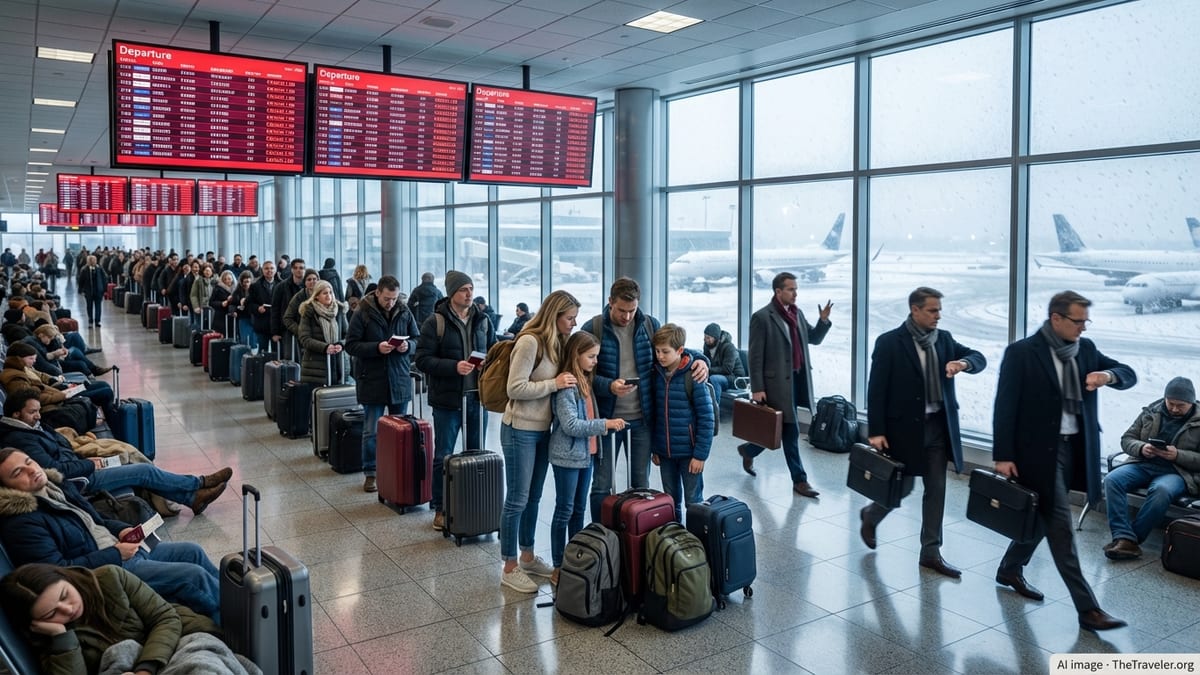
For travelers, the practical result has been extended queues at check in and security, crowded gate areas and a rising volume of missed connections for those using Mumbai as a hub. Social media posts and travel forums on Monday captured accounts of passengers facing hours-long waits at terminals and uncertainty about revised departure times.
Airlines Issue Advisories and Adjust Schedules
In response to the deteriorating weather picture, several Indian carriers have issued formal advisories highlighting potential disruption at Mumbai and other affected airports across western India. Budget operator IndiGo has warned that bad weather over Mumbai may affect its flight schedules and has urged customers to monitor their flight status through official channels before leaving for the airport.
Reports also indicate that full-service and low-cost competitors including Air India, Akasa Air and SpiceJet have issued similar guidance, flagging the possibility of delays and selected cancellations on sectors touching Mumbai, Pune and Goa. Some airlines have advised passengers to allow extra time to reach the airport, given reports of waterlogging and traffic congestion on key approach roads.
Operational planners are focusing on preserving critical trunk routes and high-demand sectors while trimming frequencies where necessary to rebuild punctuality. In some cases, airlines have consolidated lightly booked services or adjusted aircraft rotations to ensure that aircraft and crew are positioned at the right bases once the heaviest rainfall passes.
While no long-term schedule cuts have been announced, aviation analysts quoted in business media suggest that carriers may opt for short-term capacity tweaks over the next 24 to 48 hours if the red alert persists, to reduce knock-on disruption across their wider domestic networks.
Travel Advice for Passengers Heading To or From Mumbai
With the situation still fluid on Monday afternoon, publicly available advisories from airlines and airport-related updates point to a few practical steps for travelers planning to use Mumbai in the coming hours. Passengers are being strongly encouraged to check the real-time status of their flights through airline apps or customer service channels before setting out.
Travel specialists also recommend allowing significantly more time than usual to reach the terminals, as heavy rain has been linked to slow-moving traffic and localized flooding on arterial routes. Those connecting through Mumbai should be aware that even if their inbound flight is on time, onward services may be affected by earlier weather-related congestion.
Where flights are heavily delayed or cancelled, most carriers are offering standard reaccommodation options in line with their existing policies, including same-day rebooking on available services. Some airlines have indicated flexibility for date or sector changes in the case of severe weather, although specific options vary by carrier and fare type.
Given the intensity of the monsoon conditions and the ongoing red alert, travelers with non-essential journeys over the next day may wish to consider deferring plans where possible, particularly if itineraries involve tight connections or onward ground travel through areas already affected by flooding and landslides.
Outlook for Operations as Monsoon Rains Continue
Meteorological forecasts suggest that heavy to very heavy rain is likely to persist over Mumbai and parts of coastal Maharashtra in the short term, keeping pressure on aviation operations at Chhatrapati Shivaji Maharaj International Airport. While modern air traffic management and navigation systems allow aircraft to operate in challenging conditions, prolonged downpours and strong winds can still constrain runway capacity and ground handling.
Industry observers point out that the current episode highlights the vulnerability of high-density airports to extreme weather during the peak monsoon phase. Even relatively short closures for safety reasons can trigger a ripple effect of delays and diversions, particularly at hubs where departure and arrival waves are tightly scheduled.
If rainfall intensity eases and visibility improves later on Monday and into Tuesday, airlines are expected to work through backlogs by adding capacity on certain routes, swapping to larger aircraft where possible and optimizing turnaround times. However, residual delays are likely to continue for several hours after any weather improvement as aircraft and crew rotations are brought back into alignment.
For now, passengers planning to travel via Mumbai are being advised to stay closely informed, keep flexible plans where possible and prepare for the possibility of extended dwell times at the airport as the city navigates another intense monsoon spell.