


For frequent cruisers, the right credit card can feel like a backstage pass to better vacations: priority boarding, hundreds of dollars in onboard credit, and discounts on future sailings. With Royal Caribbean Group and Bank of America launching the new Royal ONE and Royal ONE Plus Visa Signature credit cards in 2026, travelers now have more direct ways than ever to turn everyday spending into free drinks, Wi Fi, specialty dining and even companion cruise fares. The key is understanding how the rewards work in the real world and planning your cruises around them.
Get the latest updates straight to your inbox!
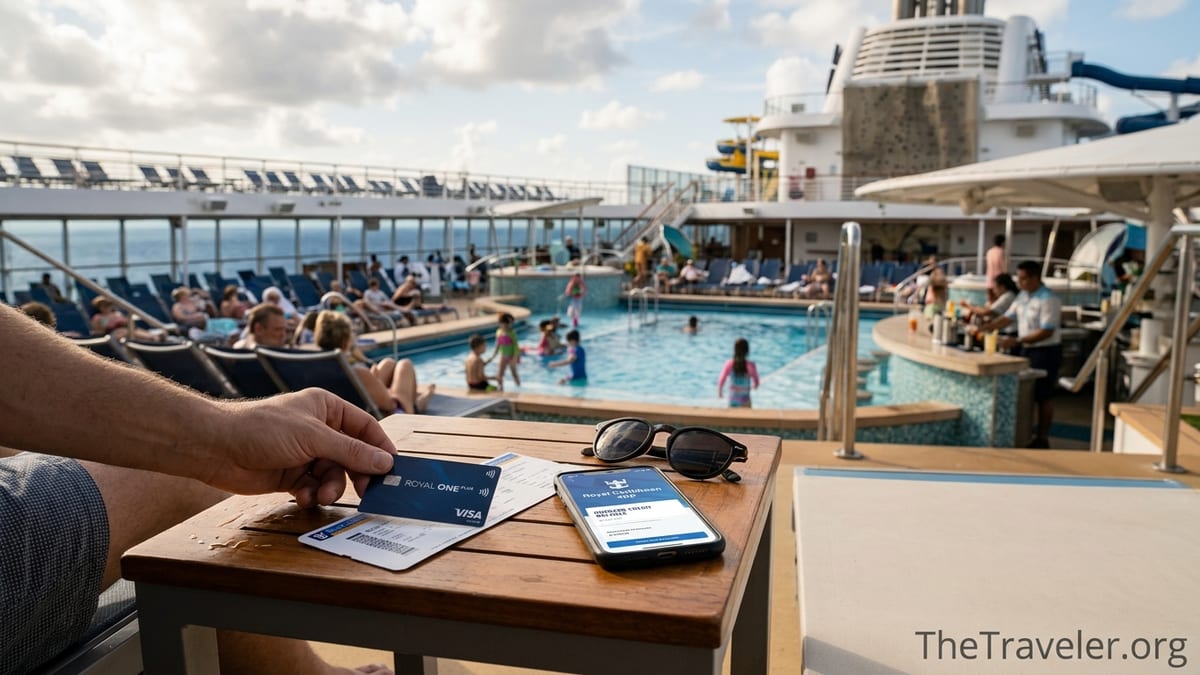
Understanding the New Royal Caribbean Premium Cards
Royal Caribbean Group’s co branded cards were overhauled in spring 2026, when the long running MyCruise Visa was replaced by two new products: Royal ONE Visa Signature and Royal ONE Plus Visa Signature. Both are issued by Bank of America and designed as tri branded cards, meaning the same points and benefits work across Royal Caribbean, Celebrity Cruises, and Silversea. Travelers use them like any other Visa, but the rewards are tightly focused on cruise discounts and onboard credits rather than general travel redemptions.
The no annual fee Royal ONE card is aimed at guests who cruise once a year or less but still want meaningful perks. Promotional offers at launch included a welcome bonus of around 45,000 points after meeting a modest minimum spend in the first 90 days, roughly equal to 450 dollars in cruise discounts or onboard credit. Ongoing earning is typically 3 points per dollar on purchases with Royal Caribbean Group brands, 2 points on everyday categories like gas, groceries and EV charging, and 1 point on everything else.
The Royal ONE Plus card, which carries a 99 dollar annual fee, is positioned as the premium option for travelers who cruise frequently or prefer suites and longer itineraries. Its launch offer has been roughly 70,000 points after an attainable spend threshold in the first three months, worth about 700 dollars toward cruises or onboard spending. Day to day, the card earns 4 points per dollar with Royal Caribbean Group, 2 points on a wider mix of travel and dining categories, and 1 point on other purchases. For guests who put airfare, pre cruise hotels and regular dining on the card, those elevated categories can add up quickly.
Both cards earn the same underlying rewards currency, which is redeemed through Royal ONE Rewards for either cruise fare discounts or onboard credit. In practice, most redemptions value points at roughly 1 cent each. That means 10,000 points are usually worth about 100 dollars in onboard spending. Premium redemptions for companion fares or upgrades sometimes offer slightly better value but are more restrictive. Understanding that baseline value helps travelers decide when to redeem and when to save points for a bigger payoff.
Converting Daily Spending Into Real Cruise Value
The fastest way to turn the Royal ONE cards into tangible cruise perks is to align everyday expenses with the bonus categories, then direct those points into specific cruise goals. Consider a couple in Florida who cruise once or twice a year with Royal Caribbean and spend about 1,000 dollars a month on groceries, 300 dollars on gas, 500 dollars on dining out and 400 dollars on general purchases. If they put all grocery and gas spending on the no fee Royal ONE card, they might earn roughly 31,000 points a year, or about 310 dollars in onboard credit or discounts, without changing their budget.
Now imagine the same couple upgrades to Royal ONE Plus and also charge 3,000 dollars in flights and pre cruise hotels over the year, plus 3,000 dollars in dining. At 2 points per dollar in those categories, they add another 12,000 points, bringing their total to around 43,000 points. Layer on the 70,000 point welcome bonus in the first year and they suddenly have about 113,000 points, worth roughly 1,130 dollars in cruise savings or onboard spending. For a seven night Caribbean sailing, that could cover beverage packages for two, Wi Fi, several specialty dinners and a couple of signature shore excursions.
Real world cardholders often focus first on the welcome bonus timing. A typical pattern is opening the card three to six months before a planned cruise and directing big expenses into the minimum spend requirement. One frequent cruiser reported using a new Royal Caribbean card to pay for a 2,500 dollar cruise booking. That single purchase was enough to trigger the sign up bonus and earn several thousand additional points, which they then redeemed for a 50 dollar or more stateroom credit. By stacking regular earnings and a one time bonus around a specific trip, travelers effectively prepay part of their onboard spending without touching cash.
Another common strategy is to use the card to pay for recurring expenses that are easy to automate, such as streaming services, cell phone bills and utilities, while avoiding interest by paying the statement in full. Over a year, a family might quietly generate 20,000 to 30,000 points from autopay charges and weekly supermarket runs. When they log into their Royal ONE Rewards account ahead of a cruise, those points can be converted into onboard credit that meaningfully reduces the bill they settle after disembarkation.
Turning Points Into Onboard Credits That Actually Matter
For many travelers, the most satisfying way to use Royal ONE or Royal ONE Plus points is converting them into onboard credit, often shortened to OBC. Onboard credit functions like digital cruise cash loaded to the guest’s SeaPass account. Most purchases made on board, from cocktails to spa treatments, are charged to that account and then offset by any available credits before the linked credit card is billed at the end of the sailing.
Redemption values can vary across promotions, but a common structure is 10,000 points for 100 dollars in onboard credit, 25,000 points for 250 dollars, 50,000 points for 500 dollars, and so on. Because points are typically worth around 1 cent each in this format, cardholders often treat onboard credit redemptions as a straightforward way to cash out their rewards, particularly if they already have a cruise booked.
The timing of redemptions matters. Travelers usually redeem points online through their Royal ONE Rewards portal by entering the booking number, ship and sail date. The onboard credit normally appears in the cruise reservation within a few days and shows up as a positive balance in the Royal Caribbean app or on the account statement once on board. Some past cruisers have reported their credit posting within two or three days of embarking, though it is safest to redeem at least a few weeks before sailing to avoid cutoffs tied to the departure date.
Consider a family of four booked on a seven night Western Caribbean itinerary on an Oasis class ship. They redeem 30,000 points for 300 dollars in onboard credit a month before departure. On embarkation day, they browse the Cruise Planner and use part of that credit to prepay one specialty dinner at a steakhouse for about 50 to 60 dollars per adult plus gratuities, and a family pass to the ship’s water park style slides. Once onboard, they charge frozen drinks at the pool, arcade credits for the kids and a photo package, all of which quietly draw down the remaining balance. At the end of the trip, the final statement shows that those extras were effectively covered by the card points, easing the post vacation sting.
Stacking Card Benefits With Cruise Promotions and Loyalty Status
Where the Royal Caribbean premium cards become particularly powerful is when card rewards are combined with other discounts and loyalty programs. Royal Caribbean, Celebrity and Silversea regularly run sales that offer reduced deposits, kids sail promotions or bundled onboard credits on select sailings. A traveler might book a balcony cabin during a promotion that includes 150 dollars of promotional onboard credit and then add another 300 dollars of onboard credit from Royal ONE redemptions, effectively creating a 450 dollar onboard wallet before ever stepping onto the ship.
Many frequent cruisers also hold Crown and Anchor Society status with Royal Caribbean or Captain’s Club status with Celebrity. Higher tiers sometimes receive small onboard credits, discounted internet or priority boarding lines. When paired with the Royal ONE Plus card, which can itself include perks such as priority suite boarding and luggage handling on certain brands, guests may see multiple benefits stack on embarkation day. For example, a Diamond level Crown and Anchor member staying in a junior suite could enjoy priority check in from loyalty status while also using the credit card’s priority baggage handling to make boarding less stressful.
Travelers can also use the cards strategically around big ticket extras. Suppose a couple plans to splurge on a private cabana at Perfect Day at CocoCay, which can run several hundred dollars on peak summer sailings, or a helicopter glacier tour booked through Celebrity in Alaska. Charging those purchases to a Royal ONE Plus card earns 4 points per dollar, accelerating rewards, while previously redeemed onboard credit from the same card offsets other onboard spending. Over time, the cycle of spending and redeeming can halve the effective cost of premium experiences that might otherwise feel out of reach.
It is also worth watching for limited time redemption offers. Occasionally, cruise lines or their banking partners introduce special redemptions such as companion fare discounts, upgrades from oceanview to balcony, or extra value on certain itineraries. For example, some past promotions have allowed cardholders to redeem a larger block of points for up to 1,500 dollars off a companion fare on select seven night Caribbean sailings. These offers come with restrictions and blackout dates but can provide better than 1 cent per point value when used thoughtfully.
Planning a Cruise Around Your Card’s Anniversary and Perks
The Royal ONE and Royal ONE Plus cards are built with anniversary style bonuses that reward ongoing use, which savvy travelers can sync with a yearly cruise. Reports at launch indicate that the no fee Royal ONE can offer an anniversary reward around 100 dollars in onboard credit after meeting a specific annual spending threshold, while Royal ONE Plus can offer around 200 dollars under similar conditions. Timing a major sailing to fall a month or two after that anniversary bonus posts effectively guarantees a chunk of “free” onboard spending every year.
Consider a pair of retirees who cruise with Royal Caribbean every spring. They open a Royal ONE Plus card in April 2026, meet the spending requirement for the 70,000 point sign up bonus by midsummer, and also reach the annual spend threshold that unlocks the 200 dollar anniversary reward by early the next year. They then book a March 2027 sailing out of Miami. Ahead of that cruise, they redeem 50,000 points for 500 dollars in onboard credit and rely on the 200 dollar anniversary credit that posts automatically. Arriving at the pier, they already have 700 dollars earmarked for onboard spending, enough to cover a deluxe beverage package, Wi Fi for both guests and multiple nights of specialty dining.
For travelers who fly to their departure port, the Royal ONE Plus card’s travel related credits can also play into timing. One of the headline perks is reimbursement for a TSA PreCheck or Global Entry application fee, up to roughly 120 dollars every four years. Applying six to nine months before an international cruise to Europe or a transatlantic repositioning voyage lets guests enjoy shorter security lines and smoother re entry to the United States, effectively turning a card perk into a quality of life upgrade for the entire trip.
Families booking once in a lifetime itineraries, like an Alaska cruise with a land tour or a Mediterranean voyage on a new Icon class ship, can coordinate final payments, airfare purchases and hotel stays around the card’s bonus calendar. Spreading large expenses to ensure they line up with the welcome bonus window and the annual anniversary bonus can add hundreds of dollars of extra value, without taking on new spending beyond what the trip already requires.
Real Onboard Scenarios: Where Card Earn and OBC Shine
To see how the Royal Caribbean premium cards play out in reality, it helps to walk through a few typical onboard spending scenarios. Take a seven night Caribbean sailing on an Oasis class ship in peak summer. A family of four might reasonably spend 600 to 800 dollars on extras like soft drink or refreshment packages, casual specialty restaurants such as a burger venue and a hibachi style dinner, ice cream treats, arcade games and a few drinks for the adults. If the parents redeemed 50,000 points for 500 dollars in onboard credit in advance, the effective out of pocket cost at the end of the sailing could drop to just a couple hundred dollars.
On another sailing, a couple celebrating an anniversary might use their onboard credit more deliberately for indulgent experiences. They could book a couples massage at the spa for about 300 dollars, add a chef’s table style dinner with wine pairings for another 150 to 200 dollars, and reserve a daybed or cabana at the adults only area of Perfect Day at CocoCay. If they entered the trip with 700 dollars in onboard credit between a sign up bonus redemption and an anniversary reward, those splurges could be nearly or entirely covered, leaving their linked credit card to settle only incidental purchases like souvenir photos or a final round of drinks.
Solo travelers and digital nomads often focus their onboard credit on connectivity and convenience. A solo guest on a two week transatlantic crossing might buy the ship’s premium Wi Fi package for around 25 to 30 dollars per day, totaling roughly 350 to 400 dollars, plus laundry services and a few specialty coffees. By directing daily spending to a Royal ONE Plus card in the months before sailing, they can accumulate enough points to redeem onboard credit that makes working remotely at sea financially realistic.
Even small amounts of credit can be surprisingly useful. Some cruisers report using modest redemptions of 100 to 150 dollars to cover gratuities that are automatically charged to the stateroom, which can easily reach 16 to 20 dollars per person per day. Others prefer to earmark onboard credit specifically for shore excursions, such as a catamaran sail and snorkel in St. Thomas, a day at the Thrill Waterpark in CocoCay or a guided tour of Old San Juan. Because onboard credit is generally applied to the overall account, guests can experiment with different ways of allocating it for the greatest personal satisfaction.
Risks, Fine Print and When Another Card Might Be Better
As with any co branded travel card, the Royal Caribbean premium cards are not automatically the best fit for every traveler. Their greatest strength is also their limitation: points are highly specialized. Rewards are typically locked into cruise discounts and onboard credit across Royal Caribbean, Celebrity and Silversea, which makes them extremely valuable for loyal cruisers but much less flexible than general travel cards from major banks that allow transfers to multiple airline and hotel partners.
Travelers who cruise only once every few years, or who prefer to switch between different cruise brands, may be better served by a more flexible travel rewards card that earns transferable points or offers broad statement credits against any travel purchase. In those cases, using a general card to book a Royal Caribbean cruise can sometimes yield higher overall rewards value than the co branded card, especially when sign up bonuses and premium category multipliers are factored in.
There are also practical considerations around interest and fees. While both Royal ONE cards are marketed with no foreign transaction fees, which is a clear advantage for purchases made in European ports or onboard international sailings, their ongoing interest rates are variable and can be relatively high compared with low rate cards. The best way to use them is by paying every statement in full, treating the rewards as a rebate on planned spending rather than a reason to carry balances. Travelers who tend to finance trips over time might find that interest charges quickly outweigh any onboard credit they receive.
Finally, the terms of welcome offers, anniversary bonuses and redemption tables can change over time. Travelers should always double check the current Bank of America and Royal Caribbean Group materials before applying or redeeming, especially regarding minimum spends, point expiration policies and any blackout dates on promotional redemptions. In general, though, the core value proposition has remained consistent: use the cards heavily for cruise related and everyday bonus category spending, redeem points at around 1 cent each for onboard credit or cruise discounts, and stack that value with loyalty status and sale fares for outsized returns.
The Takeaway
For travelers who love Royal Caribbean, Celebrity Cruises or Silversea and sail at least every year or two, the new Royal ONE and Royal ONE Plus Visa Signature cards can be powerful tools for unlocking more from every voyage. By concentrating everyday expenses in their bonus categories, timing applications and redemptions around key sailings, and viewing points primarily as fuel for onboard credits and cruise discounts, cardholders can realistically shave hundreds of dollars off each vacation.
The premium Royal ONE Plus version adds a layer of travel focused perks, from higher earn rates on flights and hotels to an application credit for TSA PreCheck or Global Entry, making it particularly appealing to frequent flyers and suite guests. For many loyal cruisers, one well planned cruise per year is enough to outweigh the annual fee when the welcome bonus, anniversary rewards and stacked onboard credits are taken into account.
As with any rewards strategy, success comes down to alignment. Travelers who pay in full, book most of their vacations with Royal Caribbean Group and cherish onboard experiences like specialty dining, shore excursions and Wi Fi are positioned to get the most from these cards. For them, the Royal Caribbean premium cards effectively transform daily spending back home into stronger memories at sea, turning every grocery run and gas fill up into another step toward a better cruise.
FAQ
Q1. What is the main difference between Royal ONE and Royal ONE Plus?
The no fee Royal ONE card focuses on solid earn rates and basic perks, while Royal ONE Plus adds a 99 dollar annual fee in exchange for higher earning on cruise purchases, broader bonus categories like air, hotel and dining, and richer travel benefits such as an anniversary onboard credit reward and a security screening fee credit.
Q2. How much are Royal ONE points worth when redeemed for onboard credit?
Values can vary slightly by promotion, but in typical redemptions, points are worth about 1 cent each toward onboard credit or cruise discounts, so 10,000 points usually equate to roughly 100 dollars in value.
Q3. Can I use onboard credit from my card to pay for gratuities?
Yes, onboard credit generally applies to most charges made to your SeaPass account, including daily service charges, as long as there are no special restrictions on the specific credit you received.
Q4. How far in advance should I redeem points for onboard credit?
It is safest to redeem at least a few weeks before sailing. Redemptions are tied to your ship and sail date, and onboard credit typically appears in your reservation or on your onboard account within days, but waiting until the last minute can risk missing cutoff windows.
Q5. Do Royal ONE points expire?
Point expiration policies can change, but generally points remain active as long as your account stays open and in good standing. Travelers should always check the latest program terms from Royal Caribbean Group and Bank of America for current rules.
Q6. Can I combine promotional onboard credit from a sale with credit from my card points?
In most cases, yes. Promotional onboard credit from a fare sale, casino offer or travel agent can stack with onboard credit you generate by redeeming Royal ONE card points, all of which typically pool into a single onboard balance.
Q7. Are these cards good for travelers who cruise with multiple brands?
The Royal ONE cards work across Royal Caribbean, Celebrity Cruises and Silversea, which helps if you like those three brands. If you regularly sail with other cruise lines, a more flexible general travel card might provide better overall value.
Q8. Is the TSA PreCheck or Global Entry credit on Royal ONE Plus worth it?
For travelers who have not yet enrolled in a trusted traveler program, the reimbursement for the application fee, typically around 80 to 120 dollars every four years, can more than offset the card’s annual fee by itself, especially if you fly to your cruise port.
Q9. Can I redeem points to reduce the cruise fare instead of taking onboard credit?
Yes, many travelers choose to use points as a discount on the cruise fare, which can make the initial booking cheaper. In general, the value per point is similar to onboard credit, so the decision often comes down to whether you prefer lower fare upfront or extra spending power onboard.
Q10. What happens to unused onboard credit after my cruise?
Most forms of promotional or reward onboard credit are use it or lose it and disappear once your cruise ends. If the credit comes from a refundable source, such as an overpayment, any remaining balance may be returned to your original form of payment, but card reward credits themselves typically do not carry over.