

More news on this day
Myanmar has emerged as one of the most restricted destinations in Southeast Asia, with multiple governments now classifying the country in their highest risk band and advising travelers not to visit, even as neighboring tourism hubs such as Thailand, Vietnam, Laos, and the Philippines remain open under comparatively lower alert levels.
Get the latest news straight to your inbox!
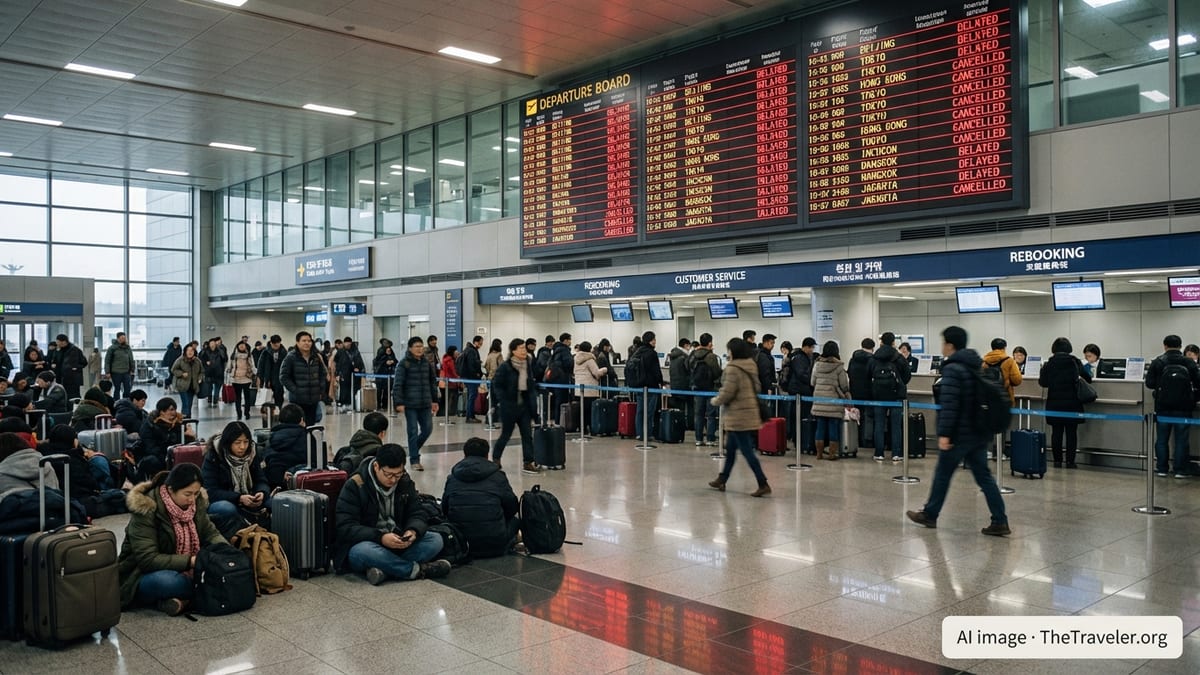
Myanmar Moves Into Highest Global Risk Tier
Publicly available advisories from the United States list Burma, or Myanmar, at Level 4, the most severe “Do Not Travel” rating, reflecting a combination of civil conflict, arbitrary security measures, and limited consular access for foreign nationals. Independent travel-risk summaries circulated in early 2026 similarly highlight Myanmar among a small group of destinations facing sustained internal instability and life-threatening conditions for visitors.
European partners present a parallel picture. Travel guidance from the United Kingdom in early 2026 advises against all travel to significant parts of Myanmar and against all but essential travel to much of the remainder, citing active fighting, a volatile political environment, and unpredictable security checkpoints. These combined signals place Myanmar in a distinctly higher-risk category than most of mainland Southeast Asia.
Mapping projects that aggregate global government advisories now visually distinguish Myanmar as a red “no-go” territory, in contrast with the amber or yellow grades applied to much of the surrounding region. This shift has effectively repositioned Myanmar from an emerging cultural destination to one of the most heavily restricted countries in the Southeast Asian zone.
Contrasting Picture in Thailand, Vietnam, Laos, and the Philippines
While Myanmar climbs into the upper tier of global travel risk, official information shows that popular neighboring destinations sit several steps lower on advisory scales. The latest United States travel notices place Thailand and Laos at Level 2, meaning travelers are urged to exercise increased caution, usually due to localized unrest or crime, rather than widespread armed conflict. Vietnam is currently categorized at Level 1, the lowest tier, where normal precautions are considered sufficient, and the Philippines is also described as a mixed but generally manageable environment, with concerns concentrated in specific areas rather than nationwide.
Foreign ministries in Europe and the Asia-Pacific region largely align with this gradation. Recent summaries of advice from countries such as the United Kingdom and Australia refer to pockets of concern in Thailand and the Philippines, especially in border regions and areas with a history of insurgency or criminal activity, but they stop short of broad “do not travel” warnings. Vietnam in particular continues to be profiled as one of the more stable and accessible options in Southeast Asia for international visitors.
Travel-health resources echo these distinctions. Regional guidance from health agencies for Laos, Thailand, Vietnam, and the Philippines largely focuses on vaccination requirements, mosquito-borne diseases, and routine safety measures rather than the kind of systemic security threats now associated with Myanmar. This divergence underscores how far conditions inside Myanmar have moved away from the wider Southeast Asian tourism norm.
Inside Myanmar’s Travel Chaos
Reports from regional observers and traveler accounts describe a country where basic tourism infrastructure has been repeatedly disrupted since the military takeover in 2021, with conditions deteriorating further into 2025 and 2026. Domestic flight schedules remain subject to sudden changes, key overland routes can be closed or diverted due to clashes, and localized curfews or checkpoints appear with little warning.
The instability has spilled into commercial services. Travelers posting updates in early 2026 describe a shrinking hotel inventory in once-popular destinations such as Bagan, with many properties offline, websites defunct, or reservation systems inactive. International booking platforms show limited or no availability for months ahead in several regions, signaling a collapse in mainstream, bookable options that most foreign visitors rely on.
Banking and connectivity add further complications. Sanctions, cash shortages, and inconsistent card acceptance leave many foreigners dependent on hard currency, while telecommunications restrictions and periodic internet blackouts undermine the ability to confirm arrangements or receive real-time security information. Together, these factors amount to what some analysts characterize as a “travel chaos” scenario, where even experienced visitors face substantial uncertainty moving around the country.
Insurance considerations amplify the risk. Many insurers reference government advisories when determining coverage, and some policies exclude claims that arise when people travel against Level 4 or equivalent warnings. Travelers who disregard the guidance may therefore find themselves without valid medical or evacuation coverage if an incident occurs in Myanmar.
Regional Tourism Flows Realign
The widening safety gap between Myanmar and its neighbors is reshaping how visitors move through Southeast Asia in 2026. Tour operators that once promoted multi-country itineraries including Myanmar report, via their public materials, a pivot toward circuits built around Vietnam, Thailand, Laos, Cambodia, Malaysia, and the Philippines instead. Recent promotional campaigns and alumni-group itineraries, for example, route travelers through Vietnam, Laos, Thailand, and Cambodia while omitting Myanmar altogether.
Industry analyses suggest that this re-routing consolidates the status of Bangkok, Hanoi, Ho Chi Minh City, and Manila as primary gateways for long-haul visitors. With Myanmar increasingly absent from organized tour programs and most scheduled air connections oriented around neighboring hubs, the country risks long-term marginalization from mainstream regional tourism even if conditions eventually improve.
Independent travel planners are making similar calculations. Discussion threads on travel forums commonly treat Myanmar as an exceptional case within Southeast Asia, often recommending that visitors focus trips on relatively stable destinations such as Vietnam, Thailand, and Malaysia while monitoring advisories for specific islands or provinces in the Philippines. The net effect is a concentration of demand in countries that combine infrastructure resilience with lower security risk.
What the New Advisories Mean for Future Visitors
The elevation of Myanmar into a top-tier “Do Not Travel” category has practical consequences for would-be visitors. At Level 4, many governments urge their citizens to avoid non-essential trips entirely and warn that consular assistance on the ground may be severely limited if something goes wrong. In conflict-affected areas, evacuation options can be constrained by damaged infrastructure, airspace restrictions, or a lack of secure overland routes.
For travelers intent on exploring Southeast Asia in 2026, the emerging consensus in publicly available guidance is that the broader region remains accessible, but Myanmar stands apart as a high-risk exception. The disparity between Myanmar’s status and that of neighbors such as Thailand, Vietnam, Laos, and the Philippines illustrates how sharply conditions can diverge within a single geographic bloc often marketed as a unified backpacker trail.
Risk specialists emphasize that advisory levels are not static. Further deterioration in Myanmar could trigger additional restrictions, while sustained improvements might eventually see the country reclassified. For now, however, Myanmar’s move into the uppermost advisory tier clearly marks it as one of the least suitable travel choices in Southeast Asia, even as nearby countries continue to welcome visitors under comparatively manageable conditions.