

More news on this day
As college basketball tournaments draw record crowds and broadcast audiences, wetter and more volatile seasons are increasingly colliding with tight NCAA travel windows, raising the risk of flight disruptions for teams, officials and fans moving around the national bracket.
Get the latest news straight to your inbox!
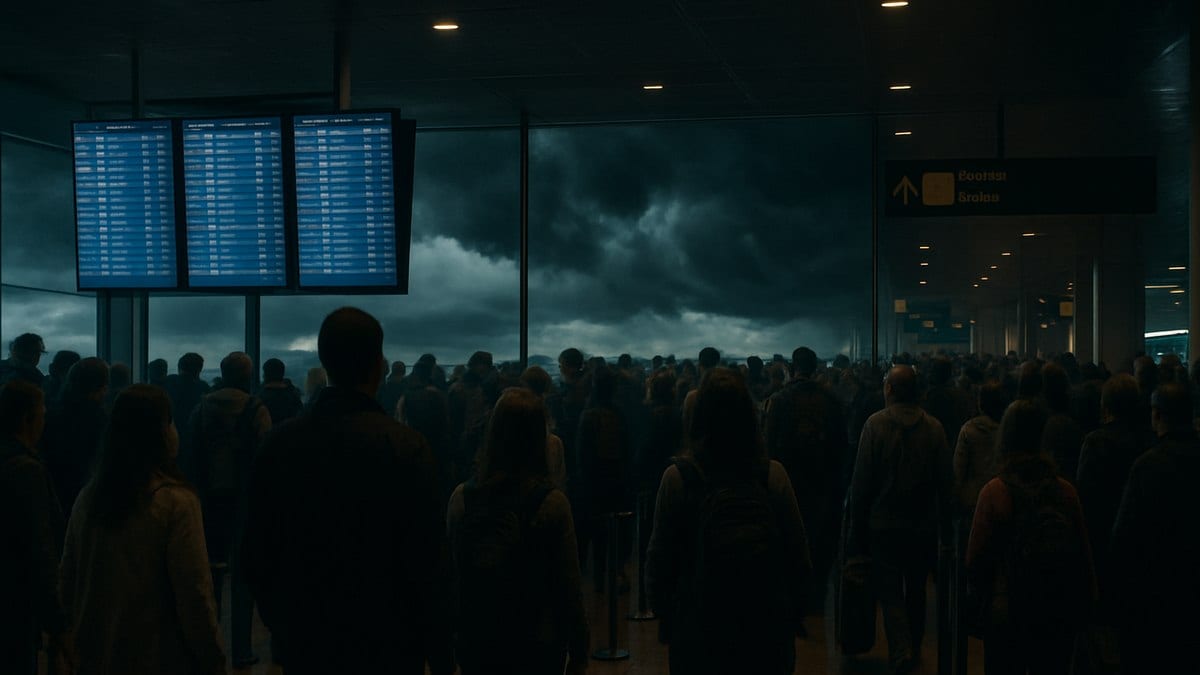
Stormier Skies Meet a Packed Tournament Calendar
Recent seasons have highlighted how exposed U.S. aviation is to fast-changing weather patterns at the very moment March and early April college tournaments concentrate demand on a handful of major hubs. Severe thunderstorms, winter storms and atmospheric river events have all contributed to large waves of delays and cancellations across airports that routinely handle NCAA team charters and fan traffic.
Publicly available aviation and weather data show that storms are increasingly a defining feature of peak travel days. Federal statistics cited in industry coverage indicate that nearly a third of U.S. arrival delays over a recent 12 month period were attributed to weather, with mass disruptions regularly triggered by single storm systems sweeping through New York, Chicago, Atlanta and other hubs that are essential links in tournament travel.
In March 2026, for example, severe weather across the eastern half of the United States led to hundreds of cancellations and thousands of delays in a single day, affecting passengers headed to spring break destinations and March basketball games alike. Reports describe snow, high winds and thunderstorms converging on the same corridor that carries a large share of NCAA tournament traffic, underscoring how quickly weather can undermine finely tuned bracket logistics.
The cumulative effect is a growing awareness within college sports that air travel during tournament weeks is no longer a routine operational detail but a central risk factor. The NCAA’s public emphasis on contingency planning reflects a broader trend across aviation, where travel managers increasingly treat weather as a structural, not occasional, challenge.
Evidence Mounts That Wetter Seasons Are Reshaping Aviation
Climate and aviation researchers have been documenting how a warmer atmosphere is influencing flight operations. Analyses compiled by national climate programs note that changes in the incidence and intensity of thunderstorms, heavy rain, snow and ice storms are expected to affect airline schedules and airport reliability, particularly at low lying or coastal facilities exposed to flooding.
Global and regional assessments released over the past two years point to more frequent high impact weather events with stronger surface winds near major airports, conditions that can force extended ground stops, diversions and reroutings. A recent scientific study focusing on mid latitude storms found that events likely to disrupt airport operations are becoming more intense, with stronger winds and larger vertical wind differences that complicate takeoffs and landings.
These findings align with operational data from recent U.S. seasons. Successive winter storms in 2024 and 2025 produced thousands of cancellations and widespread delays, including at southern and mid Atlantic airports that typically serve early round NCAA sites. Summer 2025 brought a different kind of disruption, as extreme heat in parts of the country led to performance limits for aircraft and a notable spike in weather related delay minutes.
Climate organizations and transportation planners increasingly describe a feedback loop in which aviation both contributes to and is affected by climate change. For tournament travel, the practical outcome is that the window for “routine” flying is narrowing, even as the logistics demands of national brackets continue to grow.
Recent Disruptions Offer Cautionary Lessons for Tournament Travel
Episodes over the past two tournament cycles have illustrated how quickly weather related aviation disruptions can ripple through college basketball schedules. Media coverage has highlighted team flights delayed or diverted by storms, as well as charter aircraft pushed into overnight arrivals after extended holds and reroutes around convective weather.
In parallel, several high profile national storms have stranded large numbers of passengers during the broader March travel period. A January 2025 winter storm produced more than 3,000 cancellations in the United States, while subsequent systems in late 2025 and early 2026 brought record snowfall to some hubs and strong winds to others, repeatedly forcing airlines to pare back schedules and reshuffle crews.
Independent aviation trackers reported that single multi day storm events in 2025 led to more than 1,300 to 1,400 U.S. flights being delayed or canceled at a time, with Chicago, New York and other bracket critical airports among the hardest hit. Separate tallies from July 2025 showed thousands of weather related delays in just a few days as severe storms and heat intersected with peak summer travel.
For the NCAA, these patterns reinforce the risk that a key travel day for teams or officials could align with a major weather system. While airline recovery operations generally prioritize safety and then network integrity, the compressed nature of tournament schedules leaves little margin for extensive rebooking, especially when multiple regionals rely on the same overburdened hubs.
NCAA and Airlines Adapt With Buffering and Contingency Plans
In response to the shifting risk landscape, the NCAA has been placing greater public emphasis on flexible travel arrangements, schedule buffers and diversified routing during championship season. Tournament manuals and planning materials increasingly highlight the need for earlier arrivals at host cities, alternative ground transportation options for regional hops and close monitoring of developing storm systems that could intersect with charter operations.
Airlines, for their part, are rolling out more formalized extreme weather playbooks that tournament organizers can tap into. Industry reports describe the use of advance waivers that allow passengers, including large group bookings, to move travel dates when major storms or heat waves are forecast along likely routes. Carriers are also investing in improved forecasting, dynamic crew scheduling and more resilient hub operations intended to limit the cascade of delays from a single weather event.
Federal aviation authorities are updating operational procedures and resilience plans as well, adjusting traffic management tools and encouraging airports to account for flooding and higher wind events in infrastructure decisions. These measures are not specific to college sports but have direct implications for how reliably tournament charters and fan flights can move through the system.
Travel management companies that work with collegiate athletics note that, during peak disruption periods, even well designed plans can be strained by limited seat availability and aircraft positioning challenges. This reality is prompting some programs to favor earlier departures, multi day buffers before critical games and more conservative connections when routing through historically weather sensitive hubs.
What Fans and Teams Can Expect in Upcoming Tournaments
Looking ahead to upcoming NCAA tournaments, publicly available climate and aviation analyses suggest that wetter, more volatile seasons are likely to remain a central feature of the travel equation. Atmospheric river events in the West, heavier winter storms in parts of the Midwest and East, and more frequent severe thunderstorms in spring and summer all point to a higher baseline risk of disruption.
For teams, that likely means an ongoing shift toward risk management rather than simple point to point booking. Athletic departments may continue to schedule arrivals earlier in host cities, lean more heavily on charter flights that can be re timed around evolving forecasts, and coordinate closely with ground transport providers in case last minute changes are required.
Fans following the tournaments face a similar environment. Travel experts advising the public are increasingly recommending flexible tickets, additional buffer days where possible and careful selection of itineraries that avoid tight connections at weather prone hubs during the stormiest weeks. Reports also stress the value of direct flights into host cities when available, to reduce exposure to multiple weather systems in a single trip.
As college basketball’s marquee events grow in scale and complexity, the interplay between climate, aviation and sports logistics is likely to draw still more attention. For now, the message from data and recent travel seasons is clear: wetter, more extreme weather is no longer a background concern but a defining factor in how smoothly the road to the championship can unfold.