

More news on this day
College basketball’s biggest showcase is colliding with a wetter, stormier atmosphere, as new guidance around NCAA tournament travel intersects with mounting evidence that extreme weather is driving more flight disruptions across the United States.
Get the latest news straight to your inbox!
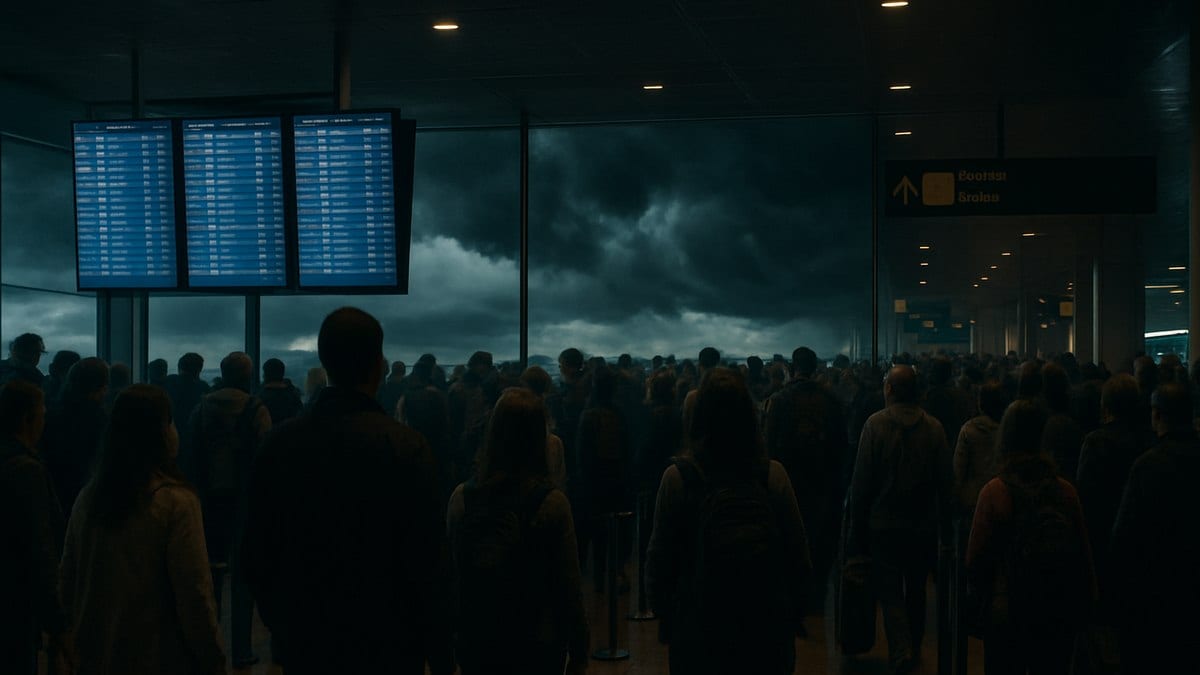
Stormier Spring Skies Meet Packed Tournament Calendars
March and early April already sit in a turbulent weather window, when late winter systems overlap with strengthening spring storms. Publicly available coverage of recent travel seasons shows that heavy rain, snow and severe thunderstorms have repeatedly snarled air traffic just as arenas fill for men’s and women’s March Madness games and other collegiate championships.
Reports from this year’s tournament period described thousands of flights canceled or delayed across major hubs in the Midwest and East as powerful storm systems moved through, directly affecting routes that carry fans and, in some cases, college teams to host cities. At the same time, spring break leisure travel and business trips are competing for the same aircraft and crews, making the network less resilient when a single storm line sweeps across multiple regions.
Travel analyses note that even when teams fly on charters, they often rely on the same congested airspace, runways and ground systems that serve commercial traffic. Once weather triggers ground stops or extended spacing between takeoffs and landings, tournament-bound aircraft can be caught in the same queue as everyone else.
In that context, references to potential tournament travel disruptions reflect a broader pattern: the NCAA’s signature events are increasingly exposed to the timing and track of multi-day storm systems that can upend carefully built brackets of flights as easily as they rearrange the competition bracket on the court.
Data Show Weather Driving a Majority of U.S. Flight Delays
Federal aviation data compiled in recent years indicate that weather is responsible for a substantial share of the most serious delays in the national airspace system. An FAA weather-delay overview reports that roughly three quarters of system-impacting delays longer than 15 minutes over a recent six-year span were attributed to weather conditions, underscoring how storms, low visibility and convective activity ripple through flight schedules.
Additional FAA statements summarizing performance trends show that in 2024, close to two thirds of all delays were linked to weather, far outweighing factors such as traffic volume or runway capacity. Industry research summarized by travel and weather analytics firms points to a similar conclusion, noting that weather-related disruptions routinely dominate other causes when large multi-day systems settle over major hubs.
Those numbers translate into large real-world impacts. Past estimates cited by transportation analysts put the total economic cost of U.S. flight delays in the tens of billions of dollars annually, with weather a primary driver. Passenger-rights groups have calculated that affected travelers often face hundreds of dollars in additional expenses for hotels, meals and rebooking when storms force cancellations.
For the NCAA calendar, this statistical backdrop means that tournaments clustered in late winter and early spring are unfolding during a period that is already prone to significant weather-related bottlenecks. When seedings are announced and teams learn their destinations, the underlying aviation system is entering one of its most fragile phases of the year.
Wetter Seasons and Climate Trends Increase Volatility
Climate assessments from U.S. agencies and international bodies describe a clear trend toward more intense precipitation events in many regions of the country. The U.S. Climate Resilience Toolkit notes that aviation is sensitive to these shifts, as heavier downpours, more frequent thunderstorms and stronger wind events all increase operational risk and reduce flexibility for pilots and controllers.
Studies on aviation and climate link warmer air and increased atmospheric moisture to a higher likelihood of severe convective storms, which can force wide detours and extended holds. Case studies from recent summers and transitional seasons highlight how extreme heat working in tandem with unstable air masses has produced widespread thunderstorm outbreaks, leading to thousands of delays and cancellations in a single day at peak.
Media analyses of major storm episodes over the past few years show that heavy rain and flash flooding have increasingly affected airports themselves, closing taxiways, slowing deicing operations and, in some cases, prompting ground stops at multiple hubs simultaneously. Researchers examining disruption patterns across the national airspace have found that the most severely affected days tend to cluster in winter and summer, but shoulder seasons can be particularly volatile when lingering cold air collides with warmer, moisture-laden systems.
For collegiate athletics, these climate signatures translate into a higher probability that a key travel day for a tournament will coincide with a disruptive weather pattern. The phrase “wetter seasons” now carries operational meaning for schedulers, as they weigh the growing odds that extreme rainfall or back-to-back storm fronts could complicate carefully sequenced itineraries.
Implications for Teams, Fans and Host Cities
When weather-driven flight disruptions intersect with tournament logistics, the consequences can cascade quickly. Teams that arrive late may lose planned practice sessions, compress rest periods or face challenges getting equipment to the venue in time. Public reports from past seasons have described instances where collegiate squads were forced to depart in the middle of the night after deicing delays or route changes, arriving with little margin before scheduled games.
Fans are equally exposed. Coverage from recent storm systems documented thousands of travelers stranded at major hubs while attempting to reach NCAA host cities, with many missing opening-round matchups or being forced to reroute through distant airports. Because March tournaments share the calendar with spring break, hotel occupancy and rental car demand are already elevated, leaving fewer backup options when flights fail.
Host cities, which invest heavily in staging games, also bear risk. Local tourism and hospitality businesses count on full arenas and predictable arrival waves. When storms suppress or scatter inbound traffic, restaurants, hotels and arena vendors may see softer revenues than anticipated, even as they carry the costs of staffing up for peak demand.
These dynamics magnify the importance of realistic travel windows between conference tournaments, early-round games and regional finals. As wetter and more volatile seasons become a planning assumption rather than an exception, collegiate organizers and travel coordinators face growing pressure to build in additional slack without undermining academic schedules or competitive balance.
How Travel Planning Is Adapting to a Wetter Future
Publicly available planning guidance for air travelers increasingly emphasizes flexibility during storm-prone periods, and similar principles are beginning to shape collegiate tournament logistics. Analysts who track airline performance recommend booking earlier departures on critical travel days, favoring nonstop flights into major hubs with stronger recovery capabilities, and allowing extra connection time when tight turnarounds carry heightened risk.
In response to the pattern of weather disruptions, airlines and airports have expanded use of tools such as ground delay programs that meter departures into congested airspace and reduce airborne holding. While these measures improve safety and can smooth operations over the full day, they often lengthen door-to-door travel times for individual flights, which matters when a team must be in a specific city by a fixed tipoff time.
Some universities and conferences, according to travel coverage, have begun exploring more conservative itineraries for high-stakes games, including departing earlier than in past years or arranging contingency plans by routing through alternate hubs less exposed to a forecast storm track. At the same time, athletic departments must balance these strategies against budget pressures and student-athlete academic commitments.
For the broader traveling public that converges around NCAA events, the emerging message is similar. As wetter seasons intensify and climate patterns fuel more erratic storms, fans heading to tournament sites are being urged by consumer advocates and travel experts to build more padding into their journeys, monitor forecasts closely and prepare for the possibility that even a routine connection could be upended by a fast-developing line of thunderstorms or an all-day rain shield over a key hub.