


More news on this day
European air travel faced fresh disruption today as at least 1,692 flights were delayed and 95 cancelled across France, Spain, Austria, Switzerland, Norway and several other countries, affecting services by Air France, Iberia, Air Baltic and multiple carriers at major hubs including Paris, Madrid and Zurich.
Get the latest news straight to your inbox!
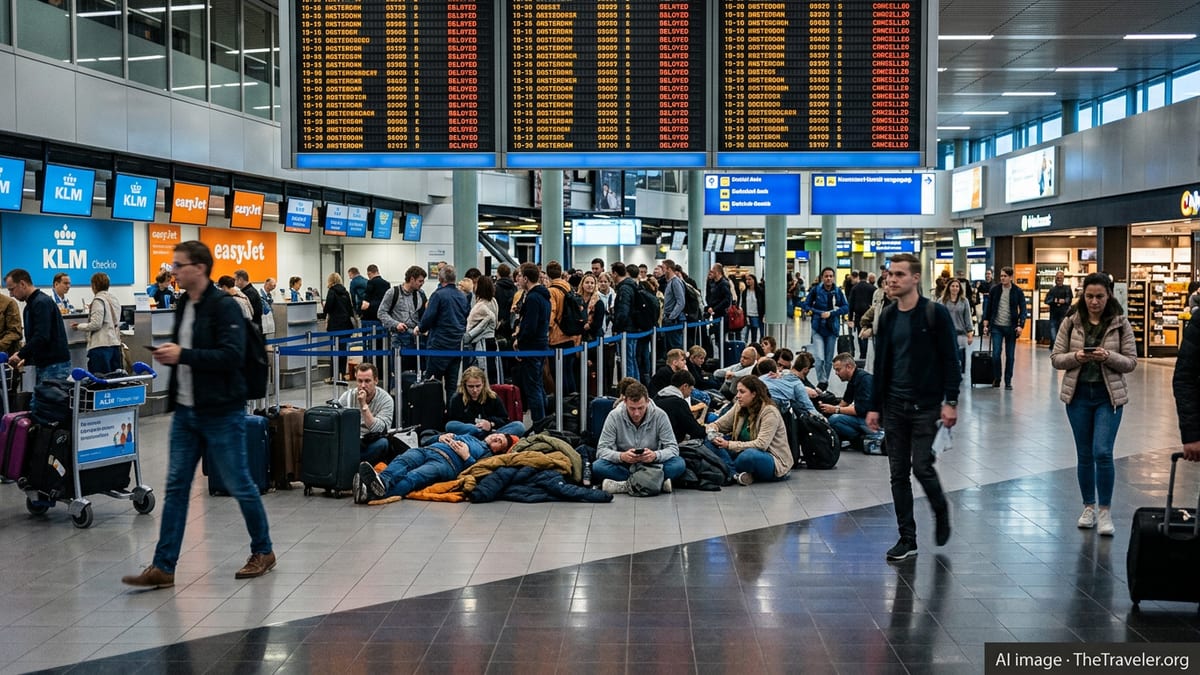
Widespread Disruptions Across Multiple European Hubs
The latest operational data show a patchwork of delays and cancellations spreading across Europe’s main corridors. The disruption spans national networks in France, Spain, Austria, Switzerland and Norway, with additional knock-on effects reported in Italy, Ireland, the Netherlands and the United Kingdom. Together, these markets form some of the continent’s busiest connections for both leisure and business travelers.
According to figures highlighted by industry monitoring services, 1,692 flights were delayed and 95 were cancelled within a 24 hour period, underscoring the fragility of summer schedules at the height of the tourism season. The impact is concentrated on short and medium haul services, but long haul passengers have also faced missed connections and rerouting as delays cascade through airline networks.
Publicly available coverage points to particularly heavy congestion at Paris Charles de Gaulle and Madrid Barajas, where dense banks of European departures leave limited slack when early morning slots are disrupted. Zurich, Vienna and Oslo have also reported elevated delay levels, compounding the pressure on airlines trying to position aircraft and crews for evening departures.
Travel and aviation outlets describe a pattern familiar to regular European flyers: a relatively modest number of outright cancellations compared with a much larger wave of late departures, creating terminal crowding, overbooked rebooking desks and aircraft waiting in long departure queues.
Air France, Iberia, Air Baltic and Others Face Network Strain
The disruption has touched a broad range of carriers, with Air France, Iberia and Air Baltic among the most affected brands on routes within and beyond the affected states. Network airlines that rely heavily on hub-and-spoke operations feel the strain quickly when arrival waves are delayed into their main bases.
In France, Air France operates dense schedules from Paris into regional cities and onward to European capitals. Even relatively small timing dislocations can cause missed connections at Charles de Gaulle and Orly, forcing last minute rebooking, hotel stays and baggage delays. Recent analyses of airline performance this year already show that major legacy carriers are contending with higher than normal summer congestion in French airspace.
Spain’s flag carrier Iberia faces similar challenges at Madrid Barajas, where today’s disruption coincides with an already busy peak in outbound leisure travel to the Balearic and Canary Islands. Travel industry reports from recent days describe several hundred delayed flights and a smaller number of cancellations across Spanish airports, with Iberia, low cost affiliate Vueling and other operators forced to adjust rotations or substitute aircraft.
Further north and east, Air Baltic’s operations through hubs such as Riga connect into Central European airports including Vienna and Zurich. While the Latvian carrier is smaller than Western European giants, delays on shared airspace and at connecting hubs can still ripple into its schedule, particularly on evening departures that rely on aircraft arriving from earlier sectors.
Weather, Airspace Congestion and Structural Pressures
The immediate triggers for today’s figures vary by region, but the pattern fits a broader backdrop of structural pressure on European aviation. Eurocontrol traffic snapshots indicate that overall flight volumes across the continent are near or above pre pandemic levels in peak periods, while key segments of the air traffic control and ground handling workforce remain stretched.
Weather remains a frequent catalyst. Thunderstorms over the Alps, low visibility along the Atlantic seaboard or strong winds in Northern Europe often force spacing between departures and arrivals, quickly reducing the effective capacity of major approach corridors into cities such as Paris, Zurich and Oslo. Once early rotation slots are lost, recovery can take much of the day.
At the same time, industry coverage continues to highlight the lingering impact of earlier industrial disputes in European air traffic control and among some airline staff groups. Even when no active work stoppage is under way, contingency rostering, accumulated fatigue and tighter staffing can limit the room for operational recovery when unplanned disruptions arise.
Analysts note that this summer’s pattern of disruption has come in waves, with intense days of system wide delays followed by quieter intervals. Today’s figures fit that intermittent but recurrent trend, which leaves passengers uncertain about whether a given travel day will be smooth or severely affected.
Key Airports Under Pressure in France, Spain and Switzerland
Paris Charles de Gaulle and Madrid Barajas rank among the most affected airports, reflecting their role as primary hubs for Air France and Iberia and as gateways for long haul traffic from North America, Latin America and Africa. Reports from recent weeks show that even modest schedule changes at these hubs can translate into hundreds of delayed departures in a single day.
Zurich, a key node for central European and Alpine traffic, has also experienced elevated delay levels as weather systems and en route restrictions squeeze busy morning and evening banks. Passengers connecting through Zurich toward smaller regional airports in Austria, Switzerland and Germany are particularly vulnerable to missed onward flights when arrival waves slip by an hour or more.
Austria and Norway, while smaller aviation markets than France or Spain, contribute important north south and east west corridors. Vienna and Oslo serve as stepping stones between Southern Europe and Scandinavia and between Western and Eastern Europe. Disruptions on these links can sever alternative routings that airlines often rely on when primary hubs are heavily congested.
Secondary airports in Ireland, the Netherlands and the United Kingdom are also feeling the effects. Flight tracking data and local media reports indicate that many delays outside the core hubs are the result of aircraft and crews arriving late from earlier disrupted sectors in France or Spain, underscoring the highly interconnected nature of Europe’s air network.
What Today’s Disruptions Mean for Summer Travelers
For passengers, today’s numbers translate directly into long queues, missed events and unplanned overnight stays. With 1,692 flights delayed, tens of thousands of travelers face late arrivals at their destinations, and the 95 cancellations represent thousands more who must be rerouted or refunded.
Consumer advocacy organizations reiterate that travelers flying within, to or from the European Union and associated states such as Norway and Switzerland benefit from a broadly harmonized set of passenger rights. Under this framework, airlines are generally expected to provide rerouting or refunds when flights are cancelled and to offer basic care such as meals and, when necessary, accommodation during extended disruptions.
Legal specialists note that eligibility for financial compensation depends on the cause of the disruption, the length of the delay on arrival and the distance of the flight. Events considered to be outside an airline’s control, such as severe weather or certain air traffic control restrictions, may limit compensation, although passengers remain entitled to assistance and clear information about their options.
Given the scale of today’s delays and the prospect of further congestion during the peak summer holiday period, travel industry guidance continues to emphasize practical precautions. These include leaving additional time for connections, monitoring flight status closely on airline and airport channels, and having contingency plans for alternative routings when critical trips involve tight schedules or important onward commitments.