


More news on this day
A minor freight train derailment in Morgan County, Tennessee, reported over the July 4 holiday weekend, is drawing heightened scrutiny because it occurred only weeks after a separate crash in the same county that spilled large quantities of alcohol products near the Emory River.
Get the latest news straight to your inbox!
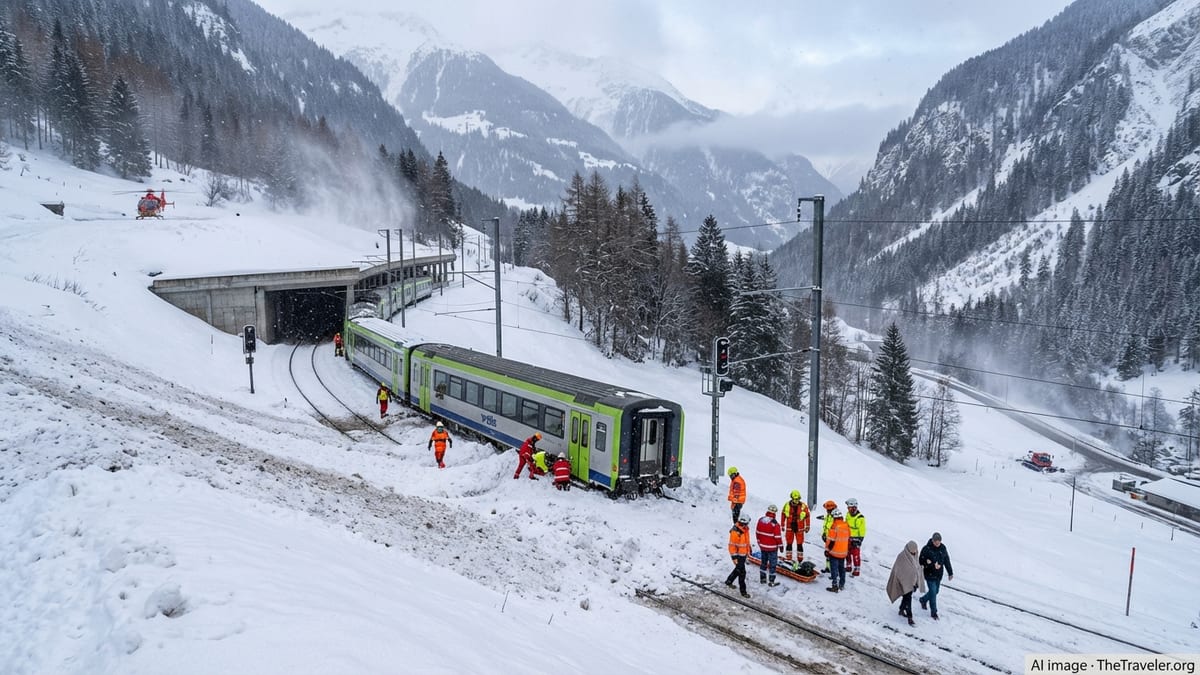
Latest incident described as minor, with no leaks reported
Recent coverage from regional outlets indicates the newest derailment occurred on July 3 near tracks already familiar to residents from the larger June crash. Reports describe the event as minor, with cars leaving the tracks but remaining upright, and no injuries documented. Early information also suggests no hazardous materials were released in this most recent incident and no evacuations were ordered.
Local radio and television reports emphasize that rail traffic in the area is a mix of general freight and tank cars, which can include industrial alcohols and other chemicals. In this case, publicly available information points to an operational disruption rather than an acute environmental emergency, a sharp contrast to the fire and plume seen in June.
Emergency crews in Morgan County have become practiced at setting up safety perimeters after the earlier derailment near Lancing. For the July event, reports indicate responders were able to quickly assess the rail cars, confirm the absence of active leaks, and begin coordinating with the railroad to clear the line and inspect the track.
For travelers and nearby communities, the immediate effect appears limited to short-term rail delays and heightened public attention. Nonetheless, the timing, so soon after a hazardous materials crash, is feeding a broader debate about how often such incidents occur and how they intersect with tourism-focused landscapes.
June derailment left lasting environmental questions
The July incident follows a far more serious derailment on June 11 near Wartburg and Lancing, when a Norfolk Southern train left the tracks and several tank cars carrying alcohol products were breached. A preliminary summary from federal investigators, reported by Tennessee media, notes that 29 of 124 cars derailed and multiple tank cars containing ethanol and other alcohols were involved in a sustained fire.
Publicly available information from environmental agencies and local news coverage indicates that large volumes of alcohol-based product flowed toward the Emory River, prompting air monitoring, water sampling, and an extended contact advisory on certain river segments. At least one campground near the river was temporarily closed, and recreation on the water was discouraged while testing continued.
Subsequent updates from state environmental regulators and county emergency management have pointed to encouraging test results for drinking water wells near the derailment site, but monitoring of surface water and aquatic life has remained a focus. Regional reporting has highlighted observations of dead fish in parts of the Emory River in late June, which state agencies have been working to evaluate alongside other data.
As of early July, available coverage suggests that well testing continues to show no detectable impact on local drinking water systems, even as clean-up teams address residual contamination in soil and sediments. For a rural county that markets nearby rivers, forests, and campgrounds to visitors, the imagery of flames, smoke, and fish kills has been difficult to reconcile with promotional messages about unspoiled nature.
Rail corridor runs alongside outdoor destinations
Morgan County’s rail line cuts through a landscape of gorges, rivers, and public lands that draw paddlers, climbers, hikers, and campers from across the region. The Emory River corridor and the Obed Wild and Scenic River area are well known stopovers for road-trippers and weekend travelers seeking whitewater and sandstone bluffs.
The June derailment prompted park and environmental agencies to recommend that visitors stay out of certain stretches of the river while ethanol levels and dissolved oxygen were assessed. Those advisories underscored the delicate balance between a freight corridor that serves the broader economy and a recreation-based tourism sector that depends on clean water and intact ecosystems.
Travel-focused coverage has begun to frame Morgan County as a case study in how rail infrastructure intersects with backcountry and riverside destinations. The juxtaposition of rail bridges, tank cars, and scenic river bends has long been part of the local landscape, but two derailments in quick succession have made that relationship more visible to visitors.
For road trippers arriving from Knoxville, Nashville, or Chattanooga, the rail line is often a backdrop glimpsed from winding two-lane roads. In recent weeks, that backdrop has featured burn marks on ballast, work crews along the right-of-way, and monitoring equipment near river access points, all of which speak to a community in the midst of environmental recovery.
Travelers weigh safety perceptions and itinerary choices
While the July derailment did not produce the kind of images that typically alter travel plans, it adds to a drumbeat of national stories about freight rail incidents involving hazardous cargo. For some prospective visitors, publicly available coverage of multiple derailments in the same county may be enough to prompt closer scrutiny of advisories and campground updates before booking a trip.
Tourism businesses in rural Tennessee often rely on perceptions of remoteness and natural purity. Even when regulators and environmental specialists report that water quality is within acceptable ranges, it can take time for traveler confidence to fully rebound after high-profile spills. Lodging operators and outfitters may find themselves answering questions about river conditions and clean-up progress well into the summer season.
Seasonal visitors who have already built traditions around Morgan County’s rivers and trails are more likely to track official advisories, rather than cancel outright, according to patterns seen in other outdoor destinations affected by industrial incidents. For first-time visitors, however, substitute options in nearby counties can be an easy choice if uncertainty lingers.
Given that the July incident involved no leak and no reported injuries, early indications suggest it will be remembered less as a stand-alone event and more as part of a cluster of rail safety concerns that color how travelers read headlines about the region.
Renewed attention on rail safety and oversight
The back-to-back derailments in Morgan County are occurring amid a wider national discussion about freight rail safety, particularly in communities near rivers, parks, and trail networks. Advocacy groups and labor organizations have used the June alcohol spill as an example of how hazardous cargo can affect rural areas that may lack large-scale emergency resources.
Initial federal findings on the June crash, summarized in local coverage, point to a train traveling at moderate speed through a remote section of track when dozens of cars left the rails. That pattern has intensified questions about track conditions, train length, and equipment maintenance in terrain that can be difficult to access quickly after an accident.
For Tennessee, the June derailment was reported as one of several rail incidents this year, adding state-level context to the Morgan County events. Discussions about inspections, investment in infrastructure, and emergency planning are likely to continue as agencies work through full investigative reports and long-term monitoring data.
For travelers, the practical guidance remains straightforward: review the latest advisories for waterways, campgrounds, and roads before setting out; stay alert to any posted warnings near river access points; and recognize that recovery work may still be underway even when the landscape appears unchanged at a glance. As Morgan County moves through another peak season for outdoor tourism, the rail line that threads through its hills is drawing more attention than ever from both residents and visitors.