


More news on this day
In the days since a freight train derailed above the canal in downtown Richmond, a nearby restaurant manager has watched revenue soften, staffing plans unravel and long-term questions emerge about how closely a neighborhood business is tied to the rails overhead.
Get the latest news straight to your inbox!
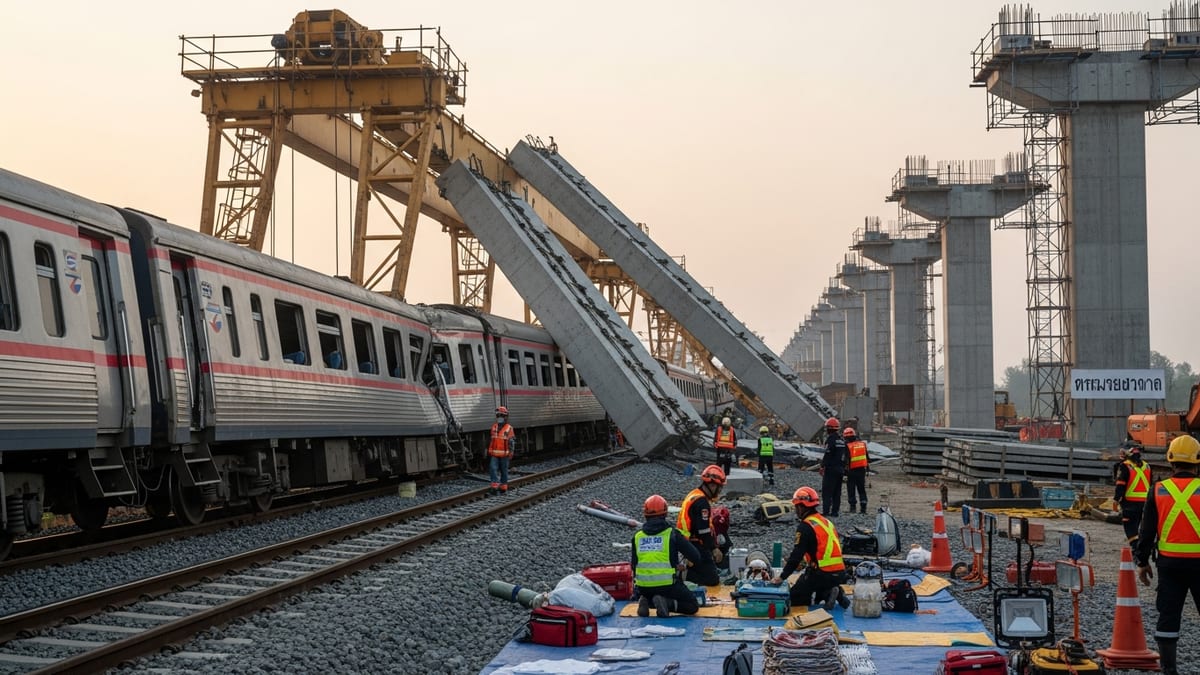
Derailment turns busy corridor into work zone
Published coverage indicates the derailment occurred in early July along the elevated tracks near Dock Street, where freight cars dropped into the canal and rail traffic through the central corridor abruptly halted. Cleanup operations, inspections of the bridge structure and track repairs have transformed what is usually a steady link between neighborhoods, the riverfront and downtown offices into a construction site ringed by heavy equipment and caution tape.
For a restaurant tucked a short walk from the damaged span, the shift has been immediate. The manager describes a once reliable flow of office workers, tourists and Capital Trail cyclists thinning as visitors confront detours, closed sidewalks and uncertainty about access. Summer afternoons that typically bring a predictable rhythm of patio seating and walk-in traffic have become uneven, with some hours nearly empty as people choose routes that avoid the disruption.
Publicly available information on rail operations shows that both freight and passenger movements through the downtown corridor were curtailed in the derailment’s aftermath. With some intercity trains terminating at suburban stations rather than at the downtown hub, the restaurant has seen fewer out-of-town diners who used to step off a train and walk directly toward the canal and riverfront.
The manager notes that the atmosphere around the business has changed as much as the numbers. The ambient rumble of passing trains, once part of the restaurant’s backdrop, has given way to the whine of cranes and the intermittent clang of steel being cut, creating a different soundtrack for guests who do make it through the barricades.
Sales slide as staffing and supplies become a daily puzzle
Internally, the derailment has turned a familiar weekly schedule into a moving target. The manager reports that receipts for the first weekend after the incident were noticeably lower than the same period a year earlier, despite warm weather and a full calendar of summer events nearby. Lunch service, which depends heavily on downtown employees and travelers, appears to be absorbing the sharpest hit as disrupted commuting patterns keep potential customers away.
Staffing has required constant recalibration. On days when road closures expand or cleanup activity intensifies, the manager trims shifts or shortens operating hours to match the reduced demand. While that approach helps control payroll, it leaves servers and kitchen staff with fewer hours and less predictable income, extending the derailment’s impact beyond the balance sheet and into household budgets.
Supply deliveries have also grown less reliable. Trucks that once used a straightforward route along the riverfront now navigate a patchwork of detours and temporary closures. The manager recounts several instances in which key ingredients arrived late or not at all, forcing last-minute menu adjustments or substitutions and adding stress to already compressed prep times.
The restaurant carries business interruption and property coverage, but the manager is learning that insurance rarely responds immediately or cleanly to a slow-burning disruption rather than a direct physical loss. Industry analyses following other high-profile derailments note that small businesses can face weeks or months of reduced revenue while still meeting rent, utilities and loan obligations, and the manager is bracing for that possibility.
Customer unease and broader rail safety concerns
Beyond the immediate financial strain, the derailment has introduced a layer of anxiety that the manager now encounters in everyday conversations with guests. Some regulars ask how close the restaurant sits to the damaged bridge or whether any hazardous cargo was involved. Others want reassurance about access, parking and the likelihood of further closures if additional issues are discovered on the line.
According to published coverage of derailments in other communities, local businesses often shoulder the burden of calming concerns that arise far from their own operations. Images of freight cars in canals or rivers, shared widely online, can create a perception of danger that lingers long after officials complete structural assessments and reopen streets. The Richmond incident has followed a similar pattern, with social media feeds amplifying dramatic scenes from the canal even as official updates emphasize the absence of reported injuries.
The manager has been paying closer attention to national discussions about rail safety, including debates over inspection practices, infrastructure investment and the movement of hazardous materials through urban centers. Reports from previous derailments, such as the 2023 incident in East Palestine, Ohio, highlight how quickly rail accidents can become economic events for nearby restaurants, shops and lodging even when damage to the businesses themselves is indirect.
In response, the restaurant has leaned into consistency and transparency. The manager uses the business’s social channels to post regular updates about operating hours, street access and the simple fact that tables are occupied and meals are being served just a few blocks from the cleanup. The goal is to counter the sense that the entire district is off-limits by showing a more measured view of daily life under the still rail line.
Adapting operations and looking for opportunity amid disruption
While the derailment has created clear challenges, it has also prompted operational changes the manager believes may outlast the crisis. With foot traffic unreliable, the restaurant has expanded online ordering and delivery partnerships, reconfigured pick-up zones to work around barricades and experimented with earlier happy hour windows to capture nearby workers leaving offices before rush-hour congestion builds around the closure.
The manager is also exploring collaborations with neighboring businesses, discussing shared marketing campaigns aimed at reassuring customers that the canal-front district remains accessible. Past experiences in other cities, described in trade publications and municipal reports, suggest that coordinated messaging and small-scale events can help reintroduce a neighborhood after a disruptive incident, even before rail service fully returns.
At the same time, the restaurant is proceeding cautiously. Cleanup timelines can shift as inspectors uncover additional repairs, and the manager is wary of investing heavily in one-off promotions that might collide with a sudden extension of closures. Instead, the focus has been on flexible measures, such as portable outdoor seating that can be moved as work zones shrink or expand.
Looking ahead, the manager expects foot traffic to return gradually once rail service resumes and barriers are removed, starting with nearby residents and curious onlookers and eventually drawing back the mix of visitors that defined the area before the derailment. For now, the business is learning in real time how tightly its fortunes are bound to the rails overhead and how quickly a transportation incident can reshape a local economy that depends on routine, reliability and the steady movement of people through downtown Richmond.