

More news on this day
Vietnam, Indonesia, and the Philippines are strengthening regional tourism ties with a wave of new and expanded flights that directly connect Da Nang, Bali, and Manila, creating a tighter Southeast Asian travel triangle for beach, culture, and city escapes.
Get the latest news straight to your inbox!
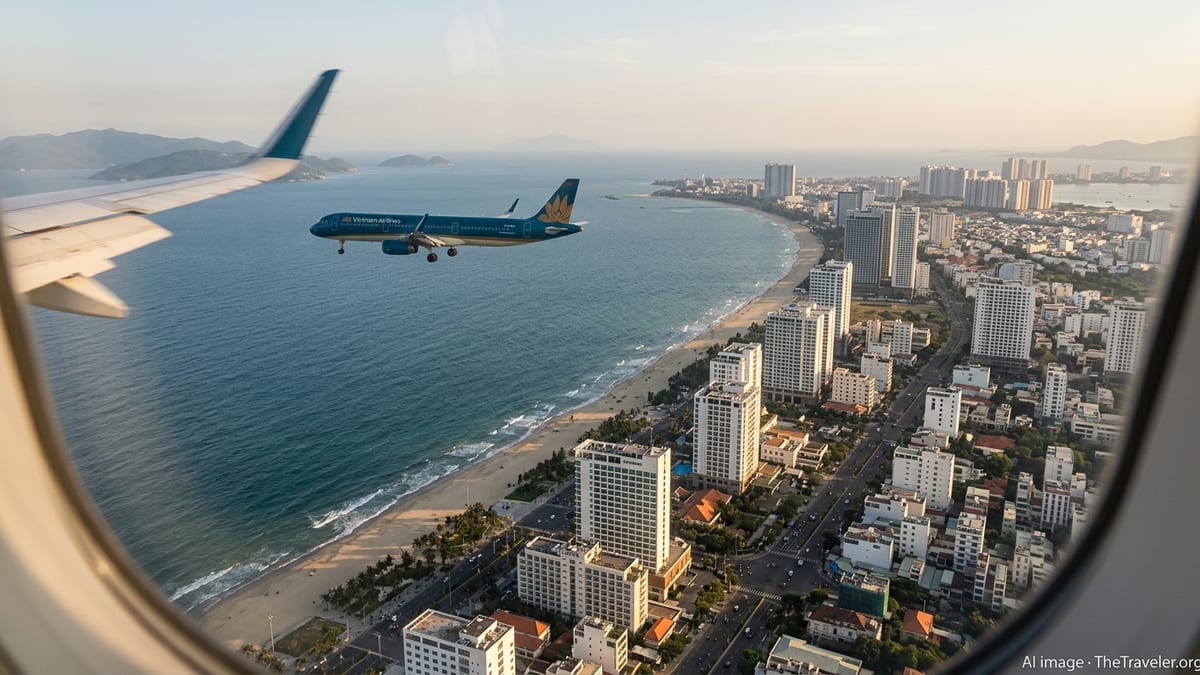
New Bali–Da Nang Flights Anchor a Regional Tourism Corridor
Indonesia AirAsia has announced a direct international route between Bali’s Denpasar Airport and Da Nang in central Vietnam, scheduled to begin operations on 20 March 2026. Publicly available information from the airline’s newsroom and regional tourism outlets indicates that the route will start with several weekly frequencies, using Airbus narrowbody aircraft tailored to regional leisure demand.
The new Bali–Da Nang link is being promoted as a key connector between two of Southeast Asia’s fastest-growing coastal destinations. Da Nang has developed a strong profile for beach resorts, golf, and nearby UNESCO sites such as Hoi An and Hue, while Bali continues to draw global visitors for its mix of beaches, temples, and wellness retreats. Industry coverage describes the route as part of Indonesia AirAsia’s strategy to build Bali into a stronger hub for regional connections across the ASEAN bloc.
Travel analysts note that the flight shortens what was previously a multi-stop journey often routed through major hubs like Ho Chi Minh City, Kuala Lumpur, or Singapore. For travelers, that means fewer transfers, reduced travel time, and a more straightforward itinerary for pairing Vietnam’s central coast with Indonesia’s best-known island.
Tourism data cited in the airline’s launch materials highlights strong underlying demand. Vietnam welcomed well over 19 million international visitors in the first eleven months of 2025, with central coastal destinations including Da Nang regarded as major contributors to that growth, while Bali remains one of Indonesia’s most important gateways for overseas arrivals.
Manila–Da Nang Capacity Grows With Multiple Carriers
The Philippines has moved quickly to deepen its air links with Vietnam, and Da Nang in particular. Cebu Pacific first placed Manila–Da Nang into regular operation in late 2023 and has since expanded the route from a handful of weekly flights to daily service, with plans signaled in airport and local media reports to increase to two daily flights during the peak summer schedule in 2025.
Philippine Airlines has joined the route as a full-service competitor, with published coverage indicating that it becomes the third carrier to offer nonstop flights between Manila and Da Nang from mid-2025. Industry trackers and airline schedules show that the corridor is now served by several Philippine and Vietnamese airlines, giving travelers a mix of low-cost and full-service options.
Looking further ahead, reports shared in regional aviation forums point to additional competition from Philippines AirAsia, which intends to inaugurate Manila–Da Nang flights in March 2026 alongside new Manila–Hanoi services. Commentators expect that extra capacity to put downward pressure on fares and increase the availability of early-morning and late-evening departures, which are attractive to weekend travelers and those seeking to optimize vacation time.
For Da Nang, the cluster of Manila connections reinforces its position as one of Vietnam’s most internationally connected cities outside Hanoi and Ho Chi Minh City. For Manila, the links add another short-haul leisure option within roughly three hours’ flying time, broadening alternatives beyond more traditional Southeast Asian city breaks.
How Travelers Can Combine Da Nang, Bali, and Manila
With new and expanded services coming online, travelers can now stitch together multi-stop itineraries that link Da Nang, Bali, and Manila with fewer backtracks and layovers. A common routing uses Manila as an entry or exit point from the Philippines, with a direct hop to Da Nang, followed by the new Da Nang–Bali service, or the reverse sequence starting in Indonesia.
In practice, this means a traveler could arrive in Manila for urban attractions and island excursions, fly directly to Da Nang for central Vietnam’s beaches and heritage towns, and then continue on to Bali for a final stretch of resort and wellness time before returning home via Indonesian or regional hubs. Previously, juggling these three destinations in one trip usually required circuitous routings and additional stops in large transit airports.
Travel planners emphasize the importance of checking schedule coordination when building such triangle itineraries, particularly in the early months of a new route launch when timetables may be adjusted. Same-day connections are likely to be possible in at least one direction, but many visitors may opt to include overnight city stays to reduce stress and allow for potential delays.
Because multiple low-cost carriers now overlap on the Manila–Da Nang segment, timing bookings around promotional sales can significantly reduce overall costs. However, travelers should factor in ancillary fees, baggage policies, and minimum connection times, especially when tickets are booked on separate airlines rather than through a single itinerary.
Tourism and Trade Benefits Across Vietnam, Indonesia, and the Philippines
The latest air links are being framed in regional coverage as more than just tourism routes. Direct flights between Da Nang, Bali, and Manila also facilitate business travel, meetings, and small-scale trade across three of ASEAN’s fastest-growing economies. Shorter flight times and increased frequency typically support cross-border investment and cooperation in sectors like hospitality, real estate, education, and creative industries.
Da Nang’s positioning as a technology and services hub for central Vietnam could make the Bali and Manila links particularly attractive for conferences and incentive travel. Bali already has an established events and retreats market, and Manila serves as a financial and corporate center for the Philippines. Easier movement between these destinations could encourage organizers to design multi-country programs that highlight different facets of Southeast Asia within a single trip.
Airlines and airports across the three countries have also been investing in infrastructure and passenger experience upgrades, according to open corporate reports and tourism board updates. Expanded terminal facilities, digitalized check-in processes, and improved public transport connections from airports into city centers are expected to support the rising number of travelers using the new routes.
As these changes take hold, observers anticipate that Da Nang, Bali, and Manila will increasingly be marketed not just as stand-alone destinations, but as part of a broader network of easily linked coastal and urban experiences. For travelers planning trips from late 2025 onward, keeping an eye on evolving schedules and new route announcements will be key to making the most of Southeast Asia’s growing web of direct flights.