

More news on this day
Travelers passing through Newark Liberty International Airport faced a difficult day as 133 flight delays and 5 cancellations rippled through schedules, disrupting major domestic links and transatlantic services to the United Kingdom, France and Germany and affecting operations for United Airlines, Delta Air Lines, American Airlines, Lufthansa and several other carriers.
Get the latest news straight to your inbox!
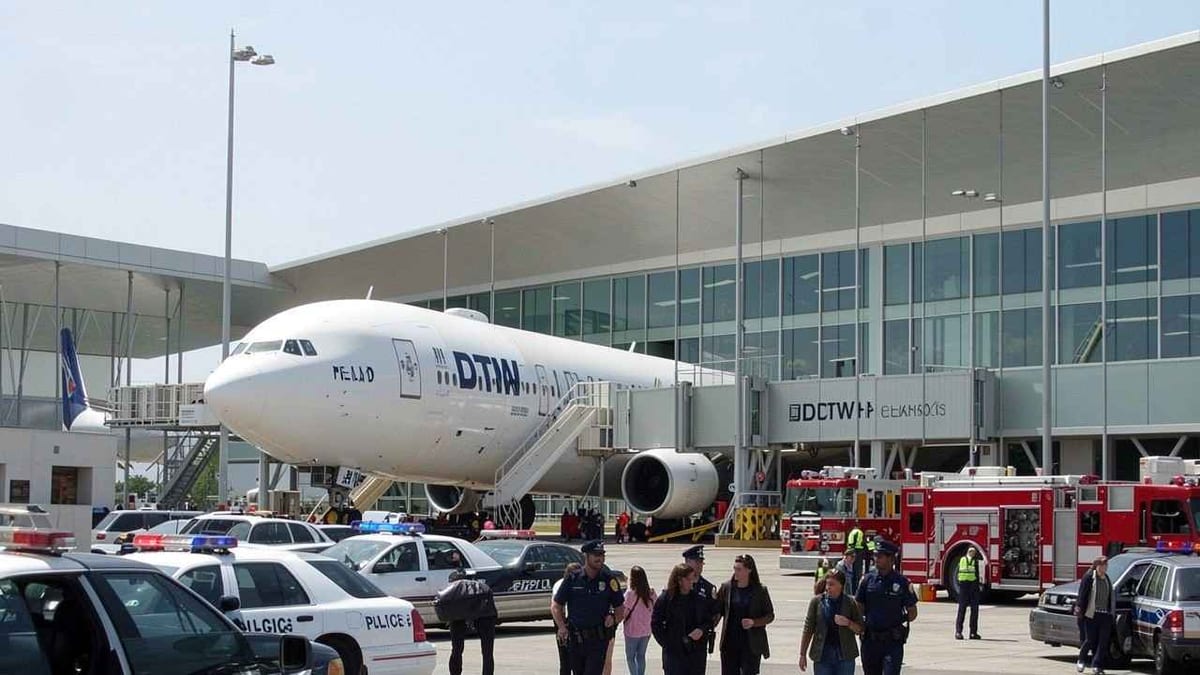
Disruptions Hit a Key East Coast Hub
The latest figures add another chapter to a challenging period for Newark Liberty International, one of the country’s busiest and most delay-prone hubs. Publicly available data on recent performance show that even on days without severe weather, the airport can experience concentrated clusters of late departures and arrivals, leaving passengers facing missed connections and long waits in crowded terminals.
The tally of 133 delays and 5 cancellations represents a smaller disruption than some of the worst episodes seen over holiday peaks or major storm systems, yet it still translates into thousands of travelers arriving late or scrambling to rebook. Because Newark serves as both a critical domestic connector and a primary transatlantic gateway, relatively modest schedule changes can create a wide ripple effect across the network.
Reports from aviation trackers indicate that the impact was spread across morning and afternoon banks, affecting both short-haul and long-haul traffic. With aircraft and crews cycling through multiple legs per day, a delay of less than an hour on an early departure can evolve into a cascade of later disruptions on routes far from New Jersey.
United, Delta, American and Lufthansa Among Affected Carriers
United Airlines, which uses Newark as a major hub, once again found itself at the center of operational headwinds. Historic performance metrics highlight that the carrier’s dense schedule at the airport leaves little margin when air traffic control programs, staffing constraints or minor technical issues arise, causing any single problem to spread quickly through its departure banks.
Delta Air Lines and American Airlines, while operating smaller schedules at Newark compared with their primary hubs, were also drawn into the day’s turbulence. According to published coverage of similar disruption days, even a limited number of delayed flights at Newark can complicate wider networks, particularly where aircraft are required to operate onward services from other busy airports such as Atlanta, Charlotte or Chicago.
Across the Atlantic, Lufthansa was among the European carriers affected on routes linking Newark with major hubs in Germany. When long-haul flights suffer delays out of the United States, the knock-on effects are often felt in Europe the following morning, as late-arriving aircraft are repositioned and crews come up against duty-time limits, compressing already tight turnaround windows at large continental airports.
Other international carriers serving Newark, including those based in the United Kingdom and France, typically rely on finely tuned overnight schedules that balance transatlantic crossings with onward connections across Europe, Africa and the Middle East. Disruptions on the US departure side can therefore reverberate through multi-leg itineraries for passengers far from New Jersey.
Transatlantic Routes to UK, France and Germany Suffer Knock-On Delays
Transatlantic services from Newark to London, Paris and German hubs such as Frankfurt and Munich figure prominently in the airport’s international portfolio. Industry analysis of recent travel periods shows that these routes are especially vulnerable when congestion and ground holds accumulate along the US East Coast corridor, which is already one of the most tightly managed airspaces in the world.
On the day marked by 133 delays and 5 cancellations, passengers on overnight services to Europe encountered longer-than-expected boarding times, revised departure slots and, in some cases, late arrivals into European morning banks. That timing is particularly sensitive because it coincides with waves of departures from European hubs to intra-European destinations, meaning even short delays across the Atlantic can cause missed or rushed connections.
Published aviation performance summaries for early 2026 point to a broader pattern of strain on transatlantic operations, including in European airspace. When Newark-originating flights reach European airspace late and encounter additional congestion or flow restrictions, the resulting delays can stretch well beyond the original cause on the US side, leaving travelers facing extended travel days and irregular arrival times.
For travelers headed in the opposite direction, late departures from London, Paris, Frankfurt or Munich bound for Newark can complicate same-day domestic connections deeper into the United States. Tight transfer windows at Newark become more precarious when arriving flights are held for spacing or weather, prompting rebookings onto later services that may already be near capacity.
Long-Standing Capacity and Staffing Constraints Shape Outcomes
Newark’s vulnerability to delay spikes is not a new story. Federal regulatory filings and transportation department analyses describe the airport as chronically congested, shaped by a combination of dense schedules, constrained runway capacity, complex air traffic control sectors and periodic infrastructure work. Orders limiting arrivals and departures have been extended through at least late 2026 in an attempt to curb excessive delays and cancellations.
In recent years, publicly available records highlight several episodes in which equipment outages, air traffic control staffing shortfalls and runway construction triggered acute operational stress at Newark. Even after the most disruptive construction phases eased, regulators continued to argue for slot-like limits and reduced scheduling, citing modeling that showed heavy schedules would otherwise push delay levels back to unacceptable ranges.
Travel performance data compiled for the broader New York area indicate that Newark often sees higher average delay durations than some peer hubs, particularly during peak morning and evening banks. When adverse weather patterns affect the wider region, air traffic managers frequently respond with ground delay programs and flow restrictions that constrain departures and arrivals at Newark, even if conditions immediately overhead the airport are relatively benign.
For airlines, this environment requires careful planning of buffers in block times, gate assignments and crew rotations. However, pressure to maintain competitive schedules can leave little slack. On days like the one marked by 133 delays and 5 cancellations, those structural constraints quickly surface in the form of long tarmac waits, gate-hold instructions and repositioning challenges for aircraft and crews.
What Travelers Can Expect in the Coming Months
With regulatory limits on flight volumes in place through at least October 2026, industry observers expect Newark to remain busy but somewhat more controlled compared with some of the most turbulent periods in recent memory. Nonetheless, historic patterns suggest that days with triple-digit delay counts will continue to appear, particularly during summer thunderstorm season and around peak holiday travel dates.
Travel outlets advise that passengers using Newark for domestic connections or transatlantic departures build extra time into itineraries, especially when connecting to or from flights bound for the United Kingdom, France or Germany. Choosing longer connection windows and early-day departures where possible can reduce the risk of missed flights when disruptions emerge.
Operational data for early 2026 suggest that airlines have made gradual adjustments to schedules and aircraft rotations at Newark, but analysts caution that the underlying constraints of runway capacity, crowded airspace and air traffic control staffing will not be resolved overnight. Incremental improvements may shorten some delays, yet sudden weather changes or technical issues can still send disruption levels sharply higher on any given day.
For now, passengers transiting Newark Liberty International Airport on United, Delta, American, Lufthansa and other carriers are likely to continue experiencing a mix of routine days and intermittent bouts of significant disruption. The latest count of 133 delays and 5 cancellations underscores how even relatively contained operational challenges can have wide-reaching consequences across domestic US networks and key transatlantic corridors.