

More news on this day
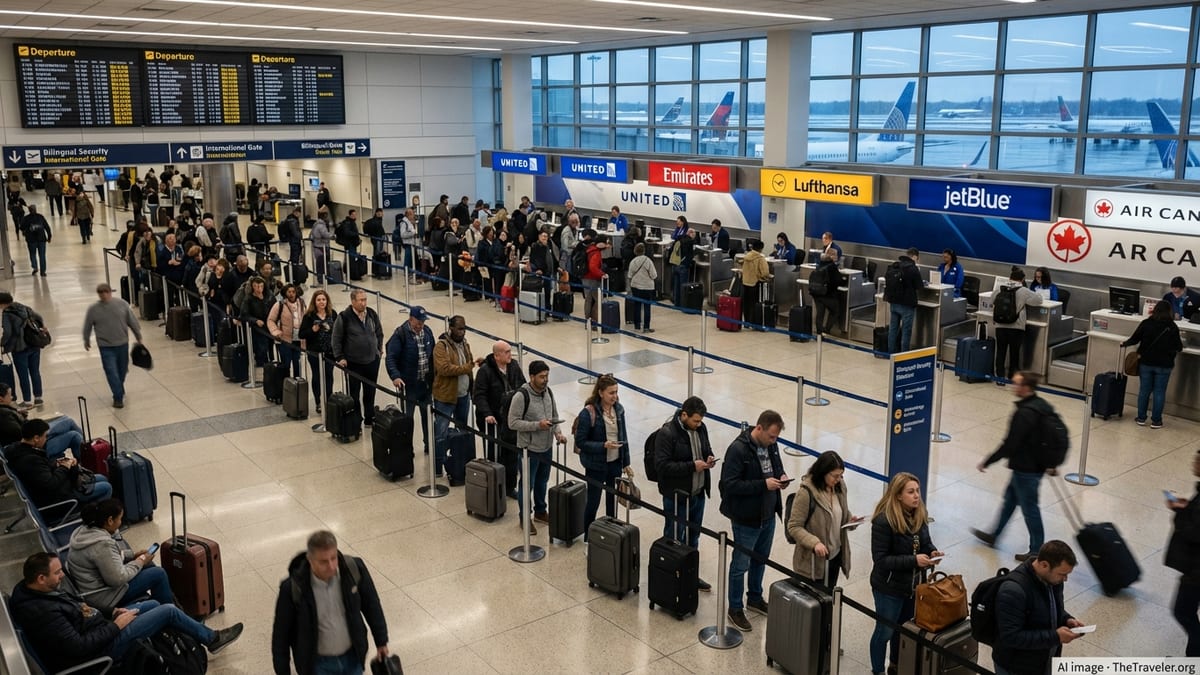
Travelers passing through Newark Liberty International Airport are facing another round of schedule turbulence, with 88 flight delays and 11 cancellations Friday rippling across major international routes served by United Airlines, JetBlue, Air Canada, Spirit Airlines, Emirates, Lufthansa and other global carriers.
Fresh Disruptions at a Chronically Stressed Hub
The latest wave of disruptions at Newark Liberty comes on the heels of one of the most difficult winters for air travel in recent years, with nationwide operational issues and severe weather repeatedly testing airline resilience. Fresh data from U.S. flight-tracking and industry reports on Friday shows Newark again high on the list of airports with significant same-day schedule changes, including 88 delayed departures and arrivals and 11 outright cancellations.
Although the totals are modest compared with the thousands of cancellations seen during February’s historic blizzard, they underscore how even a relatively small number of disrupted flights at a major hub can have outsized effects. Newark is a primary gateway for transatlantic and Middle East services as well as a key domestic connector, meaning knock-on delays can quickly reach far beyond New Jersey.
Newark’s role as one of the country’s most delay-prone airports is well documented. Recent performance rankings have placed the airport at or near the top nationally for disrupted passengers, reflecting a combination of dense traffic, constrained airspace and weather vulnerability that leaves little room for error when schedules tighten.
Major Carriers Juggle International and Domestic Schedules
United Airlines, Newark’s dominant tenant, is once again at the center of the disruption picture as it adjusts a complex network of domestic and long haul departures. Some of the delayed services on Friday involve banked connection waves to and from major U.S. cities, complicating onward journeys for travelers heading to Europe, the Middle East and beyond. Even when United avoids large-scale cancellations, rolling delays can force passengers into missed connections and overnight stays.
JetBlue and Spirit, both important players in the Northeast and Florida markets, are also contending with schedule gaps as they work planes and crews back into position after weather and congestion earlier in the week. For these carriers, whose business models rely on tight turnaround times and high aircraft utilization, even short delays can quickly cascade across multiple flights in a single day.
Air Canada and Lufthansa, which operate key transatlantic links from Newark to Canada and Europe, have seen passengers encounter longer than expected ground times as aircraft wait for clearance and deicing slots or navigate congested arrival corridors along the East Coast. While most flights are still operating, shifts of an hour or more can mean missed rail connections, hotel check-in complications and disrupted business meetings on the other side of the Atlantic.
Global Reach: Passengers Affected Across Continents
Because Newark functions as a vital international gateway, the impact of Friday’s disruptions reaches far beyond the United States. Emirates flights linking Newark with Dubai connect U.S. passengers to onward services across the Gulf, South Asia and Africa, so even a single delayed departure can reverberate through tightly timed overnight connections in the United Arab Emirates.
Travelers between North America and Israel are also feeling the strain, as Newark’s services into Tel Aviv and connecting hubs adjust to shifting departure and arrival windows. For many U.S. passengers, Newark is a preferred starting point for Israel-bound itineraries thanks to its extensive domestic feed, meaning delays at the New Jersey hub can translate into longer travel days and missed family or business commitments in the region.
On the Canadian side, Air Canada’s network into Toronto and Montreal is absorbing some of the disruption, potentially complicating onward links to secondary Canadian cities. European travelers heading to and from major capitals via United and Lufthansa are likewise encountering extended ground holds and rebookings as the airlines sequence widebody departures to make best use of available slots.
Even Egypt-bound passengers are indirectly affected, particularly those relying on connections from Newark through European or Gulf hubs to Cairo and resort destinations along the Red Sea. When long haul flights depart late from Newark, the carefully timed web of onward connections in Europe and the Middle East comes under pressure.
Storm Hangover and System Strain Linger After Blizzard
The current issues come in the aftermath of the late February blizzard that crippled air travel across the Northeast from February 22 to 24, forcing more than 9,000 cancellations and over 10,000 delays and briefly shutting down or severely curtailing operations at Newark, JFK, LaGuardia and Boston Logan. Even as runways have been cleared and skies have brightened, the storm’s effects continue to echo through crew rotations, aircraft positioning and maintenance schedules.
Carriers spent much of this week working to untangle the backlog. JetBlue, United and other airlines scrubbed hundreds of flights during the height of the storm to avoid trapping aircraft and crews in snowbound airports, but that strategy means days of follow-on adjustments as planes and staff are ferried back to their usual routes. For passengers, this translates into irregular operations that can flare up even after official storm warnings expire.
Industry analysts note that such storms highlight ongoing structural challenges in U.S. aviation, especially at chokepoint hubs like Newark. Limited runway capacity, congested Northeast airspace and high demand mean that once a schedule is knocked off balance, it can be difficult to restore normal operations quickly, particularly when airlines are already running near capacity.
What Travelers Can Expect and How to Prepare
For travelers planning to fly through Newark over the coming days, airlines and airport officials are urging vigilance and flexibility. While the Federal Aviation Administration was reporting generally on-time operations by midday Saturday, same-day statistics show that disruption totals can climb quickly, especially during peak departure banks or if fresh weather or air traffic control programs are introduced.
Passengers booked on United, JetBlue, Air Canada, Spirit, Emirates, Lufthansa and other carriers are being advised to monitor their airline apps and sign up for text alerts, as schedule changes may occur with only a few hours’ notice. In many cases, carriers are offering free same-day changes when significant delays or cancellations occur, although rebooking options can be limited on heavily booked transatlantic and Middle East routes.
Travel advisors recommend allowing extra time for connections at Newark, especially for itineraries involving international legs to Europe, Israel, the United Arab Emirates, Canada or Egypt. Building a longer layover into complex journeys can provide a buffer against knock-on delays, particularly during the busy evening departure window when long haul flights to multiple continents leave within a short time frame.
With Newark now firmly established as one of the most disruption-prone hubs in the United States, Friday’s 88 delays and 11 cancellations serve as a reminder that even on days without historic storms, travelers passing through the New Jersey gateway remain vulnerable to schedule surprises that can ripple across half the globe.