

More news on this day
Hundreds of travelers at Newark Liberty International Airport in New Jersey faced unexpected disruptions as more than 70 flights were canceled, leaving passengers scrambling for new itineraries and guidance on their rights.
Get the latest news straight to your inbox!
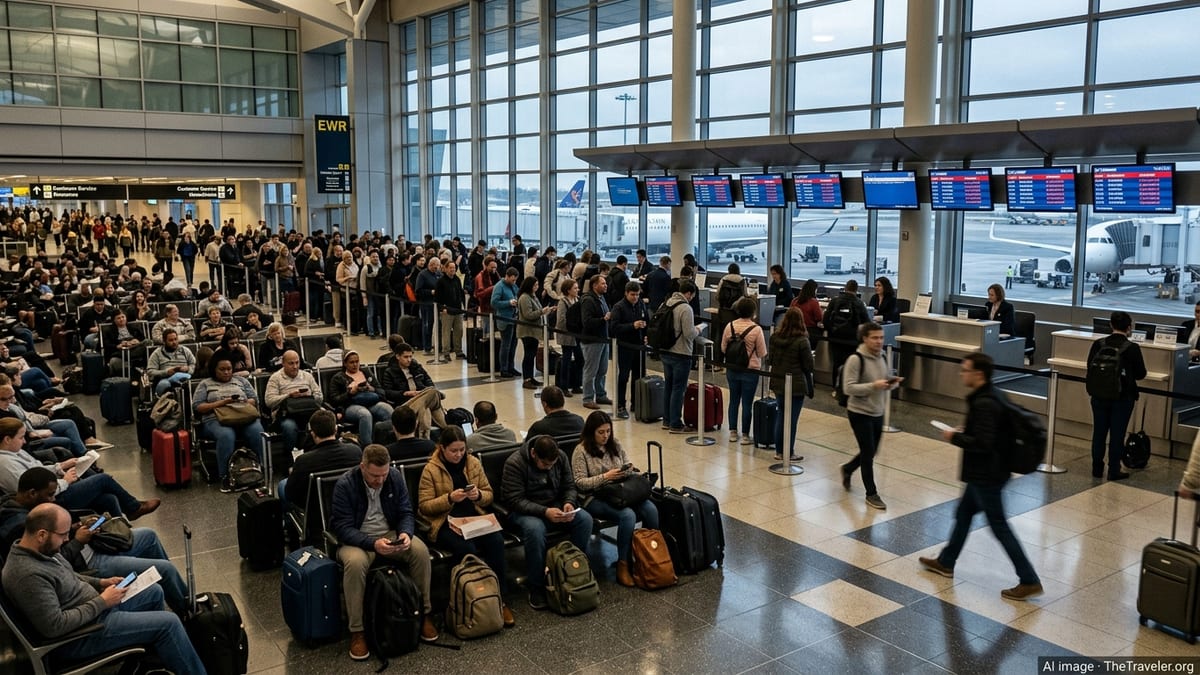
What Happened at Newark Liberty International Airport
Publicly available flight-tracking data and media coverage indicate that Newark Liberty International Airport experienced a sharp spike in cancellations, with more than 70 flights scrubbed in a single operating day. The disruption has left hundreds of passengers grounded, particularly those traveling on busy domestic routes and key transcontinental connections.
Newark is one of the busiest airports in the United States and a major hub for the New York metropolitan area. When a significant block of flights is canceled in a compressed timeframe, the effects quickly spread to other airports, as crews and aircraft are knocked out of position and connecting passengers miss onward journeys.
Recent coverage of Newark’s operations links persistent disruption to a combination of factors, including air traffic control staffing constraints in the region, previous technology outages affecting radar and communications systems, and ongoing construction and capacity limits that restrict how many flights the airport can safely handle in a given hour.
The latest wave of cancellations follows a broader pattern of strain at Newark Liberty, where federal orders limiting arrivals and departures and efforts to reduce congestion have been layered on top of already heavy traffic and complex airspace over the New York and Philadelphia corridors.
Why So Many Flights Were Canceled
Reports from airline and aviation documents point to several overlapping causes behind Newark’s recurring disruption. The airport’s flight schedule has been constrained by federal limits on arrivals and departures, introduced to ease congestion and reduce the risk of cascading delays when staffing or technology issues arise in the air traffic system serving the area.
Previous radar and communications outages at regional air traffic control facilities, highlighted in congressional correspondence and aviation reporting, have underscored how fragile the operating environment can be around Newark. When critical systems slow or fail, or when staffing levels fall short, ground stops and flow restrictions are often imposed, which in turn prompt airlines to preemptively cancel flights rather than operate with extreme delays.
Construction and infrastructure upgrades at Newark Liberty have also played a role. Runway and terminal work, as described in airport and carrier updates, can temporarily reduce usable capacity. To avoid overcrowding the airfield and gate areas, airlines sometimes trim schedules in advance, but when weather or system issues intersect with these constraints, same-day cancellations can spike quickly.
Weather remains a persistent wildcard. Thunderstorms, low ceilings and strong winds are common in the New York area, and the tightly choreographed arrival and departure patterns at Newark leave little room for error. Even a few hours of adverse conditions can trigger schedule disruptions that ripple into the evening and sometimes into the next day.
How Passengers Are Being Affected
The immediate impact for travelers has been missed departures, abandoned connections and last-minute itinerary changes. With more than 70 flights canceled, a significant number of passengers have had to be reaccommodated on later services or rerouted through other hubs such as Chicago, Washington, Boston or nearby New York airports.
Published accounts from recent Newark disruptions describe scenes of crowded gate areas, long customer service lines and limited same-day alternatives on certain high-demand routes. Once aircraft and crews are out of position, it can take an entire scheduling day or more for airlines to restore normal patterns, particularly during peak travel periods.
Travelers with tight connections or important time-sensitive plans, such as international departures, cruises or special events, have been particularly vulnerable. When a Newark-originating or connecting flight is dropped from the schedule, it may jeopardize an entire trip, especially if there are only one or two daily flights on a given route.
Disruptions at a major hub can also affect passengers who never set foot in Newark. When an aircraft is scheduled to fly multiple legs in a day, a cancellation on a Newark segment can cascade to later flights elsewhere in the network, increasing the number of travelers indirectly touched by the airport’s operational problems.
Your Options If Your Flight Is Canceled
For passengers caught in the current wave of cancellations, the first step is to confirm the status of their flight directly with the airline’s official channels and mobile app, since gate and departure boards may lag behind schedule updates during fast-moving disruptions. Most large carriers allow travelers to self-rebook onto alternative flights within the app or website at no additional fare when the airline cancels the original service.
Public information on U.S. Department of Transportation guidance explains that when an airline cancels a flight for any reason and the passenger chooses not to travel, the traveler is generally entitled to a refund for the unused portion of the ticket, even for nonrefundable fares. This typically applies to optional services such as seat fees and checked baggage tied to the canceled flight as well.
Rebooking within the same day at Newark can be difficult when large numbers of passengers are competing for limited seats, especially on already full services. Some travelers may find faster options by accepting rerouting through another hub or switching to nearby airports in the New York area, although that may require ground transportation and additional planning time.
Airlines sometimes provide meal vouchers or hotel accommodation during major disruptions, but these policies differ by carrier and often depend on whether the cause is within the airline’s control or linked to factors such as weather or air traffic control. Travelers are advised to review the customer service commitments posted by their airline and to keep receipts for essential expenses in case partial reimbursement is available later.
How to Prepare for Ongoing Uncertainty at Newark
Given Newark Liberty International Airport’s combination of heavy traffic, constrained capacity and ongoing infrastructure and air traffic challenges, similar episodes of disruption remain possible. Aviation and government notices extending limits on hourly flight operations into 2026 suggest that capacity management measures are likely to remain a feature of the airport’s schedule for some time.
Travel experts reviewing recent patterns at Newark often recommend building extra time into itineraries that rely on the airport, particularly when planning connections to international flights or time-sensitive ground travel. Choosing earlier departures in the day can sometimes reduce exposure to rolling delays that accumulate by afternoon and evening.
Passengers booking new trips may wish to monitor airline performance statistics that are publicly shared through government and industry channels, which show on-time and cancellation rates by carrier and airport. While no route is immune to disruption, some airlines emphasize schedule padding and recovery plans that may improve the odds of reaching a destination on the same day after a delay.
For now, the latest round of cancellations at Newark Liberty International Airport serves as another reminder of the fragility of tightly scheduled air travel in one of the country’s busiest air corridors. Travelers flying through the airport in the coming days and months may be best served by staying informed, remaining flexible and understanding the range of rights and remedies available when flights are suddenly withdrawn from the schedule.