


Niagara‑on‑the‑Lake has long been a favorite weekend escape for Ontarians, but it is now firmly on the international map. Expedia’s latest Unpack ’27 travel forecast highlights the town among its fastest‑rising destinations, with searches for Niagara‑on‑the‑Lake up about 35 percent year over year. That surge reflects a growing appetite for trips that combine culture, wine, and nature in a compact, walkable setting just a short drive from Niagara Falls.
Get the latest updates straight to your inbox!
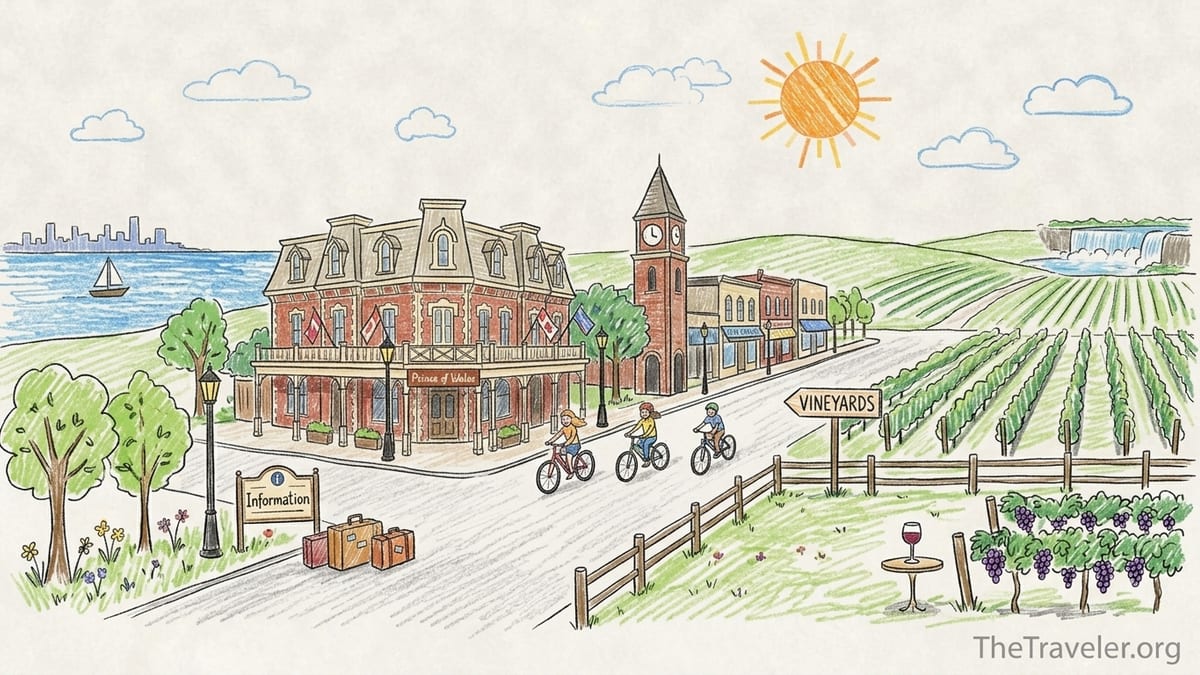
Niagara‑on‑the‑Lake’s rise beyond the shadow of the Falls
For decades, most visitors to the Niagara region stopped at the roar of the Horseshoe Falls and went no farther. That pattern is shifting. Recent tourism and economic reports from Niagara show visitors are spending more time and money across the wider region, and Niagara‑on‑the‑Lake has emerged as one of the prime beneficiaries. The town’s blend of heritage streets, vineyards, and lakefront scenery offers something the main Falls area cannot: a slower, village‑scale experience.
Expedia’s 2027 travel outlook places Niagara‑on‑the‑Lake in a small group of global destinations where interest in searches has jumped by roughly 35 percent, alongside places such as South Lake Tahoe and Perugia in Italy. Travel analysts link this growth to a broader trend toward “short breaks” and “hobby trips” that revolve around specific interests like wine tasting, cycling, and live theater. In Niagara‑on‑the‑Lake, those themes come together within a compact area that travelers can cross on foot or by bike in a single day.
Local economic studies underscore the importance of this upswing. A recent tourism sector profile prepared for the Town of Niagara‑on‑the‑Lake estimates that visitor spending accounts for roughly one‑third of the municipality’s total economic output, or in the range of a few hundred million dollars annually. That dependence on visitors has pushed the town to encourage longer stays, spread visitors more evenly through the week and the year, and manage crowds in the small Old Town core.
For travelers, the result is a destination that feels increasingly polished but still small‑scale. New tasting rooms, boutique accommodations, and guided experiences continue to open, often in restored barns or heritage buildings. At the same time, municipal heritage plans for the Old Town place tight controls on signage, facades, and building heights, so the streetscape around Queen Street and Picton Street retains its 19th‑century character despite growing popularity.
Getting oriented: Old Town, river parkway and wine country
Niagara‑on‑the‑Lake is actually a patchwork of areas: the compact Old Town on the shores of Lake Ontario, the Niagara River Parkway corridor that links the town to Niagara Falls about 20 kilometers to the south, and a wider rural area dotted with vineyards and farm stands. Most first‑time visitors stay in or near the Old Town, where Queen Street forms the main spine lined with independent shops, cafes, and historic hotels such as the Prince of Wales Hotel, which dates back to the 1860s.
From Queen Street, it is roughly a 10‑minute walk north to the shoreline, where a small park overlooks the mouth of the Niagara River and, on clear days, the Toronto skyline. To the east sits the Niagara‑on‑the‑Lake Golf Club, often described as one of North America’s oldest golf courses, with a public walking path skirting the edge of the fairways and providing sweeping lake views. To the south, residential side streets lead toward Fort George National Historic Site and a network of heritage trails maintained by Parks Canada.
Beyond the Old Town, many wineries sit either along the Niagara River Parkway or in the rural “Four Mile Creek” and “St Davids Bench” sub‑appellations, usually a 5 to 15 minute drive or bike ride from the main street. Some visitors choose to stay slightly outside town at vineyard‑side inns or farm stays, trading walking access to restaurants for quieter evenings and direct views over the vines. Distances are short, but it is worth checking whether your accommodation is within walking distance of Queen Street or will require a car, rideshare, or tour shuttle.
The broader region is relatively flat, which makes it appealing for casual cycling. However, the Niagara Parkway can see fast traffic in high season. Families with younger riders often use quieter concession roads between wineries or book a guided bike wine tour where a support vehicle can shuttle any tired riders back to town at the end of the day.
Best times to visit and how the seasons change the town
Each season in Niagara‑on‑the‑Lake offers a distinct experience. Summer, from late June through August, is peak season. This is when the Shaw Festival theatre calendar is fullest, patios along Queen Street stay busy late into the evening, and vineyard foliage is at its most lush. Hotel rates and minimum‑night stays climb during this period. For example, a midweek room at a high‑end heritage property such as the lakeside Pillar and Post or Prince of Wales often prices in the range of 450 to 700 Canadian dollars in midsummer, while smaller inns and B&Bs might sit between 250 and 400 for comparable dates.
Autumn brings arguably the most attractive mix of value and atmosphere. From mid‑September through late October, daytime temperatures are comfortable for cycling and walking, grape harvest activity is visible in the vineyards, and fall color peaks along the Parkway. Some luxury hotels lower midweek rates slightly once the August rush passes, and wineries introduce harvest‑focused tours. Visitors willing to come Sunday through Thursday often find a calmer town and more flexible tasting reservations.
Winter in Niagara‑on‑the‑Lake is quieter but far from dormant. The region promotes winter wine tourism built around icewine, and several estates host firepit tastings, mulled wine by the glass, and barrel‑cellar tours. Room rates at many properties drop notably in January and February, and it is easier to secure last‑minute tables at popular restaurants. Travelers should be prepared for snow and freezing temperatures, but on clear days the frozen lake and snow‑dusted vineyards can be strikingly beautiful, and lines at nearby Niagara Falls are shortest at this time of year.
Spring, from late April into early June, is shoulder season. Fruit trees bloom across the region, and outdoor patios gradually reopen. This is a key time for value‑conscious visitors: tasting rooms are open, staff have time for more in‑depth conversations, and both hotels and tour operators may offer midweek promotions in advance of the summer crowds. It is also when school and corporate conferences often book multi‑day programs that include winery visits, so accommodation demand can still spike on certain weekdays.
Exploring the wineries: tastings, passes and guided tours
Wine is the main reason many travelers now extend their visit beyond the Falls to spend a night or two in Niagara‑on‑the‑Lake. The surrounding appellation counts roughly two dozen wineries under the Wineries of Niagara‑on‑the‑Lake association, ranging from long‑established estates such as Jackson‑Triggs and Peller Estates to smaller producers like Ravine Vineyard and Two Sisters Vineyards. Most offer structured tastings, vineyard tours, and in some cases on‑site restaurants or picnic areas.
Standard estate tastings typically cost around 15 to 25 Canadian dollars per person for a flight of three or four wines. At Riverview Cellars Estate Winery on the Niagara Parkway, for example, a structured tasting of four wines is advertised at about 15 dollars per person, while a tour and tasting package runs closer to 25. At several estates, the tasting fee can be credited against a bottle purchase, effectively rewarding visitors who buy a few wines to take home. Higher‑end experiences, such as premium library tastings or small‑group food pairings, often range from 50 to 70 dollars and must be booked in advance.
For travelers intent on visiting multiple wineries, the Winemakers’ Tasting Pass promoted by Wineries of Niagara‑on‑the‑Lake and local partners has become a popular option. Sold through the association and supporting organizations such as the Niagara‑on‑the‑Lake Museum, the pass provides a single tasting at each participating winery and is valid year‑round. A portion of proceeds currently supports local cultural and community initiatives, including agricultural worker programs, which gives the pass a philanthropic as well as practical appeal.
Those who prefer not to drive between tastings have several options. A range of tour operators based in the region offers half‑day and full‑day guided wine tours by minibus, bicycle, or e‑bike, with tasting fees included at three or four wineries. Prices frequently fall in the 120 to 180 dollar range per person for a small‑group experience, including transportation and standard tastings. Some operators advertise that their guests do not pay additional tasting fees at the door, which simplifies budgeting. Private driver‑guide services are also available for couples or groups who want a customized route, often priced per vehicle.
Regardless of how you visit, advance reservations are increasingly important, particularly on Saturdays from June through October. Even smaller estates now use timed booking systems for tastings. Same‑day walk‑ins may still be possible for a glass on the patio, but travelers with a specific itinerary or group size should secure slots online or by phone before arrival.
Where to stay: heritage hotels, boutique inns and vineyard retreats
Niagara‑on‑the‑Lake’s accommodation scene reflects its evolution from day‑trip destination to multi‑night stay. In the heart of Old Town, historic hotels such as the Prince of Wales, Queen’s Landing, and the Pillar and Post are operated by a local hospitality group and marketed as luxury properties with on‑site spas, formal dining rooms, and afternoon tea services. Their architecture and interiors emphasize Victorian and early 20th‑century design, from stained‑glass windows to antique furnishings. These hotels sit at the top end of the price range and are usually the first to fill over festival weekends.
Smaller boutique inns and bed‑and‑breakfasts occupy many of the surrounding heritage homes. Some offer only three or four rooms but include full cooked breakfasts and personalized local advice from owner‑hosts. Typical nightly rates in shoulder season can fall between 200 and 300 Canadian dollars, climbing higher in midsummer. Many B&Bs set minimum‑night stays on weekends and prefer direct bookings, which can be important for travelers who wish to speak to the host about dietary needs, mobility considerations, or late arrivals.
For visitors who come primarily for the vineyards, several estates host on‑site guesthouses or suites with vineyard views. Properties near the St Davids Bench and Four Mile Creek areas in particular offer quiet, rural stays where dusk and dawn light over the vines are part of the appeal. These accommodations may lack the walkable restaurant choices of Old Town but instead provide easy access to early‑morning strolls through the vines and convenient cellar‑door access. They also tend to have more parking and larger rooms, suiting families or groups traveling together.
Budget travelers can look to chain hotels and motels clustered closer to the highway and along the route toward Niagara Falls. These lack the heritage atmosphere of central properties but often provide free parking and breakfast at a lower nightly rate. Some visitors split their time, spending one night in a chain hotel near the Falls and one night in a character stay in Niagara‑on‑the‑Lake to balance cost with experience.
Walking and cycling routes: from Queen Street to waterfront and trails
One of Niagara‑on‑the‑Lake’s strongest draws is how much of it can be experienced at walking pace. A simple loop from the corner of Queen and King Streets down to the waterfront park, along the edge of the golf course, and back along Queen Street might take an hour at a gentle stroll, with pauses at independent bookstores, ice cream counters, and boutique shops. The town’s Heritage Conservation District plan prioritizes pedestrian‑friendly streetscapes, maintaining wide sidewalks, mature trees, and period‑appropriate lighting that keeps the core attractive for evening walks.
To explore further, visitors can follow signed heritage trails linking Fort George, Butler’s Barracks, and Paradise Grove. Maintained in partnership with Parks Canada, these paths combine paved and unpaved segments and connect with both the Niagara River Recreation Trail and the Lake Ontario Waterfront Trail. It is easy to put together a half‑day walk that begins with a tour of Fort George, continues through wooded sections near Paradise Grove, and ends back in town for a late lunch or wine bar stop.
Cyclists can ride south along the Niagara River Recreation Trail toward the Falls. The full route stretches roughly 50 kilometers between Fort George and Fort Erie, but many visitors tackle only the scenic section between Niagara‑on‑the‑Lake and Queenston Heights or the Whirlpool area. Bike rental shops in town typically offer half‑day and full‑day hires of hybrid bikes, e‑bikes, and in some cases tandems, often bundled with suggested winery routes. Helmets are provided, and some operators allow one‑way rentals where bikes are collected at a pre‑arranged winery or shuttle point.
For travelers with limited mobility, much of Queen Street and the immediate waterfront park area is relatively flat and accessible, though older buildings can have narrow doorways or a step at the entrance. Before arrival, it is worth confirming accessibility details directly with hotels, restaurants, and wineries, especially for terrace seating or washroom access. The more modern hospitality venues along the Parkway and in newer buildings are generally better equipped with ramps and accessible washrooms.
Dining, culture and evenings in town
Despite its small size, Niagara‑on‑the‑Lake offers a dining scene that surprises many first‑time visitors. On Queen Street and nearby side streets, menus range from casual pub fare and wood‑fired pizza to multi‑course tasting menus that highlight local produce and wines. Several wineries, including larger estates such as Peller Estates and Trius, operate full‑service restaurants where chefs work closely with winemakers on pairings. These winery restaurants are particularly popular for long lunches that stretch into mid‑afternoon tastings.
In the evenings, many visitors plan around performances at the Shaw Festival, which stages a mix of works by Bernard Shaw and contemporary playwrights at multiple theaters in and around Old Town. Theater‑goers often book restaurant reservations either before or after shows, so it is wise to secure a table ahead of time during festival months. Even travelers who do not attend the theater feel the festival’s influence, as rehearsal schedules and show nights lend the town a cultural buzz.
For casual nights out, wine bars and cocktail lounges have multiplied alongside more traditional pubs. Several spots emphasize local wines by the glass, offering flights that allow visitors to compare different Niagara‑on‑the‑Lake producers without leaving town. Live music is common on weekend evenings from late spring through fall, including small jazz ensembles and acoustic sets. Many venues close earlier on weeknights and in winter, so travelers seeking a livelier atmosphere may prefer Thursday to Saturday stays in the cooler months.
Cafes and bakeries open early to serve both visitors and locals, providing good options for breakfast beyond hotel dining rooms. Patio seating appears quickly on sunny mornings, and takeaway sandwiches or pastries make convenient provisions for a picnic at the waterfront park or between winery visits. Local ice cream shops and chocolatiers see steady lines in summer, further reinforcing the town’s walkable, holiday‑village feel.
Practical tips for planning a stay beyond the Falls
For those starting from Niagara Falls, Niagara‑on‑the‑Lake is about a 25 to 30 minute drive north along the Niagara Parkway in moderate traffic. Public transit options between the two are limited, especially outside the main summer season, so most visitors rely on rental cars, rideshares, or organized tours. Some tour companies based near the Falls now include Old Town free time and winery visits in their day‑trip itineraries, reflecting the growing demand highlighted in Expedia’s growth figures.
Booking strategies have become more important as the town’s popularity has risen. For peak summer weekends and festival periods, it is sensible to secure accommodation several months in advance, particularly for smaller inns that may offer only a few rooms. Travelers flexible on dates will often find better value by visiting midweek or in the shoulder seasons of May to June and September to early November, when both hotel and tour prices can be lower and availability higher.
Given the scale of Niagara‑on‑the‑Lake, sustainability and community impact are recurring themes in local planning documents and tourism messaging. Initiatives such as channeling part of winery pass proceeds to local museums and farm‑worker support organizations, as well as municipal efforts to manage traffic and preserve heritage streetscapes, aim to balance economic benefits with residents’ quality of life. Visitors can contribute by parking once and walking, using bikes where possible, and favoring locally owned businesses when choosing restaurants, lodgings, and activity providers.
Above all, travelers who carve out at least one overnight stay rather than rushing back to the Falls or Toronto gain access to a different rhythm. Early morning walks beneath the maples on Queen Street, unhurried tastings with winemakers who have time to talk, and quiet lake views after day‑trippers have gone all reveal why Niagara‑on‑the‑Lake has become one of Expedia’s fastest‑rising search destinations. For many, that slower, more immersive experience is precisely what makes the town worth the detour from Niagara Falls.