

More news on this day
Fresh disruption involving United Nigeria Airlines at Lagos has intensified scrutiny of Nigeria’s aviation sector, after reports of a jet blast incident and a separate bird strike grounded aircraft and stranded passengers.
Get the latest news straight to your inbox!
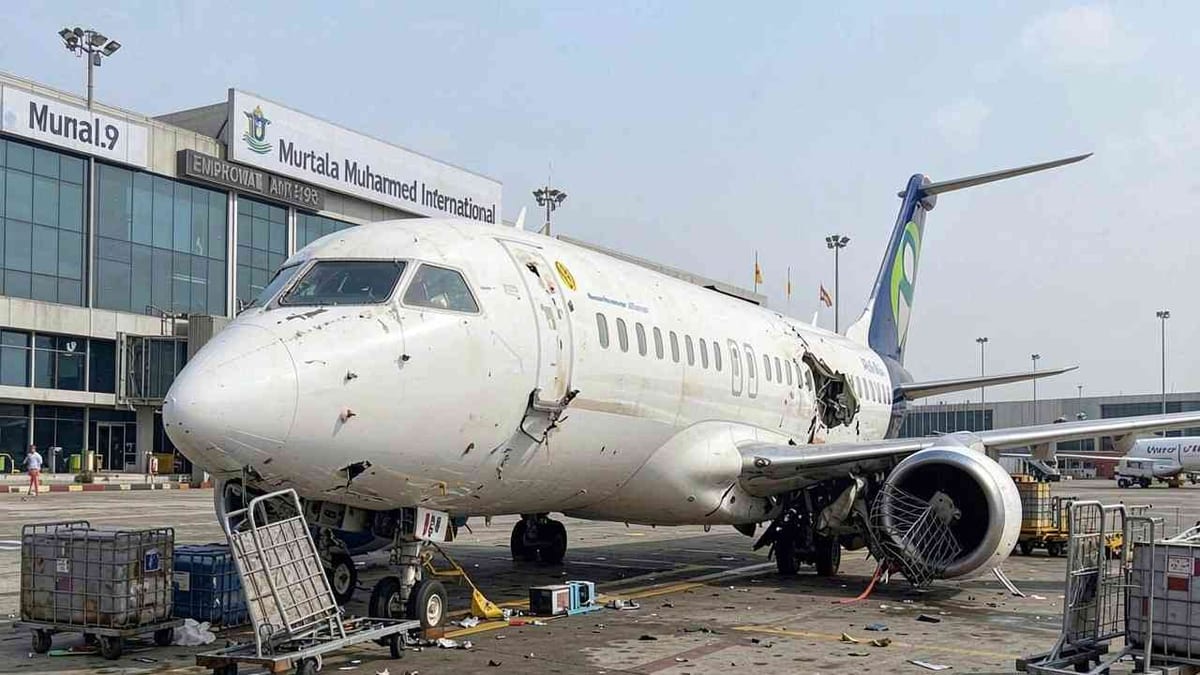
Image by Travel And Tour World
What Happened To United Nigeria Airlines
United Nigeria Airlines has faced a series of operational shocks at Lagos Murtala Muhammed Airport, including reports of ground chaos linked to jet blast from a larger aircraft and, more recently, a damaging bird strike that forced one of its Embraer regional jets out of service. While details of the latest jet blast incident remain limited, published coverage and video shared on social media from Lagos have highlighted concerns about ramp safety, aircraft spacing and ground-handling practices at Nigeria’s busiest hub.
Separate reporting and regulatory documents show that United Nigeria Airlines has already been on the radar of Nigerian safety investigators following runway excursions at Lagos in 2023. A preliminary report from the Nigerian Safety Investigation Bureau described how an Embraer ERJ-145 operated by the carrier left the paved surface during landing on runway 18L, with passengers disembarking after the aircraft came to a stop beyond the centreline. Although there were no fatalities, the incident underlined how adverse weather, runway conditions and cockpit decision-making can combine to create serious risk.
The latest disruption linked to jet blast has again drawn attention to congestion on Lagos airport’s aprons, where narrow-body and regional jets often operate in close proximity. Publicly available images and eyewitness accounts point to strong engine exhaust from a departing aircraft affecting smaller equipment and vehicles nearby, adding to questions over ramp procedures and enforcement of safety zones.
For local travellers, this sequence of events has translated into missed connections, long queues at departure gates and growing frustration about delay management. For international visitors, the symbolism of yet another headline involving United Nigeria Airlines at Lagos is feeding into broader concerns over reliability and safety standards in West Africa’s largest aviation market.
Bird Strike Shocks Passengers And Disrupts Schedules
The separate bird strike incident involving a United Nigeria Airlines flight into Lagos has underscored an enduring and costly problem across Nigerian aviation. According to coverage by Nigerian media, the aircraft, operating from northern Nigeria to Lagos, suffered a bird strike on approach, leading to damage that required the jet to be grounded for inspection and repair. The event prompted the cancellation of onward flights and an immediate reshuffle of the carrier’s limited fleet.
Reports from Lagos and Abuja described scenes of passengers facing lengthy delays and, in at least one case, an angry confrontation at a check in counter after cancellations were announced. Video clips circulated online showed damaged equipment at a United Nigeria desk, illustrating how operational shocks can rapidly escalate into customer service crises when communication and contingency planning are strained.
Industry estimates suggest that bird strikes cost Nigerian airlines billions of naira each year in repairs, inspection downtime and lost revenue. Analysis by aviation consultants and local commentators has noted that airports such as Lagos sit near wetlands and open fields attractive to birds, while rapid urbanisation around the airport perimeter complicates wildlife management. The combination of environmental factors, limited budgets and competing infrastructure priorities makes it difficult for airport operators to roll out the full suite of global best practices.
For passengers, the technical details of a bird strike matter less than the experience on the day. Grounded aircraft can quickly cascade into cancelled rotations on already thin schedules, particularly for smaller airlines with few spare jets. Travellers booked on regional routes into Lagos often find that a single incident can wipe out options for same day rebooking, forcing overnight stays or complex re-routing through alternative Nigerian cities.
Safety Record And Oversight In Nigeria’s Aviation Sector
The recent turmoil around United Nigeria Airlines is unfolding against a longer backdrop of safety concerns and regulatory scrutiny in Nigeria’s aviation sector. Over the past two decades, the country has experienced several high profile accidents and serious incidents, prompting reforms, infrastructure upgrades and changes in oversight. Official statistics indicate that accident rates have improved since the mid 2000s, yet questions persist around runway safety, ground handling standards and maintenance oversight.
Publicly available information from Nigerian parliamentary debates and regulatory reports shows that delays and operational disruptions are widespread across domestic carriers, including larger airlines. Legislative documents citing data from 2024 indicate that some Nigerian airlines recorded delay rates above 50 percent on scheduled services, reflecting challenges with aircraft availability, weather, congested airspace and infrastructure limitations.
At Lagos, the country’s main international gateway, the sheer density of movements and mixed traffic adds complexity. Narrow body jets bound for regional and intercontinental destinations share apron space with smaller regional aircraft serving domestic routes. Aviation analysts argue that tight turnrounds, constrained parking stands and pressure to keep schedules moving can make it harder to maintain ideal separation between aircraft, ground vehicles and passengers.
Regulators have repeatedly pledged to strengthen enforcement of safety management systems and ramp procedures, and Nigeria continues to cooperate with international audit programmes. However, independent commentators frequently highlight gaps between written regulations and everyday practice, especially during peak holiday periods when flight volumes surge. The latest incidents involving United Nigeria Airlines have reignited debate over whether investment in safety critical infrastructure is keeping pace with passenger growth.
Implications For UK And US Tourists Flying To Nigeria
For travellers from the United Kingdom and United States, the immediate impact of these disruptions is most pronounced on domestic segments within Nigeria rather than on long haul links. Most visitors from London, Manchester or US hubs such as New York and Atlanta reach Nigeria on foreign carriers, then connect to local airlines, including United Nigeria Airlines, for onward travel to regional cities. When a domestic jet is grounded in Lagos, it creates missed connections, extended waits in transit areas and, in some cases, the need to overnight in the city.
Travel advisories issued by the UK government already categorise parts of Nigeria as high risk, highlighting security challenges, crime and infrastructure constraints. Aviation specific incidents, such as runway excursions and bird strikes, now form part of the wider risk picture that British tourists are asked to consider when planning itineraries beyond major business centres. In practice, tour operators focusing on Nigeria tend to build additional buffer time into schedules and recommend flexible tickets to accommodate potential delays.
For US visitors, Nigeria remains primarily a business and diaspora market, with tourism arrivals smaller than to other African destinations. However, the country features in multi stop West Africa itineraries and cultural tourism packages that connect Lagos with destinations such as Abuja, Port Harcourt or Enugu. When domestic reliability becomes a concern, travel agents report that some US based clients either shorten their Nigerian stays or opt to concentrate their time in Lagos to avoid multiple domestic flights.
Insurance providers and risk management firms are also updating their assessments in light of recurring operational disruptions. Policy documents increasingly refer to potential delays and missed connections in Nigeria, and some corporate travel programmes now require staff to route via better performing domestic carriers or use charter options where available. Although the absolute number of serious accidents remains low, the reputational impact of repeated incidents and chaotic scenes at airports can be significant for nervous flyers.
How Tourists Can Navigate Nigeria’s Skies More Confidently
For UK and US tourists who still plan to visit Nigeria, the latest events offer practical lessons rather than a reason to avoid the country altogether. Travel specialists advise building generous connection times when linking from an international arrival into a domestic flight at Lagos, especially during busy periods such as Christmas, Easter and major festivals. Booking the first flight of the day on domestic sectors can also reduce exposure to knock on delays from earlier rotations.
Many experienced travellers to Nigeria recommend monitoring airline performance data, where available, and paying close attention to recent news coverage of particular carriers. While all airlines occasionally face bird strikes or weather related delays, patterns of repeated technical or operational incidents may justify switching to an alternative domestic provider on key routes. Flexibility to adjust plans on short notice is valuable in an environment where a single grounded aircraft can reshape an entire day’s schedule.
On the ground, passengers can reduce stress by being prepared for the possibility of disruption. That includes having local currency or widely accepted payment cards for unexpected hotel stays, carrying essential medication and valuables in hand luggage rather than checked bags, and keeping contact information for accommodation providers and tour operators easily accessible. Some visitors also choose to build a night in Lagos at either end of their trip to create a cushion between domestic flights and long haul departures.
Ultimately, the jet blast chaos and bird strike affecting United Nigeria Airlines are reminders that aviation systems are only as strong as their weakest links. For Nigeria’s growing tourism ambitions to be fully realised, domestic reliability and visible safety improvements will be as important as visa policies and marketing campaigns. For now, informed planning and realistic expectations remain the best tools for UK and US tourists navigating Nigeria’s complex air travel landscape.