

More news on this day
A Norfolk Southern freight train derailment in Bucyrus, Ohio, prompted overnight evacuations and a significant emergency response, but current assessments from multiple agencies report no release of hazardous materials from the overturned tanker car involved.
Get the latest news straight to your inbox!
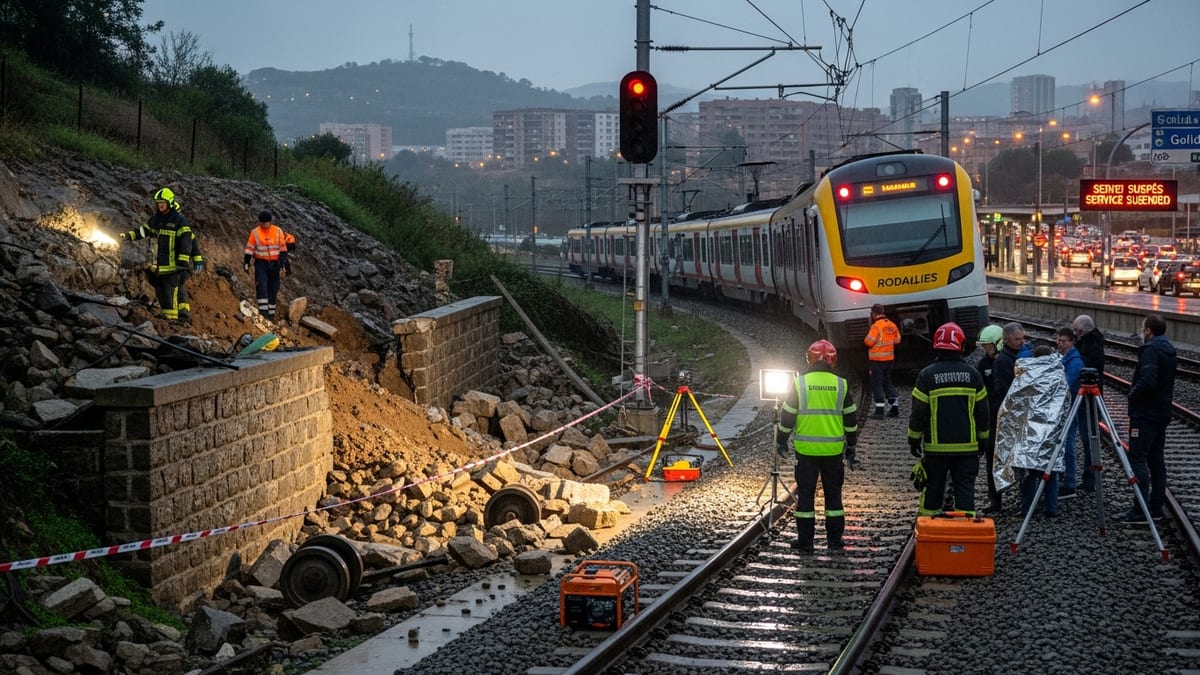
Derailment near residential area prompts evacuations
The derailment occurred on the evening of Sunday, July 5, near the intersection of Whetstone Street and Auto Avenue in Bucyrus, a small north central Ohio city situated on a key freight rail corridor. Publicly available information describes several cars of a Norfolk Southern manifest freight leaving the tracks close to homes and local businesses.
Initial reports indicate that at least one tank car carrying hydrochloric acid left the rails and came to rest entangled with several cars loaded with nonhazardous materials. The proximity of the overturned tank car to nearby streets and properties led local officials to establish a broad safety perimeter while rail and emergency crews worked to assess the situation.
Out of caution, residents within an initial radius of about one mile were advised to leave their homes and seek shelter elsewhere. A local high school and other facilities were opened to accommodate evacuees as nightfall and summer heat added to the disruption.
Rail traffic through the city was halted while responders evaluated track damage and the stability of derailed cars. Motorists faced detours around blocked crossings, with some main roads still affected as crews continued recovery and repair operations into Monday.
Assessments report no hazardous material release
According to published coverage from regional outlets and statewide broadcasters, hazmat specialists, state environmental teams and Norfolk Southern contractors conducted repeated inspections and air monitoring around the overturned hydrochloric acid tanker. These publicly reported assessments have indicated no breach of the tank and no confirmed release of hazardous material into the surrounding community.
Public information summaries describe air monitoring results as not showing an immediate threat to nearby neighborhoods. Rail and emergency management updates emphasized that while the presence of a corrosive chemical required a strong precautionary response, field readings did not support earlier fears of a leak or explosion risk.
As confidence grew that the tanker remained intact, the evacuation zone was gradually reduced from roughly one mile to a quarter mile and then lifted for most residents. Some streets near the derailment site have remained closed to allow heavy equipment access, debris removal and track reconstruction.
Local reports note that no injuries have been publicly documented in connection with the derailment. Nearby residents, however, experienced several hours of uncertainty as sirens, emergency alerts and social media posts circulated before detailed environmental results were available.
Cleanup operations and travel disruptions continue
Crews working on behalf of Norfolk Southern and local agencies have focused on clearing derailed railcars, inspecting damaged track and restoring utility lines and communications hardware affected by the crash. Images published by regional news organizations show cranes, excavators and specialized rail equipment used to stabilize and rerail cars where possible and to dismantle others for removal.
During the early stages of the response, key roadways near the tracks were closed to both through traffic and local access. Reports indicate that some closures continued into Monday to accommodate large machinery and to limit public access to areas where heavy lifting, cutting and welding were underway.
For Bucyrus, a city that functions as a regional hub along U.S. and state highways as well as rail lines, the incident brought short term congestion and detours for commuters, freight haulers and visitors. Local coverage notes that the affected rail corridor is an important route for mixed freight traversing northern Ohio, meaning that delays extended beyond the immediate area as trains were held or rerouted.
Crews are expected to remain on scene for several days to complete cleanup, conduct further environmental checks and restore normal rail operations. Publicly available information indicates that more detailed structural and metallurgical inspections of the damaged tank car will take place after it is moved to a secure location.
Heightened concern after previous Norfolk Southern accidents
The Bucyrus derailment has attracted heightened attention in part because it involves the same railroad at the center of the 2023 East Palestine, Ohio, disaster, where a Norfolk Southern train carrying hazardous chemicals derailed and led to a significant chemical release and controlled burn. That earlier incident sparked national debate about freight rail safety, the movement of hazardous materials and the robustness of federal regulations.
Since East Palestine, Norfolk Southern has announced safety initiatives focused on track inspection technology, train handling practices and placement of hazardous materials within long trains. Federal agencies and state officials have also pursued new rules and oversight measures intended to reduce the likelihood and severity of derailments involving chemicals.
In this context, reports from Bucyrus have repeatedly highlighted that current monitoring does not show a hazardous materials release from the overturned tanker. Public discussion in local media nonetheless reflects anxiety about the frequency of derailments and the risks communities face when tank cars carrying industrial chemicals travel close to homes, schools and businesses.
Advocacy groups and policy commentators have pointed to Bucyrus as another example of how even a derailment without a toxic release can cause major disruption, trigger evacuations and strain local emergency resources. They argue that investments in rail infrastructure, emergency preparedness and stricter standards for hazardous cargo remain urgent priorities.
Ongoing investigation and implications for rail travelers
According to publicly available information, the cause of the Bucyrus derailment has not yet been formally determined. Rail safety specialists and relevant state and federal agencies are expected to review train data recorders, track conditions, car inspections and train makeup to reconstruct the sequence of events leading up to the crash.
Investigations of similar derailments have previously examined track defects, equipment failures, braking and train handling, as well as the placement of heavy and hazardous cars within long consists. Findings from Bucyrus could feed into broader discussions about how freight traffic is managed on corridors that also intersect with key road routes used by passenger vehicles and buses.
For travelers passing through north central Ohio, the incident serves as a reminder that rail infrastructure plays a critical role in how communities function and how people move between destinations. Temporary closures, detours and delays can ripple outward, affecting road trips, regional bus routes and access to nearby airports and attractions.
As cleanup progresses and formal reports on the Bucyrus derailment emerge, transportation observers are watching to see whether the episode reinforces calls for additional safeguards, route planning changes or new requirements for hazardous cargo passing through smaller cities that rely on rail lines as both economic lifelines and potential risk corridors.