

More news on this day
Norwegian Cruise Line is directing fresh attention to South and Central America with a limited series of Norwegian Jade sailings that combine a full Panama Canal transit with off-the-beaten-path calls along the Pacific coasts of Peru, Central America, and Mexico.
Get the latest news straight to your inbox!
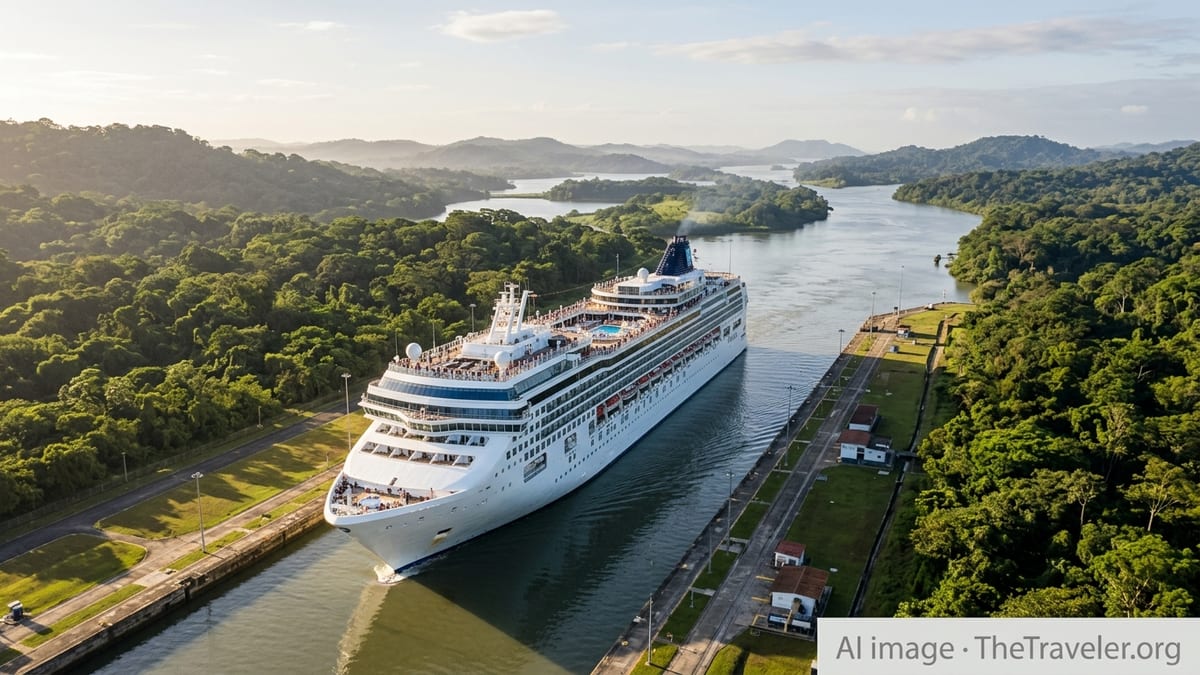
Limited Voyages Spotlight South and Central America
Publicly available deployment information for the 2025 to 2026 season indicates that Norwegian Jade will operate a small number of longer voyages linking South and Central America, framed around full Panama Canal crossings. The sailings stand out within the brand’s wider schedule, which in recent years has been increasingly concentrated in the Caribbean, Alaska, and Europe.
Industry coverage notes that many of Norwegian’s South America programs have been reduced or redeployed for winter 2025 to 2026, leaving only a handful of South America and Latin America itineraries in place. Within this trimmed lineup, Norwegian Jade’s extended Panama Canal and Pacific coast cruises are positioned as some of the more distinctive options for travelers seeking more in-depth regional exploration.
The cornerstone of this program is a 17-day open-jaw itinerary from Callao, the port for Lima in Peru, that travels north along the Pacific seaboard of South and Central America before turning toward Mexico. The ship then continues to the Mexican Riviera, connecting a string of ports that are not commonly linked on a single cruise.
These longer routes are being marketed as once-per-season style journeys, rather than regularly repeating circuits. As a result, the sailings are drawing attention among experienced cruisers who track unusual itineraries and rare port combinations.
Panama Canal Transit Anchors the Itinerary
The Panama Canal remains the centerpiece of Norwegian Jade’s South and Central America deployment. Company materials and third-party cruise guides describe the ship crossing the canal during a series of 11 to 17 day voyages between late 2025 and early 2026, including the extended Callao departure.
The canal segment provides a contrast to typical Caribbean-based partial transits by offering a full passage between the Pacific and Atlantic basins. For many travelers, the experience is considered a bucket list event, combining engineering history with the spectacle of locks, lakes, and dense tropical scenery on either side of the waterway.
These Norwegian Jade itineraries are structured so that the canal transit is bracketed by longer sea days and coastal calls, allowing passengers time to recover from early-morning viewing and to attend enrichment-style programming focused on the region’s history and environment. While onboard offerings vary by sailing, longer repositioning-style cruises of this type typically emphasize lectures, destination briefings, and extended time on deck.
Because the voyages are scheduled outside the core summer and holiday seasons, the canal crossings also fall during periods that can feature varied weather patterns, adding an element of unpredictability to conditions as the ship moves from one ocean to the other.
Callao to Mexico: A String of Uncommon Pacific Ports
The open-jaw itinerary from Callao is notable for its focus on the less-visited Pacific coasts of South and Central America. According to itineraries published by Norwegian and travel retailers, the sailing begins in Callao, giving guests access to Lima’s colonial center and nearby archaeological sites before Norwegian Jade turns north toward Central America.
From there, the ship is scheduled to visit Acajutla in El Salvador, a port that remains relatively rare on mainstream cruise calendars compared with long-established Caribbean gateways. The call offers access to volcanic highlands, coffee-producing regions, and Pacific beaches that have been drawing more international visitors in recent years.
Continuing north, Norwegian Jade is slated to call at Huatulco and Manzanillo on Mexico’s Pacific coast. These stops represent first-time visits for the vessel, according to earlier deployment announcements, underscoring the line’s effort to broaden its footprint beyond marquee ports such as Cabo San Lucas and Mazatlan.
The itinerary concludes with a call at Puerto Vallarta, marking Norwegian Jade’s return to the classic resort city for the first time since 2008. The port’s blend of historic center, palm-lined waterfront, and mountainous backdrop positions it as a visual highlight toward the end of the voyage.
Redeployments Make Sailings More Exclusive
The exclusivity of Norwegian Jade’s South and Central America cruise program is being sharpened by broader fleet redeployments. Trade publications and cruise industry reports show that Norwegian has canceled a significant portion of Norwegian Jade’s originally planned Panama Canal and Caribbean season between late 2025 and early 2026, shifting the ship to other regions for part of that period.
These changes mean that only a handful of longer Latin America and Panama Canal sailings remain available on the schedule, transforming what was once envisioned as a multi-month program into a more limited series. For travelers interested in combining Peru, Central America, and Mexico on a single itinerary, the revised deployment narrows the window of opportunity.
Cruise analysts note that redeployments of this kind are becoming more common across the industry as lines react to shifting demand, port constraints, and new ship deliveries. As a result, unusual itineraries can disappear or change configuration more quickly than in previous decades, encouraging travelers to book farther in advance when a particular region or route is a priority.
Norwegian Jade’s South and Central America sailings illustrate this trend, with initial announcements focusing on an extended season and later updates highlighting cancellations, alternative homeports, and new routes elsewhere in the fleet.
What Travelers Can Expect Onboard and Ashore
Norwegian Jade, which entered service in 2006 and underwent a major refurbishment in 2022, is positioned as a mid-sized ship by contemporary standards, with capacity for just over 2,300 guests. For the South and Central America program, that scale may offer a balance between onboard amenities and a more intimate feel than the newest mega-ships.
Passengers can expect a full range of dining venues, bars, lounges, and entertainment spaces, along with outdoor decks that become focal points during the Panama Canal transit and coastal scenic cruising. The ship’s size allows it to operate comfortably in a variety of port environments, including smaller Pacific terminals that do not routinely host the largest vessels in the global fleet.
Ashore, the itineraries emphasize a mix of urban and nature-focused experiences. Lima and Puerto Vallarta provide established tourism infrastructure, while ports such as Acajutla and Huatulco offer access to national parks, coffee regions, and quieter beach areas. Travelers can combine guided excursions with independent exploration, depending on comfort level and local conditions at each stop.
Given the length and geographic scope of the voyages, travel planners advise paying close attention to seasonal weather patterns, flight availability to and from gateway cities such as Lima and the Mexican Riviera, and any updates to port lineups that may arise from future deployment adjustments. For now, Norwegian Jade’s extended route through South and Central America stands out as one of the more distinctive cruise offerings on the market for early 2026.