


Moving money across borders has quietly become one of the biggest hidden costs of global travel and expat life. Whether you are funding a six‑month stint in Lisbon, buying a home in Portugal from the United States, or getting paid as a freelance designer by a client in London, the choice between OFX and Wise can easily mean hundreds or even thousands of dollars in difference over time. Both services promise cheaper, more transparent international transfers than your bank, but they are built for slightly different needs. Understanding those differences is the key to picking the right one for your next move.
Get the latest updates straight to your inbox!
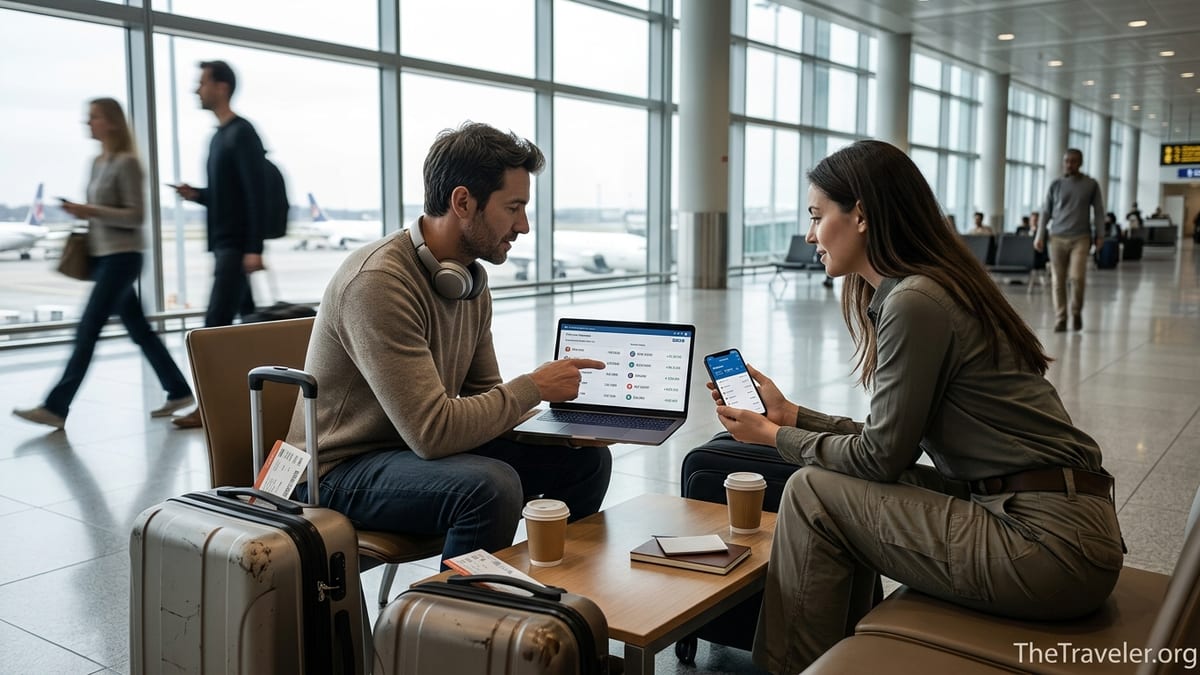
OFX and Wise in a Nutshell
OFX and Wise sit in the same broad category of international money transfer specialists, but they come from very different origins. OFX started in the late 1990s in Australia as a currency broker focused on larger transfers for individuals and businesses, especially for things like overseas property purchases and corporate FX hedging. It still leans heavily into that broker model today, with human dealers, phone support and tools such as forward contracts and limit orders that let you lock in exchange rates in advance.
Wise, originally known as TransferWise, emerged from the European fintech boom as a digital-first platform for everyday people who were tired of opaque bank fees. Its core idea is simple: use the real mid‑market exchange rate you see on a currency converter, then add a clearly stated percentage fee on top. Wise wraps that up in a modern app, local bank details in multiple currencies, and a debit card that many travelers now rely on as their default plastic abroad.
For a U.S.-based traveler or remote worker, that difference in DNA matters. OFX is often pitched to someone wiring 150,000 U.S. dollars from New York to Sydney for a home purchase or moving a large inheritance overseas. Wise, by contrast, is the go‑to tool for paying 1,200 euros of rent each month in Berlin, reimbursing a friend in the United Kingdom for shared Airbnb costs, or moving 3,000 dollars into a local currency while you test life as a digital nomad in Mexico City.
Both companies are regulated in multiple jurisdictions and are widely used by expats, small businesses and travelers. In practice, that means that for most common routes such as U.S. dollars to euros, British pounds or Australian dollars, you will find both OFX and Wise frequently recommended in expat and digital nomad communities, but usually for slightly different transfer sizes and priorities.
Fees and Exchange Rates: Where the Real Costs Hide
The biggest difference between OFX and Wise lies in how they charge you. Wise uses the mid‑market rate and then adds a separate fee, usually a small percentage of the total amount plus, in some corridors, a small fixed component. The percentage depends on the route and how you fund the transfer, but for many major currency pairs like U.S. dollars to euros, recent disclosures indicate an average global fee in the region of a little more than half a percent of the transfer value. The important point is that you can see that fee itemized before you hit send, and you can compare the rate directly against what you see on a currency converter.
OFX takes a more traditional broker approach. It often advertises zero transfer fees, but the revenue comes from adding a margin on top of the mid‑market exchange rate. Independent comparisons in 2026 suggest that this margin is often somewhere in the region of about 0.4 to 0.7 percent above the mid‑market rate for common corridor transfers, although it can move around depending on currency pair and the size of your transfer. In effect, you often see a round number rate quote rather than the exact real‑time mid‑market rate, and the difference between those numbers is the cost you pay.
To make that concrete, imagine a traveler in Chicago sending 1,000 U.S. dollars to a friend in Manila to cover a shared island‑hopping trip. A live comparison page recently showed Wise converting at the mid‑market rate to Philippine pesos, charging a clearly listed fee of under 10 dollars, and ultimately delivering a little over 60,800 pesos to the recipient for a 1,000‑dollar send. The same 1,000 dollars sent via OFX, using a slightly weaker rate but a low fixed transfer fee, resulted in roughly 58,600 pesos arriving. In that specific case, the difference was more than 2,000 pesos, which is enough to cover several nights in a budget guesthouse or a few domestic flights in the Philippines.
On the other hand, if you are wiring a much larger amount, such as 150,000 U.S. dollars for a property completion in Spain, OFX is often prepared to narrow that margin as part of a negotiated rate with a human dealer, especially if you are an existing client. In practice, travelers and expats report that on six‑figure amounts, a small change in the spread can more than offset Wise’s very low percentage fee. The gap is rarely dramatic, but when you are sending the equivalent of a house deposit, even a small advantage of a few tenths of a percent can translate into thousands of euros on arrival.
Speed, Convenience and Everyday Usability
Speed and ease of use are where Wise tends to shine for regular travelers and remote workers. The Wise app lets you set up an account, verify your identity and send money from a U.S. bank account to dozens of currencies in a few minutes once you are approved. For common routes like U.S. dollars to euros or British pounds, a large share of transfers now arrive within seconds or a few hours on business days when paid by debit card or funded via an instant bank transfer option. Even slower options such as ACH from a U.S. bank tend to settle in one to two business days for many destinations.
Imagine a digital nomad who has just landed in Lisbon and realizes that their Portuguese landlord will only accept bank transfers to a local IBAN. With Wise, they can open a multi‑currency account that provides local euro bank details, move dollars from their U.S. bank via ACH, and then either pay the landlord directly in euros or send themselves money to a Portuguese bank account if they open one later. That can all be handled from a smartphone without any phone calls or manual paperwork.
OFX is less focused on that day‑to‑day app experience and more on one‑off and recurring large bank‑to‑bank transfers. You create an account online, but for significant sums you will often speak to a dealer on the phone, particularly if you want to discuss rate options or set up a forward contract. Transfers are typically executed via the banking system rather than local balances, so they can be slightly slower for some currency pairs than Wise’s local‑to‑local routing. For instance, a U.S. resident wiring 80,000 dollars to Canada to buy a lakeside cabin might see the money arrive in one to three business days, depending on the funding method and the receiving bank’s processing times.
For daily spending, only Wise offers a physical and virtual debit card tied to your multi‑currency balances. Many travelers now pay for metro tickets in Paris, coffee in Tokyo and hotel bills in Cape Town directly with the Wise card, letting the app convert at close to the mid‑market rate in the background. OFX does not have a consumer card, so it is not a replacement for a travel credit or debit card when you are physically on the road.
Transfer Limits, Minimums and When Size Matters
One area where OFX and Wise differ sharply is minimum and maximum transfer sizes. Wise is built for flexibility: you can usually send as little as a single U.S. dollar equivalent across many routes, which is why people happily use it for small things like reimbursing a friend for a shared taxi while traveling. Wise does impose maximum amounts per transfer and per day that vary by currency and funding method, but for typical travelers those caps are usually more than enough, often in the tens of thousands or more per transfer when sending from a U.S. bank.
OFX, by contrast, has historically required a minimum transfer amount of 1,000 U.S. dollars or equivalent from U.S. customers. That immediately shapes the kind of traveler for whom OFX makes sense. It is not the tool you use to pay for a single night in a Budapest guesthouse or to top up your overseas spending money by 200 dollars. It is much more suited to scenarios like sending 30,000 British pounds from London to Toronto to cover a year of university tuition for a child, or moving 50,000 Australian dollars from Sydney to Singapore when taking up a new regional role.
At the upper end, both services are used for quite large sums, but OFX explicitly targets high‑value transfers and business transactions. It encourages clients to call in when moving six‑figure amounts to discuss options and documentation. Wise also supports high‑value transfers and has been used by many expats to move hundreds of thousands of dollars, but users occasionally run into extra verification steps or split transfers when totals get very high. For someone planning multiple large moves ahead of a relocation, it can be worth checking both platforms’ current per‑transfer and annual limits for your specific route and confirming what paperwork will be required.
In practice, a common pattern among long‑term travelers and new expats is to use Wise for frequent, smaller transfers and everyday spending, while turning to a broker such as OFX when a single, extremely large transaction like a home purchase or a corporate capital injection comes up.
Advanced Tools for Property Buyers, Expats and Businesses
Where OFX often pulls ahead is in the set of tools it offers to people and businesses that are heavily exposed to currency risk. If you are a U.S. couple buying an apartment in Paris off‑plan, you might sign a contract in January with staged payments over the next 18 months. During that time, the euro‑dollar rate can move significantly. OFX allows you to lock in a rate in advance via a forward contract for all or part of those future payments, giving you certainty about how many dollars you will ultimately have to come up with.
OFX also provides limit orders that let you set a target rate and automatically trigger a transfer when the market hits that level. A Canadian entrepreneur paying suppliers in Japan, for example, might place a limit order to move a large sum of Canadian dollars into yen if the rate improves to a specific level while they sleep, without having to sit in front of a screen watching foreign exchange markets. These tools are particularly valuable once transfers get into high five, six or seven figures, where small changes in the rate make a big difference.
Wise offers a different set of tools aimed more at high‑frequency, smaller transactions. Its multi‑currency account can hold balances in a wide range of currencies, and you can get local account details such as euro IBANs, British sort code and account numbers, or Australian account details. A freelance web designer from New York might issue invoices to clients in London and Berlin in their local currencies, get paid into Wise without foreign transaction fees at the client’s end, then either keep some money in euros for future travel or convert back to dollars when rates look attractive.
For businesses, Wise integrates with accounting systems such as Xero and QuickBooks in many markets, and supports batch payments that let a remote‑first company pay dozens of international contractors in their home currencies from a single screen. OFX also has business solutions and foreign currency accounts in some regions, but its strongest differentiator remains one‑on‑one dealer support and risk management products rather than software integrations.
Safety, Regulation and Customer Experience
Both OFX and Wise are heavily regulated, but their structures are slightly different. Wise operates as an electronic money institution and payment services provider in the regions where it is licensed, holding client funds in safeguarded accounts at major banks rather than lending them out like a traditional bank. OFX, on the other hand, functions as a specialist international payments provider and foreign exchange dealer, with regulatory permissions in markets including the United States, United Kingdom, European Union and Australia. In both cases, you are relying on large, established companies rather than a small startup.
From a traveler’s perspective, that means you typically face standard identity verification when you first sign up and occasionally for larger transfers. Expect to provide a passport scan, proof of address and, for very large amounts, evidence of where the funds came from, such as property sale documents or bank statements. Wise tends to automate this via in‑app uploads, while OFX is more likely to handle complex cases through a mix of email and human support.
Customer reviews tell a mixed but useful story. Wise attracts millions of users and a high volume of reviews praising its transparent fees, strong mobile app and quick transfer times for popular routes. At the same time, there are complaints about sudden account reviews and limited phone support when something goes wrong. OFX reviews frequently highlight the value of having a named dealer to call when moving six‑figure sums or navigating time‑sensitive property completions, but you can also find frustrated customers who have experienced delays or aggressive compliance checks at exactly the wrong moment.
For most travelers and remote workers sending modest amounts, both services work smoothly most of the time. Problems are more likely to surface when you are pushing limits, either in size or in the complexity of the route, such as sending to a country with tighter capital controls or less developed banking infrastructure. In those cases, some expats choose to test both services with a smaller transfer before trusting them with a life‑changing sum.
Real‑World Scenarios: Which Service Wins?
To decide between OFX and Wise, it helps to look at specific situations that travelers, expats and global workers commonly face. Consider an American software developer spending a year working remotely in Spain. Each month, they need to move about 2,500 dollars into euros to cover rent and living costs, while also keeping a U.S. credit card for points and emergencies. Wise is usually the more natural fit here. The developer can set up a recurring transfer from their U.S. bank, hold euros in the Wise account, pay with the Wise debit card in local shops, and send bank transfers to their Spanish landlord. The fees are clearly shown, the amounts are moderate, and the process requires no phone calls.
Contrast that with a British couple selling their house in London and buying a retirement home in the south of France. They plan to move approximately 400,000 pounds into euros over several months, with part of the payment tied to construction milestones. For them, OFX’s ability to discuss rates with a dealer, use forward contracts to lock in a favourable euro rate for a future payment, and place limit orders to capture short‑lived market improvements can be worth more than the transparency of a small, fixed Wise fee. They may still keep a Wise account and card for everyday spending once they move, but for the big property transfers, OFX often becomes their main tool.
Another common scenario is a small U.S. business paying overseas contractors. A design studio in Austin might have a handful of regular freelancers in Poland, Argentina and Thailand. Paying each one via international wire from the company’s bank can mean fees of 30 to 50 dollars per payment, plus a hidden markup in the exchange rate. Wise can streamline that by letting the studio upload a batch of payments, see the total cost upfront, and pay all three contractors in their local currencies from a single funded balance. OFX could also handle these payments, but without the same level of self‑service automation and with a higher minimum transfer amount, it can be less convenient for a string of modest monthly invoices.
At the other end of the spectrum is a Canadian entrepreneur selling a business and moving their life to Australia. If they need to send the equivalent of 1 million Canadian dollars over in stages, they might compare quotes from multiple providers, including OFX, Wise and perhaps a specialist bank. In this kind of high‑stakes, high‑value situation, OFX’s broker model and appetite for large one‑off transfers can become particularly competitive. The entrepreneur might use Wise first to move and test 10,000 dollars, then switch to whichever provider offers the best blend of rate, personal support and documented process for the larger sums.
The Takeaway
OFX and Wise both beat traditional banks in most international money transfer scenarios, but they excel at different jobs. Wise is built for transparency, small to medium transfers and everyday usability. It is the tool that makes a digital nomad’s life simpler, lets a student in Berlin receive money from home with minimal friction, and helps a remote worker route their pay into multiple currencies at fair rates. If your transfers are usually in the low thousands and you value a slick app, real mid‑market exchange rates and a travel‑friendly debit card, Wise is very hard to beat.
OFX, by contrast, shines when the sums get serious and the timing matters. For a six‑figure property purchase in another country, a large relocation budget or a business hedging regular overseas invoices, the ability to speak to a human dealer, use forwards and limit orders, and negotiate tighter spreads on big amounts can justify picking OFX over a purely app‑based solution. Its 1,000‑dollar minimum means it is not the right choice for booking hostels or splitting restaurant bills, but for moving a lifetime of savings, it belongs on your shortlist.
For many globally mobile people, the most practical answer is not OFX or Wise, but OFX and Wise. Using Wise for daily life, smaller transfers and card spending, alongside OFX for the occasional large, planned move, gives you flexibility and price competition. Before sending money, especially larger amounts, it is always worth running a live quote on both platforms for your specific route, funding method and amount. The best service for you is the one that offers the right blend of cost, speed, support and features for the way you actually live and travel.
FAQ
Q1. Is OFX or Wise cheaper for small transfers under 5,000 dollars?
For most popular currency routes and amounts under about 5,000 dollars, Wise is usually cheaper in real terms because it uses the mid‑market rate with a low, transparent fee, while OFX typically adds a margin into the exchange rate and has a 1,000‑dollar minimum transfer from many countries.
Q2. Which service is better for very large transfers like buying property abroad?
For six‑figure transfers such as overseas property purchases, OFX can become more competitive because it may narrow its exchange rate margin for large amounts and offers tools like forward contracts and limit orders, plus dealer support to help you plan the timing of your transfers.
Q3. How fast are transfers with OFX and Wise?
Wise is often faster for common routes, with many transfers arriving the same day or within one to two business days, especially when funded by debit card or instant bank transfer. OFX typically delivers in one to three business days for major currency pairs, depending on banking hours, funding method and receiving bank processing times.
Q4. Are OFX and Wise safe to use for large sums?
Both OFX and Wise are established, regulated financial services providers that must follow strict rules on safeguarding client funds, anti‑money‑laundering controls and capital requirements. While no provider is entirely risk‑free, they are widely considered safe options for international transfers when compared with unregulated services.
Q5. Can I get a debit card with OFX or Wise for spending abroad?
Wise offers a debit card in many markets, linked to your multi‑currency account, which you can use for purchases and ATM withdrawals abroad. OFX does not offer a consumer debit card, so it is focused purely on bank‑to‑bank transfers rather than day‑to‑day spending.
Q6. Which service is better if I am a freelancer paid by overseas clients?
Wise is usually the more convenient option for freelancers because it provides local account details in several currencies, lets clients pay you as if you had a local account, and charges relatively low, transparent fees to convert and move money between currencies or to your home bank.
Q7. Does OFX really have no fees, and how does that compare with Wise?
OFX often advertises no fixed transfer fee, but it makes money by building a margin into the exchange rate it offers you. Wise shows you the real mid‑market rate and then adds a separate, clearly stated fee. When you compare total cost, you should look at both the rate and the fee rather than focusing on one alone.
Q8. Are there situations where using a bank is better than OFX or Wise?
Using a bank can make sense if you are moving money between accounts within the same banking group, need in‑branch service, or must meet specific documentation requirements tied to a mortgage or investment product. For most routine international transfers, however, banks are usually more expensive than either OFX or Wise once you factor in both fees and exchange rate markups.
Q9. Can I hold money in foreign currencies with OFX or Wise?
Wise lets you hold balances in multiple currencies inside its account, receive money locally and convert when you choose. OFX offers foreign currency accounts for certain business customers, but standard personal users mainly use it for direct conversions and transfers rather than long‑term holding.
Q10. Which service should a long‑term traveler or digital nomad start with?
A long‑term traveler or digital nomad will usually benefit most from starting with Wise because of its low entry minimums, strong app, multi‑currency account and debit card. If they later need to move a very large sum, such as proceeds from a property sale, they can add OFX to compare quotes and access more advanced hedging tools.