


More news on this day
UAE air travel remains vulnerable to rolling delays and selective cancellations as Gulf tensions persist, with Emirates, Etihad Airways, Air Arabia, and flydubai urging passengers to verify flight status close to departure and expect short-notice schedule changes.
Get the latest news straight to your inbox!
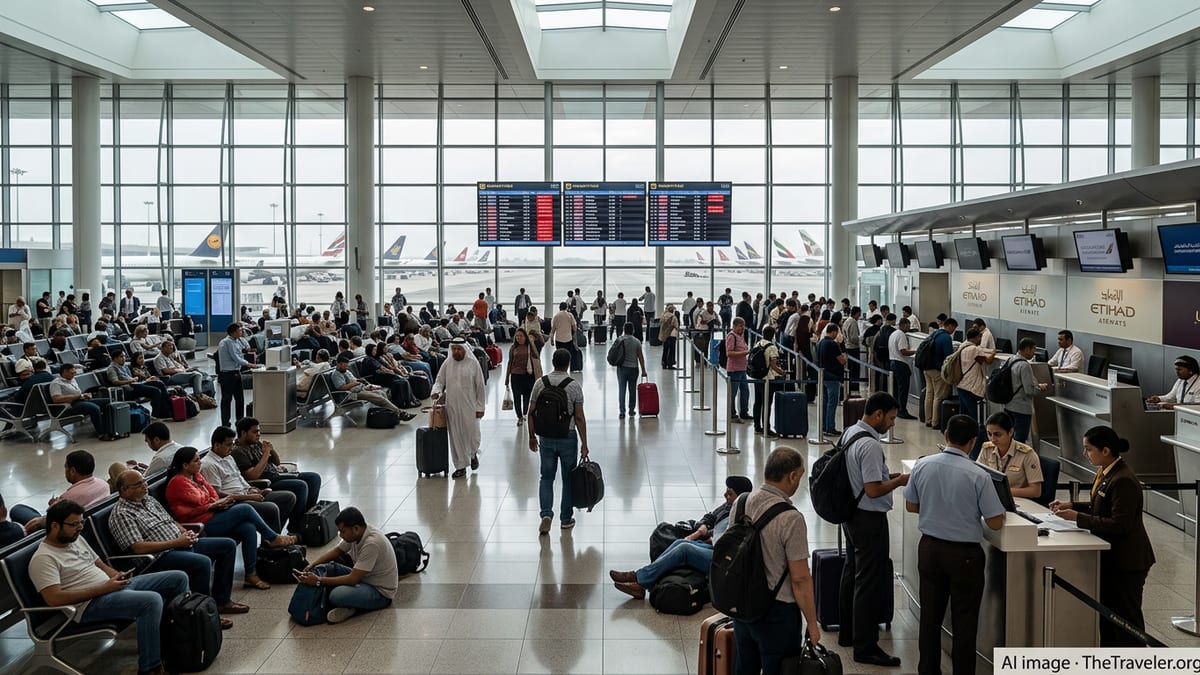
Where disruptions are showing up now
Recent flight-tracking data and published regional coverage indicate that disruption is currently less about a full shutdown and more about uneven operational impacts: late departures, longer routings around restricted airspace, and occasional day-by-day cancellations on specific Gulf routes.
On Sunday, September 13, 2026, FlightAware data cited in regional coverage showed 122 delays at Dubai International Airport and 51 delays at Abu Dhabi’s Zayed International Airport as of mid-afternoon local time. The same reporting also referenced cancellations on select Dubai to Bahrain services operated by flydubai.
Travelers should distinguish between airport-wide delay waves and route-specific cancellations. Delays can affect any airline using a busy terminal, while cancellations tend to cluster around short-haul Gulf services when airspace, slot constraints, or operational restrictions change with little notice.
Emirates: operational updates, status checks, and reroutes
Emirates has continued to publish travel updates and repeatedly directs customers to check flight status before leaving for the airport and to watch for email notifications about changes. Its latest operational update page carries a Dubai time-stamped update from September 8, 2026, underscoring that conditions can shift quickly even when the wider schedule remains largely intact.
For travelers, the most practical takeaway is that Emirates is signaling variability rather than a broad suspension. That can translate into longer flight times on some sectors as aircraft route around affected airspace corridors, plus potential last-minute retiming that can compress connections at Dubai International.
Passengers with onward connections via Dubai should pay close attention to minimum connection times and monitor gate changes. When delays cascade, tight itineraries can be at higher risk of misconnections even if the long-haul flight itself operates.
Etihad: selective route changes and watch-the-clock rebooking
Etihad’s public flight-status tools and published regional coverage indicate the airline has been operating most of its network from Abu Dhabi while making targeted adjustments on specific routes during peak disruption periods. Earlier in the disruption cycle, published coverage described temporary cancellations affecting select Abu Dhabi to Kuwait services, including EY653 and EY654, during a July window.
More recently, flight-tracking summaries cited in regional reporting pointed to minor arrival delays on flights such as EY654 when delay waves hit Abu Dhabi. That pattern aligns with a system under pressure but not broadly grounded: some flights operate, some shift times, and a smaller number can be cancelled as conditions change.
Etihad’s own flight-status messaging emphasizes checking status online and keeping contact details current in Manage Your Booking so automated updates can reach passengers quickly. Travelers should also be prepared for time-sensitive rebooking assistance when cancellations occur close to departure, since alternatives can sell out quickly during regional disruption.
flydubai: short-haul volatility and operational notices
flydubai has continued to publish operational updates and advises passengers to regularly check its flight status before traveling to the airport. While some of its posted operational notices can be unrelated to regional security issues, the broader guidance to confirm flight status close to departure has remained consistent throughout the period of heightened uncertainty.
Short-haul Gulf sectors are often the first to see day-of disruption because aircraft rotations are tight and small schedule shifts can ripple across an entire day’s flying. When delays build at Dubai International, flydubai’s high-frequency regional network can experience knock-on effects that are felt most acutely by travelers on quick weekend trips.
For passengers connecting between Emirates and flydubai itineraries, the key is to treat them as separate operating carriers even when codes are shared. Travelers should verify which airline is operating each flight segment and track status on that operator’s website rather than relying on third-party itineraries alone.
Air Arabia: limited operations on some routes and uneven schedules
Air Arabia has previously announced temporary suspensions during periods of acute escalation, and subsequent reporting has described limited operations to certain destinations depending on restrictions and operational feasibility. In the current environment, publicly available information suggests Air Arabia’s pattern has been a mix of operating flights on some days while adjusting or cancelling others as conditions evolve.
Separate published reporting in early September indicated Air Arabia continued operating a limited number of flights out of Kuwait’s Terminal 4 following local operational directives, illustrating how airport-level constraints can matter alongside regional airspace concerns. That kind of constraint can affect punctuality even when flights are not cancelled.
For travelers flying Air Arabia from Sharjah or Abu Dhabi, the most reliable approach is to confirm the flight’s day-of operation through the airline’s own flight-status tools, then plan extra time for airport processes and possible terminal or gate changes when irregular operations are underway.