

More news on this day
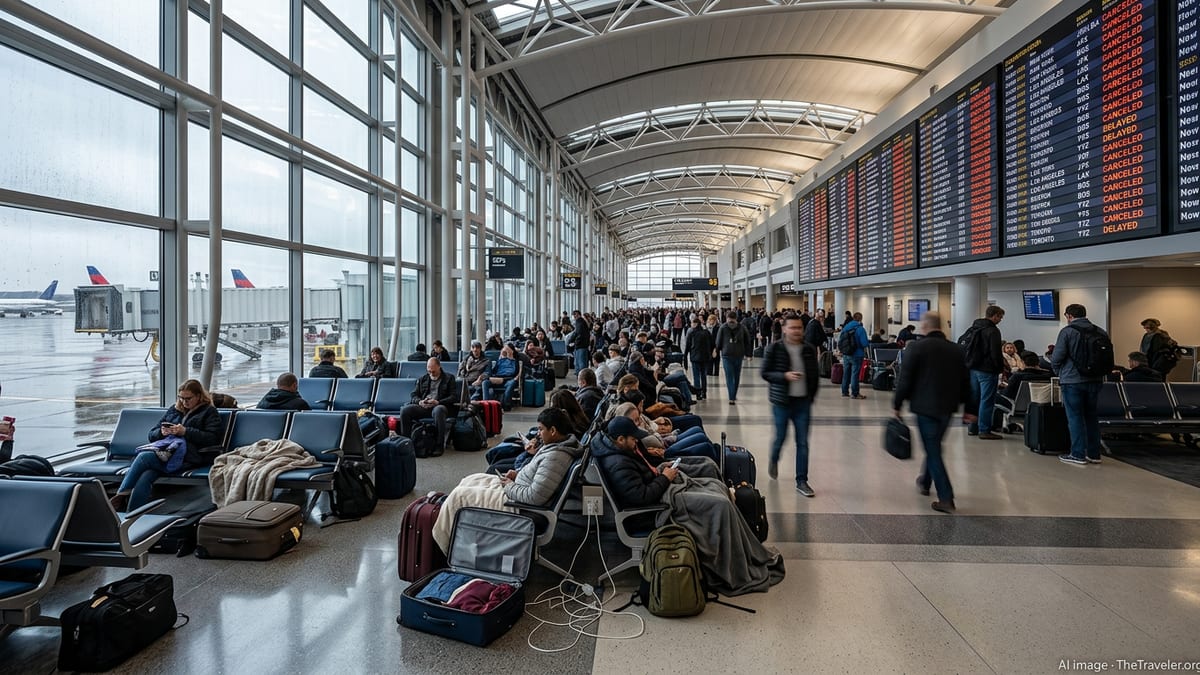
Thousands of travelers were left stranded at Chicago O’Hare International Airport on Sunday as nearly 800 flight cancellations and more than 800 delays rippled through the network of major North American carriers, disrupting connections to cities including New York, Los Angeles, Toronto, and Boston.
Get the latest news straight to your inbox!
High Winds and Storm Systems Snarl Chicago Hub
Publicly available flight tracking data on Sunday, March 15, indicates that Chicago O’Hare has once again become the focal point of a widespread disruption, with hundreds of departures and arrivals scrubbed or pushed back for hours. Strong crosswinds and unsettled spring weather over the upper Midwest have repeatedly forced ground stops and runway changes, sharply reducing the airport’s operating capacity.
Reports from airline operations dashboards and aviation monitoring services show roughly 790 cancellations and about 830 delays across flights touching O’Hare and connected hubs. While exact tallies vary by data provider and update cycle, the totals place the disruption among the most severe single‑day events of the current travel season, echoing the large weather‑related meltdowns that have periodically hit US networks in recent years.
Travelers on social platforms described long stretches of time spent confined to terminals as departure times slid later into the day or disappeared from boards altogether. Many passengers reported being unable to leave the airport due to rebooking difficulties, limited hotel availability near O’Hare, and long waits for customer service assistance as call centers and help desks struggled to keep pace with the scale of the schedule changes.
The situation was aggravated by the hub’s importance in domestic and transborder networks. With O’Hare serving as a primary connection point for the central United States, disruptions there tend to cascade outward, quickly affecting flights along the East and West Coasts and into Canada.
Major US Carriers and Regional Partners Under Strain
The latest data from flight status aggregators show that the largest share of cancellations and delays is concentrated among the biggest US carriers and their regional partners. United Airlines, which maintains a major hub at O’Hare, has seen a significant portion of its Chicago departures delayed or cancelled, with knock‑on effects at its coastal bases as aircraft and crews fall out of position.
Delta Air Lines, which relies on SkyWest and other regional operators for feeder service, is also contending with rolling schedule disruptions. SkyWest flights into and out of Chicago and surrounding Midwest cities have been especially vulnerable, since regional jets are more sensitive to high winds and low ceilings and often operate on tighter turnaround windows. As regional aircraft miss connections, mainline departures from larger hubs experience additional pressure.
Southwest Airlines, which focuses its Chicago operations at Midway but also serves broader US city pairs affected by the storm systems, has reported cancellations on routes that intersect the central US weather pattern. Travelers attempting to route around O’Hare through alternative airports have in some cases encountered similar issues, as planes and crews that were scheduled to feed those routes originated from the disrupted Chicago hub.
Publicly available performance statistics from the US Department of Transportation underline how quickly adverse weather can overwhelm even otherwise efficient operations. Recent Air Travel Consumer Reports show that a small share of flights categorized under “extreme weather” delays can still translate into thousands of passengers experiencing missed connections, missed events, and unexpected overnight stays when the impacted airport is a major hub.
Ripple Effects on New York, Los Angeles, Toronto, and Boston
Although the epicenter of Sunday’s disruption is Chicago, the reach of the cancellations and delays extends well beyond the Midwest. Flight boards at New York area airports, particularly Newark and LaGuardia, reflected a steady stream of delayed inbound aircraft from O’Hare as crews waited for weather and traffic flow improvements. Late‑arriving planes in turn pushed back evening departures, tightening connection windows for travelers heading to Europe and other long‑haul destinations.
On the West Coast, Los Angeles International Airport also reported disruptions linked to aircraft and crews scheduled from Chicago and nearby hubs. Published schedules show that many of these flights form part of cross‑country rotations, meaning a missed departure in Illinois can cause compounding schedule adjustments along the entire route chain. Travelers connecting in Los Angeles to Pacific and Latin American services faced heightened risk of misconnecting as a result.
In Canada, Toronto Pearson has seen a mix of late arrivals and cancellations on transborder flights tied to O’Hare and the broader Midwest corridor. According to publicly available airport operations updates, carriers have been working to consolidate lightly filled flights and reroute passengers through alternate hubs where possible, but gate agents and customer support channels remain heavily burdened.
Boston Logan has similarly recorded a wave of delays on Chicago‑linked services. With evening bank operations particularly sensitive to connection timing, any prolonged hold on departures from O’Hare can leave travelers in Boston facing limited same‑day alternatives, especially on routes that rely on a single daily frequency.
Passengers Face Long Lines, Limited Options, and Mounting Costs
For travelers caught in the disruption, the practical consequences have been immediate and often costly. Accounts circulating on travel forums and social media describe security queues snaking through terminals as passengers repeatedly reenter screening areas after involuntary rebookings or overnight stays. Lines at customer service counters for the hardest‑hit airlines have stretched across concourses, with some passengers reporting waits of several hours to speak with an agent.
Hotel availability in the vicinity of O’Hare tightened through the afternoon as stranded travelers sought last‑minute rooms. Dynamic pricing at nearby properties pushed nightly rates sharply higher, and budget options quickly sold out. Some travelers reported opting to sleep in terminal seating areas rather than absorb the cost of same‑day hotel bookings or ride‑share trips into downtown Chicago.
Rebooking challenges have been intensified by high overall load factors at this time of year. With many flights already near capacity, finding seats for disrupted passengers on later departures has proved difficult. Reports indicate that some travelers have been rerouted through secondary hubs, adding extra connections and longer total journey times in order to complete their trips.
Ancillary impacts are also mounting. Missed cruises, tours, conferences, and family events are a recurring theme in online posts from affected travelers, underscoring how tightly timed modern itineraries can be. Those who purchased travel insurance or credit card protections are beginning to test policy coverage for weather‑related interruptions, often discovering that reimbursement rules are complex and vary widely.
What the Disruption Reveals About North American Air Travel Resilience
The scale and speed of the O’Hare disruption highlight the structural vulnerabilities of hub‑and‑spoke air networks in North America. When a single major connecting point experiences an extended capacity reduction, the tightly interwoven schedules of multiple airlines can quickly unravel, even if conditions at destination airports such as New York, Los Angeles, Toronto, or Boston remain relatively stable.
Recent data releases on airline on‑time performance show that carriers have made some gains in reducing controllable delays, yet weather and airspace constraints continue to pose persistent challenges. Events like Sunday’s O’Hare disruption serve as a reminder that marginal improvements in scheduling and staffing can be overtaken by large and fast‑moving storm systems that affect multiple regions simultaneously.
For travelers, the incident underscores the value of monitoring weather patterns not only at departure and arrival cities but also at key connecting hubs. Aviation analysts frequently note that itineraries that rely on a single busy hub can carry higher risk of severe disruption than routes with more flexible connection options, particularly during storm‑prone seasons.
As airlines work through the backlog created by the cancellations and delays, recovery is expected to continue into the early part of the week. Aircraft and crew repositioning, combined with ongoing weather variability, may keep schedules fragile for at least another news cycle, leaving passengers across the United States and Canada facing the prospect of further adjustments as the system slowly resets.