

More news on this day
Travellers heading to Oman’s usually sun-drenched coast are being urged to review their plans as fresh showers and storm cells revive flash flood fears across popular beach and wadi destinations.
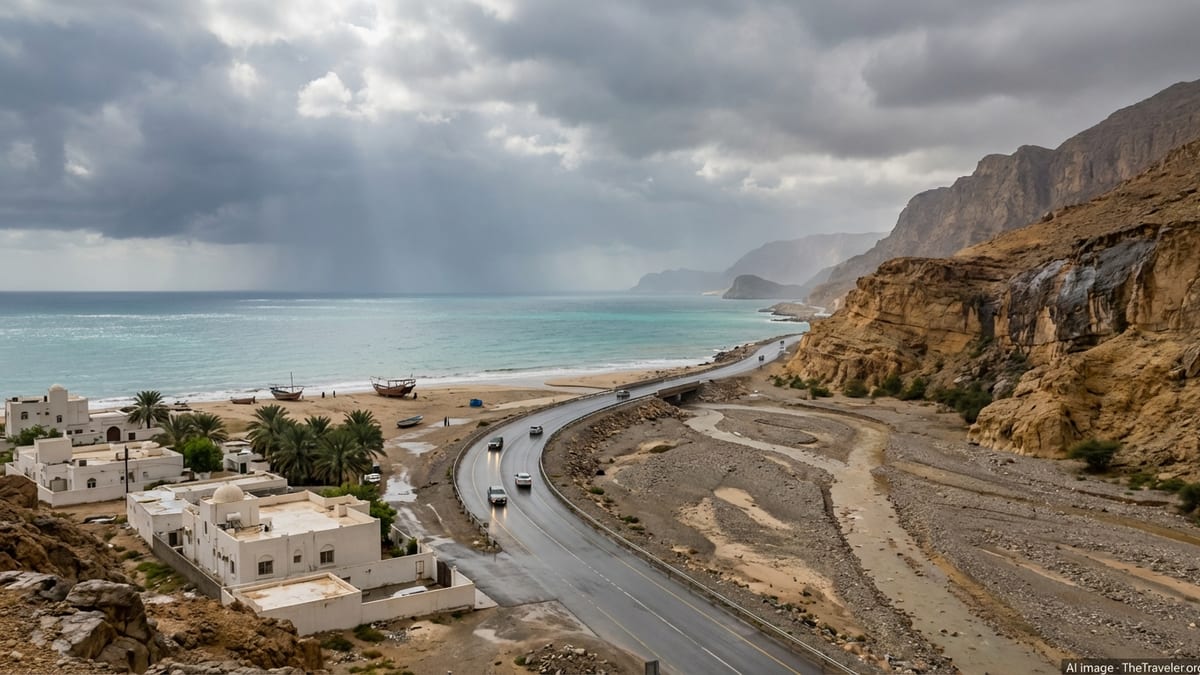
Unsettled Skies Over Oman’s Holiday Coast
After a year marked by deadly flash floods across the Persian Gulf region, Oman’s early spring weather is once again turning volatile, with forecasters warning that new rounds of showers could trigger sudden flooding in low-lying and mountainous coastal areas. The risk is greatest where narrow valleys meet the sea, a combination that has long made the sultanate’s eastern shoreline both spectacular and vulnerable.
Though the current systems are not classified as cyclones, the pattern is familiar to residents and regular visitors. From October to March, passing disturbances in the Arabian Sea can rapidly dump intense rain on otherwise parched landscapes, sending torrents through normally dry riverbeds and across coastal highways. For travellers bound for Muscat’s beach suburbs, the fishing town of Quriyat or the cliff-lined shores around Sur, officials say vigilance is essential in the coming days.
The latest advisory comes less than two years after exceptional downpours in April 2024 contributed to widespread flash floods that killed at least 20 people in Oman, part of a regional disaster that affected several Gulf states. The memory of cars swept away in wadis and rescue helicopters hovering over inundated neighbourhoods remains fresh, shaping a more cautious tone from authorities as new storm clusters build offshore.
Warnings Focus on Wadis and Coastal Roads
Omani authorities and foreign embassies are reiterating one of the country’s most important safety messages: avoid wadis when rain is in the forecast, and stay away from riverbeds and culverts for at least a full day after heavy showers. Wadis, which often double as scenic hiking routes and access tracks to hidden swimming holes, can transform without warning into raging brown rivers carrying rocks, tree trunks and debris.
Recent advisories highlight a particular concern for popular beauty spots in the Al Hajar Mountains that feed towards the coast, including routes used to reach well-known canyon pools and waterfalls east and south of Muscat. Travellers planning self-drive day trips are being urged to monitor local Arabic-language forecasts, listen for police instructions at checkpoint areas and be prepared to abandon itineraries if roads are closed.
Coastal highways and access roads that cross wadis are another focus. Even shallow-looking flows can be powerful enough to shift vehicles off causeways, a danger underscored by multiple past incidents in northern Oman where drivers attempting to cross flooded stretches were swept away. Police and civil defence teams routinely publish images of submerged saloon cars as stark reminders not to underestimate fast-moving water.
Impact on Tourism Hotspots From Muscat to Sur
The weather alerts are especially significant for visitors drawn to Oman’s blend of beaches and canyons along the northeastern shoreline. Muscat’s resort-lined districts such as Shatti Al Qurum and Al Ghubra have in previous storms experienced significant surface flooding when intense cloudbursts overwhelmed drainage systems and nearby wadis overflowed, briefly cutting access to some hotels and malls.
Farther down the coast, the fishing port of Sur and nearby coastal villages are gateways to some of the country’s best-loved natural escapes, including sea cliffs, turtle nesting beaches and lush wadis that carve inland. When heavy rain hits the interior mountains feeding these valleys, floodwaters can race seaward, closing tracks used by local guides and disrupting excursions that rely on clear, manageable water levels.
Local tour operators report monitoring weather charts more closely than in the past, adjusting departure times to avoid afternoon storm peaks and, when necessary, postponing or rerouting hikes. Some have shifted guests from wadi-focused adventures to safer coastal viewpoints on days when thunderclouds build inland. Travellers are being advised to confirm excursion status 24 hours ahead and to be flexible about last-minute changes prompted by safety considerations.
Foreign Travel Advisories Flag Extreme Weather Risks
While international travel advisories for Oman continue to highlight the country’s overall stability and relatively low crime levels, several governments now explicitly reference the risk of flash flooding in their safety sections. Overseas guidance notes that wadis are particularly prone to sudden inundation after heavy rain, stressing that visitors should check local forecasts and avoid flood-prone areas during the October to March wet season.
Recent regional tensions and airspace disruptions have dominated many travel updates for the Gulf, but extreme weather remains a parallel concern for those planning itineraries that include off-road driving and adventure tourism. Advisories recommend that travellers pay close attention to civil defence messages, follow Royal Oman Police instructions on road closures and avoid attempting to bypass barriers, even if conditions appear calm at that moment.
Insurance providers are also reminding customers to verify that their policies cover weather-related disruptions, including cancelled excursions and delays due to flooded roads. As storm systems become harder to predict, the prospect of stranded vehicles and blocked access routes is increasingly factored into pre-trip risk assessments for both group and independent travellers.
Practical Safety Tips for Beachgoers and Road-Trippers
With the peak of Oman’s tourism season overlapping its most flood-prone months, safety officials are urging visitors not to let clear blue skies at the coast create a false sense of security. Heavy rain can be falling unseen in the mountains while beach resorts enjoy sunshine, only for powerful flows to surge through downstream wadis hours later. Travellers are advised to ask hotel staff or local guides about conditions inland before setting off on day trips.
Those hiring cars are encouraged to choose vehicles with sufficient clearance for rough, rutted tracks, but not to interpret that as a licence to cross running water. The safest choice, authorities stress, is always to wait on higher ground until officials confirm that levels have dropped and it is safe to proceed. For hikers, that may mean turning back early if clouds build quickly or thunder is heard echoing from the mountains.
On the beaches themselves, the main concerns are strong currents, floating debris washed out from wadis and reduced visibility for small boats during heavy showers. Dive centres and dhow cruise operators along the Muscat and Sur coasts often suspend trips when storms approach, and travellers are urged to respect those decisions even if conditions appear manageable from shore. The overarching message from local authorities is clear: Oman’s coastal escapes remain open, but during unstable weather patterns, caution should travel with you every step of the way.