


More news on this day
Rail passengers using Peterborough have been urged to travel only if necessary during substantial engineering works on the East Coast Main Line that will close the main route to London and significantly disrupt services over a key late‑November weekend.
Get the latest news straight to your inbox!
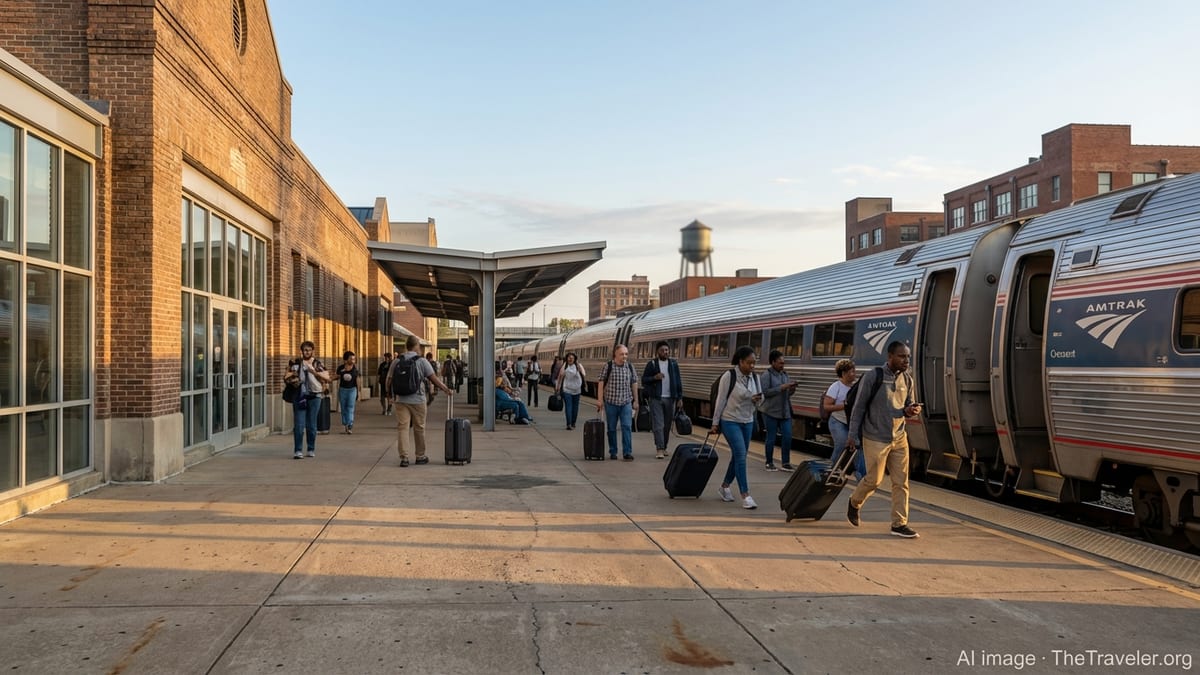
Major closure south of Peterborough on East Coast Main Line
Publicly available information shows that the East Coast Main Line will be fully closed between Peterborough or Letchworth Garden City and London over the final weekend of November, as part of a major phase of the East Coast Digital Programme. The closure means London North Eastern Railway services will not run between London King’s Cross and Peterborough on those dates, with other long‑distance operators also affected.
Coverage in national and trade rail outlets indicates that the most severe disruption is expected on Saturday 28 and Sunday 29 November 2026, when no LNER trains will operate between King’s Cross and Peterborough and capacity on alternative lines will be heavily constrained. Passengers are being advised in published updates to check journey planners before travelling and to consider whether their journey is essential.
Reports also highlight that the shutdown south of Peterborough coincides with wider route alterations around London, increasing the risk of crowding and extended journey times for anyone attempting to reroute via St Pancras, Euston or other London terminals.
According to recent rail industry briefings, the works build on multiple previous weekend closures on the same corridor in 2025 and 2026, which have already seen King’s Cross services replaced by buses or diverted via the Hertford Loop or other slower routes.
Digital signalling upgrade at the heart of disruption
The late‑November blockade is part of the multibillion‑pound East Coast Digital Programme, which is introducing European Train Control System in‑cab signalling between London King’s Cross and Peterborough. Public information from the programme describes how traditional lineside signals are being removed in favour of continuous digital information direct to drivers, aiming to deliver more reliable and more frequent services over the next few years.
Recent Network Rail and operator updates explain that the November works focus on commissioning further sections of digital infrastructure on the southern part of the route, building on earlier testing between Welwyn and Hitchin and preparatory cabling between Biggleswade and Peterborough. Earlier phases have required significant weekend closures in March and June, reducing or suspending direct services between Peterborough and London on multiple occasions.
Industry reports state that the same block of possession time is being used to carry out additional upgrades, including track renewals, drainage work and improvements to overhead power lines. Rail business coverage notes that combining projects in this way increases the scale of individual closures but is intended to reduce the number of disruptive weekends overall.
Programme documents indicate that the first digitally signalled passenger services on the East Coast Main Line south of Peterborough are expected to start operating in stages from the mid‑2020s, with full benefits scheduled to be realised before the end of the decade.
Severely limited alternatives and replacement transport
Planned timetables published by operators for comparable engineering weekends show that, when the main line has closed between Peterborough and King’s Cross, replacement buses have run linking key stations with alternative rail services. In January 2025, for example, coaches substituted for trains between King’s Cross and Peterborough while long‑distance services started and terminated north of the closed section.
For the upcoming November 2026 works, early indications from rail industry coverage suggest a similar pattern, with long‑distance LNER and open‑access services curtailed or diverted, and a limited number of rail replacement buses operating between affected stations such as Peterborough, Stevenage and Letchworth Garden City. Journey planners typically show substantially extended travel times and fewer through options when these plans are loaded.
Separate advice issued by East Midlands Railway for earlier East Coast Main Line works in February highlighted that services into London St Pancras could become extremely busy when King’s Cross routes were closed, as passengers attempted to switch to the Midland Main Line. Comparable warnings have been repeated for later engineering phases, and rail forums report that heavily loaded trains and longer dwell times have been common on alternative routes during past blockades.
Great Northern and Thameslink service updates for the East Coast Digital Programme also indicate that, on some weekends, trains that usually run between Peterborough and London have been shortened, rerouted or replaced altogether, reducing local capacity for commuters and leisure travellers south of the city.
Impact on Peterborough passengers and wider network
Local news coverage for Cambridgeshire earlier in 2026 described how digital signalling test weekends led to reduced timetables and longer journey times between Peterborough and London across four weekends in March, prompting warnings of delays for passengers. Those reports emphasised that rail users travelling for sports fixtures, events and airport connections needed to allow additional time or consider alternative days of travel.
On similar closure weekends, rail community reports have pointed to knock‑on effects well beyond the immediate King’s Cross corridor, with passengers diverting via cross‑country routes, the West Coast Main Line to and from Euston, or even domestic flights, depending on origin and destination. This redistribution has, in turn, led to busier services and pressure on seat availability across much of the intercity network.
At Peterborough itself, which is a major interchange for services towards the Midlands, the North East and East Anglia, earlier closures have meant more passengers waiting for fewer onward options and greater reliance on station facilities. Public information about the station notes that it serves LNER, CrossCountry, East Midlands Railway and Great Northern, so any major engineering south of the city quickly reverberates through multiple operators’ timetables.
Industry analyses of the digital signalling transition suggest that, while the short‑term disruption is considerable, the long‑term outcome should be a more resilient timetable for Peterborough passengers, with the potential for more frequent intercity services and better recovery from incidents once the new system is fully in place.
Advice for travellers urged to reassess journeys
Given the scale of the upcoming works and the limited capacity on diversionary routes, recent media coverage has highlighted strong guidance for customers to travel only if their journey is essential on the affected November weekend. This reflects similar messaging seen during earlier phases of the East Coast Digital Programme, when operators urged passengers to avoid the busiest days unless travel was unavoidable.
Journey planners for previous closure weekends have shown that door‑to‑door travel times between Peterborough and central London could more than double once coach transfers and longer diversionary routings are factored in. Reports also indicate that accessible travel can require additional planning, as not all replacement bus stops and interchange points offer the same step‑free access as the mainline stations.
National and local outlets advise that anyone who does need to travel should check live journey planners close to departure, leave significantly more time than usual, and be prepared for changes to departure platforms or replacement bus boarding points. Advance ticket holders are typically offered the option to use alternative services at nearby times or to travel on different days when planned disruption is this extensive, although specific conditions depend on the operator and ticket type.
Publicly available information from the East Coast Digital Programme and associated operators stresses that, while the November blockade will be highly disruptive for Peterborough rail users in the short term, it is regarded as a key milestone in delivering a modernised, higher‑capacity railway between the city and the capital.