


More news on this day
Thunderstorms moving across the Denver metro area disrupted air travel at Denver International Airport, where flight-tracking totals showed more than 400 delayed flights as the FAA put traffic-management restrictions in place.
Get the latest news straight to your inbox!
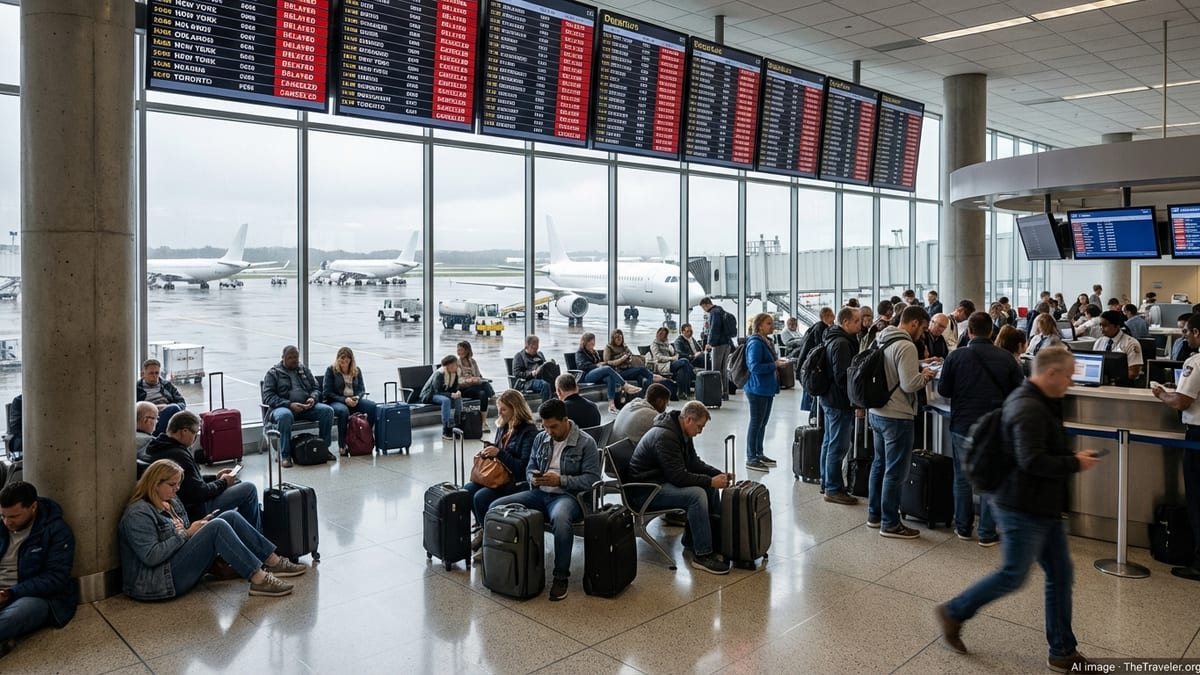
Storm-driven restrictions ripple through a major U.S. hub
Published coverage and publicly available air-traffic status pages showed a weather-driven slowdown at Denver International Airport as thunderstorm activity reduced the airport’s ability to move aircraft safely and efficiently. Denver’s airport is a key connecting point for domestic travelers, so even short weather windows can cascade into extended delays as aircraft and crews fall out of position.
During the most active period, published coverage indicated the FAA implemented a ground delay lasting for several hours into the evening, with average delays reported at roughly three quarters of an hour. Flight-tracking totals cited in the same coverage showed more than 400 flights delayed into or out of Denver, a figure that can change quickly as schedules reflow and late-day operations compress.
Separately, the FAA’s airport-status page for Denver is designed to show broad conditions rather than individual flights, and it can reflect improving conditions after storms pass. Late Sunday, the FAA status page displayed only limited, general gate-hold and airborne delays of 15 minutes or less, underscoring how quickly the overall picture can shift once convective activity moves away from the airfield.
What travelers may see on the ground and in the air
Thunderstorms affect aviation less because of rain itself and more because of lightning risk, wind shifts, turbulence, and the need to keep aircraft separated when weather blocks arrival and departure corridors. FAA guidance on weather delays notes that large convective systems can force reroutes, holding patterns, or metering programs that reduce capacity, even when conditions at the terminal appear to improve.
At airports like Denver, lightning in the vicinity can also slow ramp activity, which may delay baggage handling, fueling, catering, and aircraft servicing. That can turn an initial air-traffic delay into longer gate holds while flights wait for a workable departure slot and for turnaround tasks to finish safely.
When storms arrive during peak afternoon and evening banks, delays often compound into late-night operations. That can lead to missed connections, aircraft swaps, and crew-duty constraints that push a portion of disruptions into the next morning’s schedule.
How the FAA manages demand when storms reduce capacity
When thunderstorms reduce how many flights can arrive or depart each hour, the FAA commonly uses traffic-management initiatives to balance demand with the temporary lower capacity. These tools can include holding aircraft at their origin airports rather than sending too many planes toward an airspace bottleneck, which helps reduce airborne holding and congestion around the destination.
FAA materials describe the purpose of ground delay programs as a way to meter arrivals so an impacted area is not overloaded during a weather event. The approach can be especially important for a hub like Denver, where arrival demand is often high and disruptions can extend well beyond the local region through airline networks.
In practice, travelers may experience this as an “EDCT” style delay, a revised pushback time, or a rolling change in boarding schedules. Even after storms subside, it can take time for arrival and departure queues to clear and for airlines to reposition aircraft and crews for later legs.
What to do if you are flying through Denver
For travelers departing or connecting at Denver, the most useful first step is to monitor the flight status directly with the airline and, if possible, set up app notifications for gate changes and revised departure times. During convective weather, published coverage and FAA guidance indicate that schedules can change repeatedly as airlines adjust to shifting storm cells and to updated air-traffic flow restrictions.
If you are connecting at Denver, consider checking the incoming aircraft’s status, not just your flight number, because a late inbound can be a leading indicator of additional delay. In tight connection windows, travelers may want to review same-day alternatives early, since rebooking options can narrow quickly once large banks of flights are delayed.
Ground transportation and pickup plans should also account for unpredictable arrival times. When thunderstorms trigger irregular operations, the most challenging moments are often clustered around the same time period, producing simultaneous gate changes, crowded concourses, and longer waits for service as multiple flights attempt to recover at once.