


More news on this day
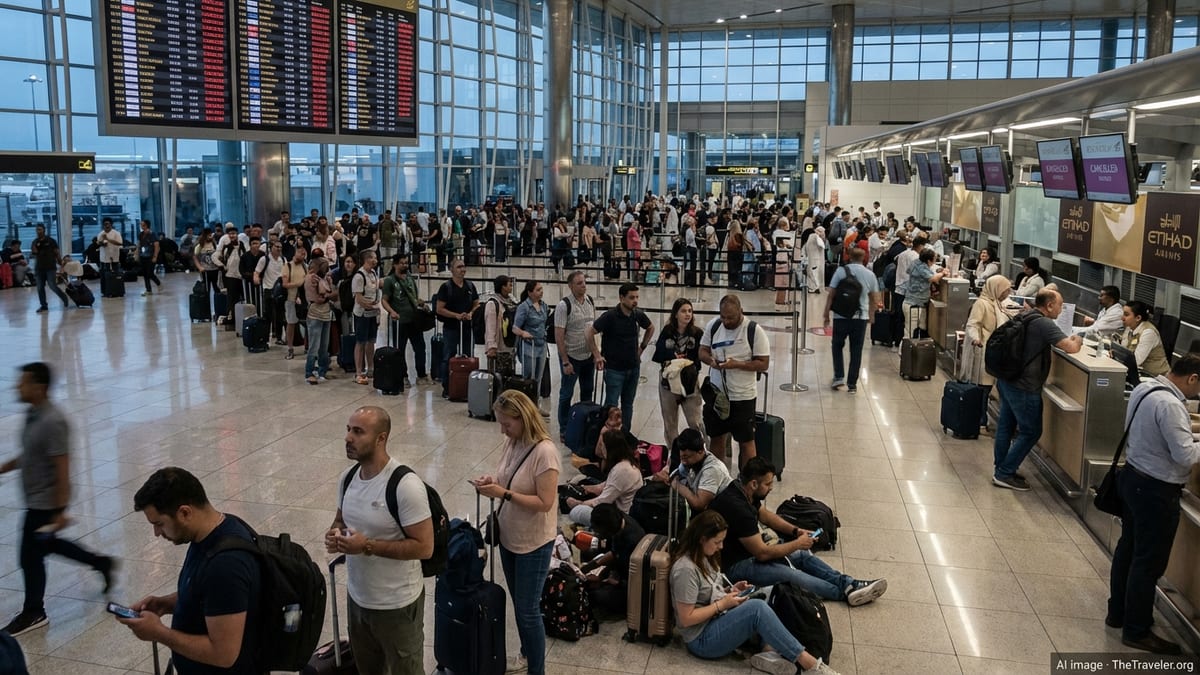
Travelers transiting through the UAE are seeing pockets of flight disruption at Dubai International (DXB) and Abu Dhabi’s Zayed International Airport (AUH), with delays and a smaller number of cancellations showing up across airline networks as regional conditions and external air-traffic disruptions ripple into Gulf schedules.
Get the latest news straight to your inbox!
What’s happening at DXB and AUH right now
Published coverage in early September reported delays on both arriving and departing flights at Zayed International Airport and Dubai International Airport, with cancellations affecting a limited number of services. The same coverage noted that disruption levels can change quickly, with airlines warning that timings may be adjusted at short notice as operational conditions evolve.
More recent airport and flight-tracking data continues to show intermittent irregular operations at DXB, including clusters of delayed departures and some cancellations on certain days. Because these third-party boards can lag or display incomplete information, travelers are generally best served by confirming status directly with their airline before heading to the terminal.
For Abu Dhabi, destination and tourism information published by Experience Abu Dhabi states that Zayed International Airport remains open and operational, while still advising travelers to check flight status with their airline. That guidance aligns with the current pattern: AUH operations continue, but travelers may encounter longer waits and occasional schedule changes depending on route and carrier.
Key drivers: regional airspace constraints and international knock-on effects
Published travel advisories from governments and news coverage point to an unsettled regional operating environment that can produce periodic airspace constraints, reroutes, and schedule variability for flights crossing the broader Middle East. In late August, the U.S. State Department’s UAE travel advisory referenced “significant disruptions to commercial flights” in connection with the broader security environment in the region earlier in 2026.
Operational variability is not solely regional. Early September also saw major disruption in UK air traffic control systems, and airline notices indicate that UK network issues can feed delays across long-haul rotations that touch the Gulf. Emirates, for example, posted a travel update tied to the UK’s NATS technical incident dated September 8, 2026, advising passengers to monitor flight status and notifications for delays, changes, or cancellations.
In the UK, NATS later published a preliminary report dated September 18, 2026 describing a software defect behind the September 8 disruption. Even when a technical issue is resolved within hours, the operational recovery can take longer as aircraft, crew, and slots reposition, and those aftereffects can show up on international routings that connect through Dubai or Abu Dhabi.
Airline-specific updates travelers should watch
Airline update pages are often the fastest way to confirm whether a disruption is a one-off technical issue, a route-specific constraint, or part of a broader network problem. Emirates’ travel updates have recently flagged UK-related disruption tied to NATS, and its flight status tools and disruption FAQs emphasize checking email or app notifications before departing for the airport.
Etihad’s flight status pages can also surface route-level disruptions, including occasional technical cancellations on specific flight numbers and dates. Travelers connecting through AUH should pay close attention to whether their inbound is running late, since a delayed inbound aircraft can cascade into a delayed outbound connection later the same day.
For flydubai, the carrier’s operational updates and travel advisories have included guidance for busy periods at DXB and notices about temporary route or airport changes in specific markets. While not all such notices reflect disruption, they can affect where passengers should go, which terminal applies, and how much time to plan for check-in and security.
Airport operations notes: what to expect on the ground
At Abu Dhabi’s Zayed International Airport, a current travel alert notes overnight maintenance affecting the primary baggage handling system in Terminal A (International), with manual processing possible during late-night and early-morning hours. The alert advises international passengers departing during that window to arrive at least 3.5 hours before departure and to keep essential items in carry-on baggage in case of longer wait times.
Dubai International’s official airport website directs passengers to use its flight-status tools and customer support channels for up-to-date information. In practice, when disruptions occur, the most visible impacts at DXB tend to be concentrated in check-in queues, gate changes, and longer connection times as banks of arriving flights bunch together after airspace or air-traffic restrictions.
For travelers connecting, it is worth remembering that even when an airport is fully operational, a single cancellation can create congestion at transfer desks and airline counters. That congestion can slow rebooking and hotel voucher processing for eligible passengers, particularly during peak evening departure waves.
What travelers can do before leaving for the airport
Because delays and cancellations can appear with little notice, the most practical step is to verify flight status via the airline’s app or website shortly before departing for DXB or AUH, then again after arriving at the airport. Airlines also commonly recommend confirming that mobile numbers and email contacts are up to date in the booking so that automated rebooking or gate notifications can reach the passenger.
Passengers with tight connections should consider building extra time into itineraries where possible, especially on itineraries that depend on a single daily frequency or involve long-haul rotations that may be sensitive to airspace constraints and slot availability. If a schedule change breaks a connection, carriers typically manage reaccommodation within their policies, but the best options can disappear quickly during widespread disruption.
For those transiting Abu Dhabi overnight, the current Terminal A baggage-system maintenance advisory makes carry-on packing and early arrival especially relevant for late-night or pre-dawn departures. For Dubai, travelers should be prepared for gate changes and allow extra time for terminal transit, particularly if operational recovery is still underway from earlier delays.