

More news on this day
Travel plans across Japan were thrown into disarray this week as more than 75 flights were cancelled at major airports, disrupting services on Japan Airlines, All Nippon Airways, Air Do and other carriers and affecting key routes linking Tokyo, Osaka, Fukuoka, Sendai, Hong Kong and multiple regional hubs.
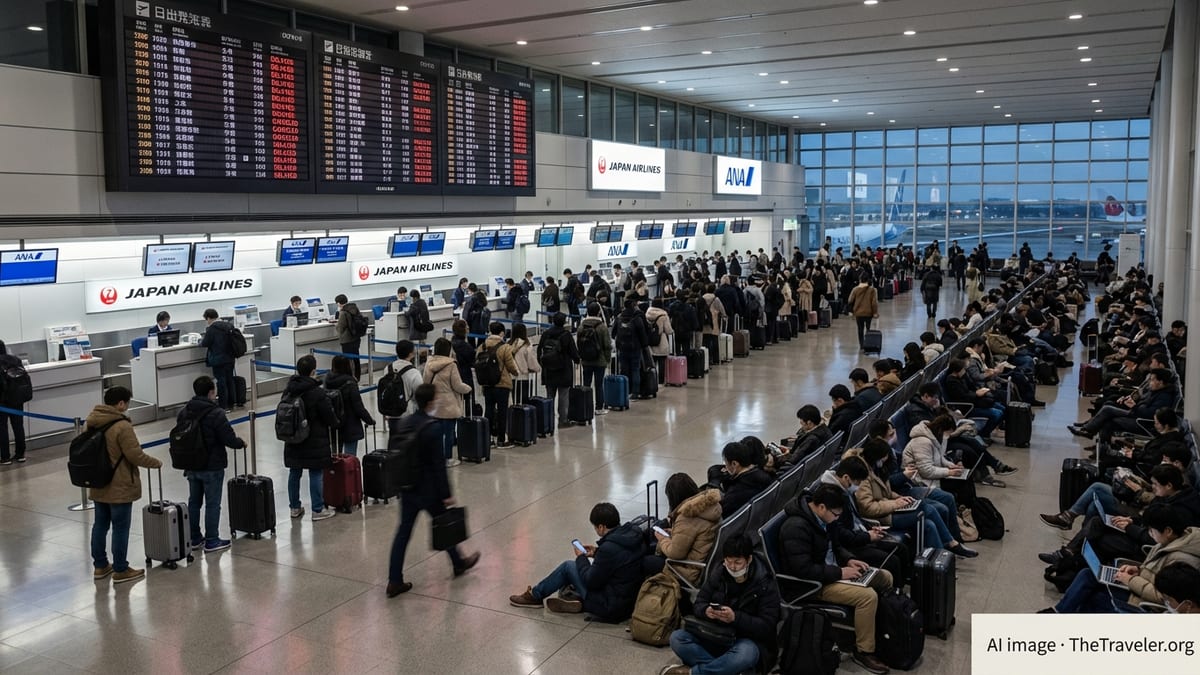
Widespread Cancellations Across Major Japanese Airports
The latest disruption, detailed by aviation and travel industry sources on Thursday, has seen at least 77 flights scrubbed over a two day period at Kansai, New Chitose, Fukuoka and Chubu Centrair airports. The cancellations span both domestic and short haul international services, with knock on effects into the wider Japanese network.
New Chitose Airport near Sapporo has borne a large share of the impact, with a string of mid morning departures to Tokyo, Fukuoka, Hakodate, Niigata and Chubu Centrair cancelled. Services operated by All Nippon Airways, Japan Airlines, Air Do and other regional carriers feature prominently on the list, underlining how the disruption is cutting across airline groups rather than being confined to a single operator.
At Kansai and Fukuoka, cancellations have been concentrated around busy trunk routes, particularly flights linking Osaka and Fukuoka with the Tokyo metropolitan area. Aviation data show that the affected services include narrow body and wide body aircraft, meaning the number of displaced passengers is likely to run into the thousands over the course of the disruption.
Chubu Centrair, serving Nagoya and the surrounding Chukyo region, has also reported scrubbed departures and arrivals, adding another layer of complexity for travellers attempting to reroute within Japan’s dense domestic network.
Key Routes to Tokyo, Osaka, Fukuoka, Sendai and Hong Kong Affected
The cancellations are heavily concentrated on some of Japan’s most important air corridors. Multiple flights from New Chitose to Tokyo Haneda have been removed from schedules, along with services to Itami and Kansai airports in the Osaka area. Links from Sapporo to Fukuoka, Niigata, Hakodate and Chubu Centrair have also been affected.
Further south, services feeding into Fukuoka and Osaka have seen interruptions, complicating travel for both domestic passengers and those connecting onward to international flights. Fukuoka, a major gateway to Kyushu and an important point for flights to and from East Asia, has previously seen disruptions ripple into services to Seoul and Hong Kong, and industry observers warn that today’s pattern could follow a similar trajectory if delays persist.
International connectivity has not been spared. Routes linking Japan and Hong Kong are among those flagged by travel industry monitors as vulnerable when cancellations mount, with Hong Kong bound services from Japanese regional gateways particularly exposed. Travellers planning multi leg itineraries through hubs such as Tokyo Haneda, Narita, Kansai and Fukuoka have been urged to verify the status of all segments, not just their initial departure.
Sendai and other regional airports, which rely heavily on trunk routes to Tokyo and Sapporo for both business and leisure traffic, are expected to feel secondary impacts as aircraft and crews fall out of position. Past disruption events in Japan have shown that regional links can take longer to normalise, even after operations at major hubs begin to stabilise.
Airlines Respond With Rebooking and Limited Compensation
Japan Airlines and All Nippon Airways have activated their standard irregular operations procedures, publishing rolling updates on their websites and airport information screens. Both carriers are offering rebooking on alternative flights when seats are available, with priority typically given to passengers with imminent international connections, families with young children and those requiring special assistance.
All Nippon Airways guidance states that, where a major delay or cancellation is directly attributable to the airline, it may cover certain accommodation and ground transportation costs for affected passengers. When disruption is linked to factors outside the airline’s control, such as adverse weather or airspace constraints, assistance is generally limited to rebooking support, with out of pocket expenses falling to travellers.
Domestic and regional airlines including Air Do and other operators at New Chitose and Kansai have adopted similar approaches, focusing on moving passengers onto the next available services and, where possible, rerouting them through alternative hubs such as Tokyo Haneda, Narita or Chubu Centrair. However, tight capacity on popular trunk routes means that some travellers are facing prolonged waits or overnight stays before they can be accommodated.
Low cost and leisure focused carriers have also reminded passengers that refund and change options depend on the original fare type and conditions. In several cases, fee free itinerary changes are being permitted within a limited window for those directly affected by the current wave of cancellations.
Knock On Effects for Business and Leisure Travel
The timing of the disruption, falling during a busy late winter travel period, has created particular difficulties for business travellers and tour groups. Corporate itineraries built around tight day trip schedules between Tokyo, Osaka, Fukuoka and Sapporo have been upended, forcing last minute switches to remaining flights or alternative modes such as the Shinkansen on some domestic routes.
Inbound tourists using Japan as a regional hub have also been caught out. Travellers connecting from long haul flights into domestic services for onward journeys to ski resorts in Hokkaido, cultural centres around Kansai or city breaks in Fukuoka and Sendai are among those most affected. Travel agents report a surge in same day itinerary changes as groups attempt to salvage key elements of their trips, even if it means shortening stays or revising routes.
Tourism authorities are monitoring the situation closely, wary that repeated episodes of disruption could dent confidence at a time when Japan is vying to sustain its strong post pandemic recovery in visitor numbers. While aviation systems globally have been under pressure from weather, staffing and infrastructure constraints, Japan’s domestic network is typically regarded as highly reliable, so clusters of cancellations tend to attract particular scrutiny.
Regional businesses that depend on steady flows of domestic visitors, such as hotels and attractions in Hokkaido and Kyushu, are also watching seat availability closely. Extended disruption on key air corridors can translate into late arrivals, shortened stays or, in some cases, cancelled trips, with knock on impacts on local revenues.
What Travellers Need to Do Now
Airlines and airport operators are urging passengers with bookings into or within Japan over the coming days to monitor flight status repeatedly rather than relying on information received at the time of booking. Schedules remain subject to late adjustments, and flights that appear as operating one day may be revised or cancelled at short notice as airlines rebalance fleets and crews.
Travellers are being advised to arrive earlier than usual for departures from heavily affected airports such as New Chitose, Kansai, Fukuoka and Chubu Centrair, in anticipation of longer queues at check in and customer service counters. Those with tight onward connections, particularly to international services in Tokyo, Osaka or Fukuoka, are encouraged to consider allowing additional buffer time or, where possible, shifting to earlier flights.
Passengers who have already received cancellation notifications should move quickly to secure rebooking options, as seats on alternative services are being snapped up fast. Keeping digital copies of booking confirmations and receipts can help streamline discussions over refunds or any potential compensation with airlines and travel agencies.
For now, industry analysts expect that operations will gradually stabilise as carriers work through the backlog of disrupted flights. However, with weather and operational challenges still a factor during the late winter period, travellers planning journeys to or within Japan are being reminded that flexibility, careful monitoring and contingency planning remain essential.