


More news on this day
All 288 people on board a Turkish Airlines flight from Istanbul to Kathmandu escaped unharmed on May 11 when smoke and flames from the jet’s landing gear triggered an emergency evacuation at Nepal’s Tribhuvan International Airport, drawing renewed attention to passenger safety procedures on one of South Asia’s most challenging runways.
Get the latest news straight to your inbox!
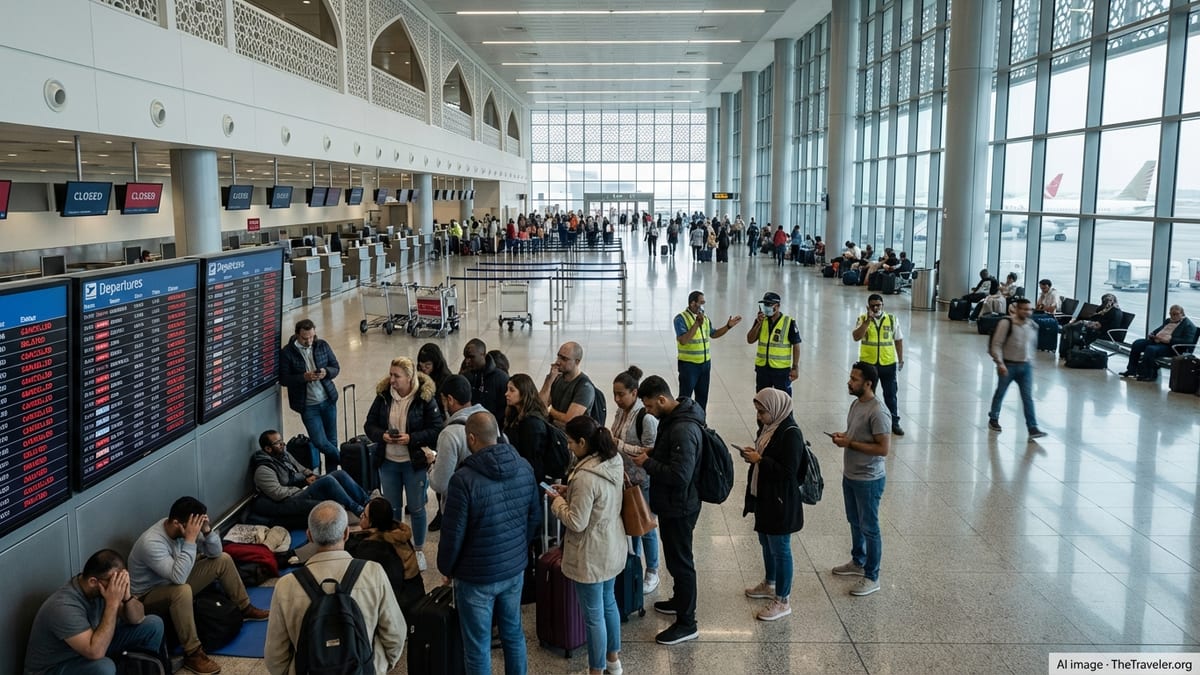
Swift Evacuation After Landing Gear Incident
Reports indicate that Turkish Airlines flight TK726, an Airbus A330, was nearing the end of its journey from Istanbul when smoke was detected from the right main landing gear shortly after touchdown in Kathmandu on the morning of May 11. Images and video from the scene showed smoke and localized flames around the wheel assembly as the aircraft came to a stop on the runway.
Publicly available information from multiple outlets describes cabin crew initiating an emergency evacuation using inflatable slides once the aircraft halted. All 277 passengers and 11 crew members left the jet on the runway and grass verge, moving away from the aircraft in accordance with standard emergency protocols.
News coverage from Nepal and international media consistently states that no injuries were reported among passengers or crew. The airport’s fire and rescue services attended the aircraft on the runway and brought the situation under control while passengers waited in safe areas nearby.
Turkish Airlines later stated that preliminary technical assessments pointed to a malfunction in a hydraulic system component as the likely source of the smoke and heat around the landing gear, although a full investigation is still expected to examine the sequence of events in detail.
Airport Disruption at Nepal’s Busy International Gateway
The incident led to a temporary shutdown of Tribhuvan International Airport, Nepal’s primary international gateway and a vital hub for tourism and labor migration. Runway operations were suspended for roughly one and a half to two hours while emergency teams worked around the parked Airbus A330 and inspected the surface for damage or debris.
During the closure, arriving flights were placed in holding patterns, diverted to alternate airports, or delayed from departure points. Departing flights from Kathmandu were also held on the ground. Once the aircraft was towed to a remote apron and the runway was cleared, operations gradually resumed and airlines began to work through backlogs.
The brief shutdown underlined how a single aircraft blocking the sole main runway at Kathmandu can quickly disrupt regional travel flows. Tribhuvan International Airport handles a concentrated schedule of flights serving South Asia, the Middle East, and beyond, making any interruption immediately visible to travelers transiting through the Himalayan nation.
For passengers on TK726, Turkish Airlines organized an additional flight for the onward journey after the aircraft involved in the emergency was taken out of service for inspection. Travel industry reports indicate that most travelers were able to continue their routes later the same day or shortly afterward once alternative arrangements were in place.
Focus on Safety Protocols and Crew Training
The outcome of the emergency, with all passengers and crew unharmed, has been widely framed in coverage as an example of safety procedures functioning as intended under pressure. Aviation analysts quoted across international reports have highlighted the role of regular crew training in rapid decision-making during such events.
Standard operating procedures require flight and cabin crews to treat signs of fire or smoke in landing gear as a serious hazard. The decision to deploy slides and evacuate is typically based on visible smoke, heat, or fire, as well as instructions from air traffic controllers and airport emergency services. In Kathmandu, available evidence suggests that this chain of decisions unfolded within minutes.
Observers have also pointed to passenger behavior as a factor in the smooth evacuation. Footage and photos from the runway show travelers moving away from the aircraft without visible carry-on luggage, a key point emphasized in airline safety briefings. Avoiding delays caused by retrieving bags can be critical when an aircraft is at risk from heat or fire.
Turkish Airlines has indicated that the aircraft is undergoing detailed technical inspections. Industry watchers expect investigators to focus on the hydraulic systems and brake assembly in the right main landing gear, along with maintenance records and operational data from the flight.
Challenging Operating Environment in Nepal
The emergency in Kathmandu has revived discussion about the demanding flying environment in Nepal, where variable weather, mountainous terrain, and limited runway options present ongoing challenges. Tribhuvan International Airport is located in a valley surrounded by hills, requiring carefully managed approach and departure paths.
While the Turkish Airlines incident occurred after a routine landing rather than during approach, the context of Nepal’s aviation record continues to frame public reaction. The country has experienced several serious accidents over the past decades, many involving smaller domestic aircraft operating to short, high-altitude runways in remote regions.
International aviation bodies have worked with Nepal’s regulators and airports to improve safety oversight, infrastructure, and training. The incident involving TK726 is now expected to feed into those ongoing discussions, particularly around ground operations, emergency response coordination, and maintenance practices for large widebody aircraft operating at Kathmandu.
Travel industry commentary notes that the safe outcome is likely to temper immediate concerns among foreign visitors planning trips to Nepal, especially as international airlines and the local aviation authority emphasize adherence to global safety standards and rapid post-incident review.
Implications for Passengers and Future Operations
In the short term, the primary effect on passengers has been limited to delays and equipment changes associated with the grounding of the affected Airbus A330 and disruptions during the temporary airport closure. Turkish Airlines has rerouted travelers and scheduled replacement services, according to published coverage.
Longer term, analysts expect the incident to prompt a close look at maintenance intervals, inspection routines, and operational limitations for heavy aircraft at Kathmandu, particularly during busy morning arrival banks. Any recommendations emerging from the investigation may influence how international airlines plan their schedules or choose specific aircraft types for the route.
For travelers, the event serves as a reminder of the importance of listening to safety briefings and following crew instructions immediately in an emergency. The absence of injuries among nearly 300 people on board TK726 is being widely attributed to a combination of trained crew response, functioning aircraft safety systems, and cooperative passenger behavior.
As the technical inquiry progresses, publicly available information suggests that both Turkish Airlines and Nepal’s aviation officials will be under scrutiny from regulators and the traveling public. For now, the focus remains on the fact that a potentially serious situation ended with every passenger walking away safely, reinforcing the critical role of robust safety protocols on routes into Nepal’s capital.