


More news on this day
Philippine Airlines is advancing toward membership in the Oneworld alliance at the same time that air links between the Philippines, the United States, Australia, Japan and Qatar are deepening, a convergence that could redraw how global travelers connect across the Indo-Pacific and beyond.
Get the latest news straight to your inbox!
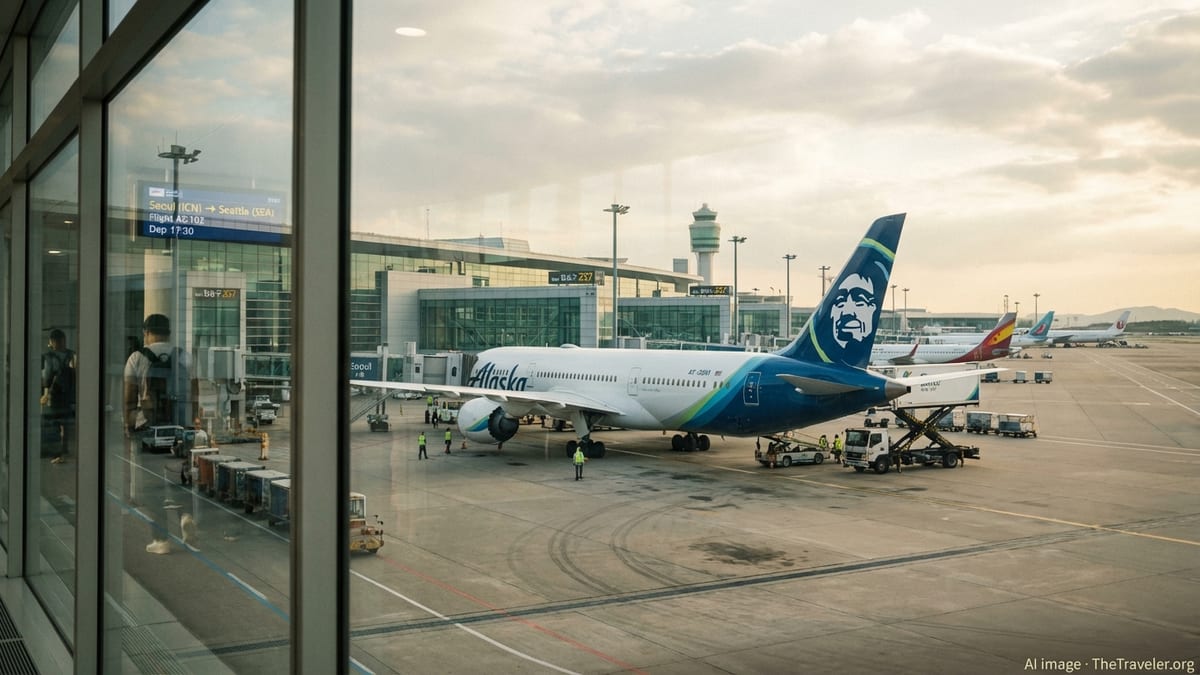
Alliance Entry Puts Philippines on the Global Connectivity Map
Recent announcements indicate that Philippine Airlines has accepted an invitation to join Oneworld as the alliance’s 16th member, positioning the flag carrier alongside major partners such as American Airlines, Japan Airlines, Qantas and Qatar Airways. Publicly available information from Oneworld and regional business press highlights that PAL’s entry will bring a dense network of Philippine domestic and regional routes into the alliance system for the first time.
This move is significant for travelers because the Philippines sits at the crossroads of Northeast Asia, Southeast Asia and the Pacific. Manila, Cebu and emerging hubs like Clark can serve as alternative gateways to traditional mega-hubs in Tokyo, Hong Kong or Singapore. As Oneworld integrates PAL’s network, passengers from North America, Australia, Japan and the Middle East will gain additional one-stop options into secondary Philippine cities and nearby island destinations.
For the Philippines, alliance membership is often framed as a way to support tourism and business travel growth. Government tourism strategies have prioritized attracting higher-spending visitors and encouraging longer stays, and alliance-aligned connectivity typically helps by simplifying multi-country itineraries. As PAL moves through the technical and commercial steps required for full integration, industry observers expect a gradual but visible shift in how international passengers route through the country.
Oneworld’s own materials show that the alliance is emphasizing network breadth across Asia and the Pacific. Philippine Airlines’ addition strengthens that emphasis by filling geographic gaps and increasing frequencies on trunk routes that link the Philippines with the United States, Australia, Japan and the Gulf.
Deeper Links With the United States, Australia and Japan
Philippine Airlines already operates long-haul services to the United States and medium-haul flights to Australia and Japan, markets with strong Filipino diaspora communities and rising leisure travel. Public schedules and previously reported air services data show that nonstop flights from Manila to cities such as Los Angeles, San Francisco, New York, Sydney, Melbourne and Tokyo have become important corridors for both visiting friends and relatives and corporate travelers.
Oneworld membership will connect these PAL-operated routes more closely with alliance partner networks. For US-bound passengers, that is likely to mean smoother onward connections via American Airlines’ hubs to secondary American cities using a single booking and harmonized baggage rules. For travelers coming from the US heartland, more itineraries may appear that connect through West Coast and Pacific gateways directly onto PAL flights.
In Australia, the interplay between Philippine Airlines, Qantas and other alliance carriers is expected to generate new routing options for both leisure and business passengers. Australia-to-Philippines demand has been buoyed by outbound tourism to Philippine beach destinations and by a growing base of Filipino workers and students. As alliance integration proceeds, passengers may see more itineraries that combine Australian domestic legs on alliance members with PAL-operated flights into Manila, Cebu or other Philippine gateways.
Japan is another key piece of the puzzle. Japan Airlines is a core Oneworld member with an extensive domestic and regional network. When PAL formally joins, airline and alliance data suggest that travelers will be able to combine JAL and PAL flights more seamlessly, particularly for multi-stop itineraries that link Japanese regional cities with Philippine island destinations through coordinated schedules and through-checked baggage.
Qatar and the Gulf as Strategic Connecting Hubs
Alongside the planned Oneworld entry, Philippine Airlines has been tightening its relationship with Qatar Airways, the Gulf carrier that serves Doha as a major global hub. Recent press releases and loyalty program updates show that PAL flights have been integrated into Qatar Airways Privilege Club as an earn-and-burn partner, allowing Avios points to be used across a large portion of the Philippine carrier’s network.
This partnership has both bilateral and alliance-level dimensions. Qatar Airways is a high-profile Oneworld member, and its Doha hub links Europe, Africa and the Middle East with Asia and the Pacific. By connecting PAL’s domestic and regional network to Doha via codeshares and loyalty integration, the two airlines are effectively knitting the Philippines into a broader web of long-haul connectivity that reaches cities with limited or no direct links to Manila.
For global travelers, especially those in Europe and the Middle East, this means more one-stop itineraries to Philippine leisure destinations via Doha, where flights on Qatar Airways can connect to PAL-operated services into cities such as Cebu or secondary tourist gateways. For Filipinos working overseas in the Gulf, it can also mean more flexible ticketing and the ability to combine loyalty benefits across multiple carriers.
Analysts note that this structure mirrors broader trends in which Gulf hubs function as connective tissue between established alliances and emerging regional carriers. As PAL advances toward full Oneworld membership, the Doha link provides a ready-made channel for alliance passengers to reach the Philippines and for Philippine-origin traffic to access Europe and Africa without detouring through traditional Asian hubs.
What Changes for Frequent Flyers and Fare Hunters
One of the most visible shifts for travelers is likely to come in the area of loyalty and status recognition. Once PAL is fully integrated into Oneworld, frequent flyers holding elite status with member airlines such as American Airlines, Japan Airlines or Qatar Airways can generally expect standardized benefits when flying on eligible PAL-operated flights, including priority check-in, extra baggage on certain tiers and lounge access where available.
In parallel, Philippine Airlines’ own frequent flyer members are expected to gain access to the wider range of Oneworld benefits when traveling on partner carriers. Public loyalty program communications already highlight growing cooperation with Qatar Airways through Avios, and observers anticipate that alliance-wide benefits will extend those advantages to additional partners in North America, Europe and Australasia.
For fare-conscious travelers, alliance integration often leads to more combinable fares and promotional pricing that spans multiple carriers. This can translate into competitive prices on complex itineraries, such as a trip that combines a US domestic segment, a trans-Pacific crossing and a Philippine domestic leg under a single ticket. Travel agents and online booking platforms generally find it easier to construct such routings once alliance rules and interline agreements are fully in place.
At the same time, industry analysts point out that alliance membership may also prompt some rationalization of overlapping routes as carriers coordinate schedules. Travelers could see adjusted frequencies or time-of-day changes on certain services as PAL and its partners seek to reduce duplication and maximize connectivity at key hubs in Manila, Doha, Tokyo and major US and Australian gateways.
Implications for Tourism and Island-to-Island Journeys
The Philippines has long marketed itself as a multi-destination country, where visitors might combine Manila with beach destinations such as Boracay, Palawan or Siargao. Oneworld’s preview materials for Philippine Airlines highlight that the carrier will add new destinations to the alliance map, including several secondary island gateways that are central to this tourism strategy.
By bringing those destinations into an alliance framework, the Philippines effectively lowers the barrier for international visitors who want to venture beyond traditional entry points. Travelers from the United States, Australia, Japan or Qatar can increasingly rely on synchronized schedules and single-ticket itineraries that protect connections between long-haul flights and short domestic hops, an important consideration in a country where weather disruptions and airport capacity constraints can affect operations.
Regional tourism officials and trade groups have repeatedly emphasized the importance of air connectivity for sustaining local economies in island provinces. While alliance membership alone does not guarantee new routes, it often supports them by channeling more connecting passengers into existing flights. As Philippine Airlines scales up its role within Oneworld and deepens partnerships with carriers from the United States, Australia, Japan and Qatar, the expectation is that more of those passengers will continue beyond Manila to regional airports.
For global travelers planning multi-country trips across the Indo-Pacific, the emerging pattern is clear. The Philippines is positioning itself as both a destination and a connector, leveraging alliance membership and strategic partnerships to integrate more closely into long-haul networks that span North America, Australasia, Northeast Asia and the Gulf. Over the next several seasons, booking screens are likely to reflect that shift as new combinations and routings appear, inviting travelers to pass through or stay longer in the archipelago.