


More news on this day
The Philippines and Israel are moving to strengthen air connectivity between Manila and Tel Aviv, aiming to turn a growing passenger corridor into a powerful bridge for tourism, trade, and broader economic cooperation.
Get the latest news straight to your inbox!
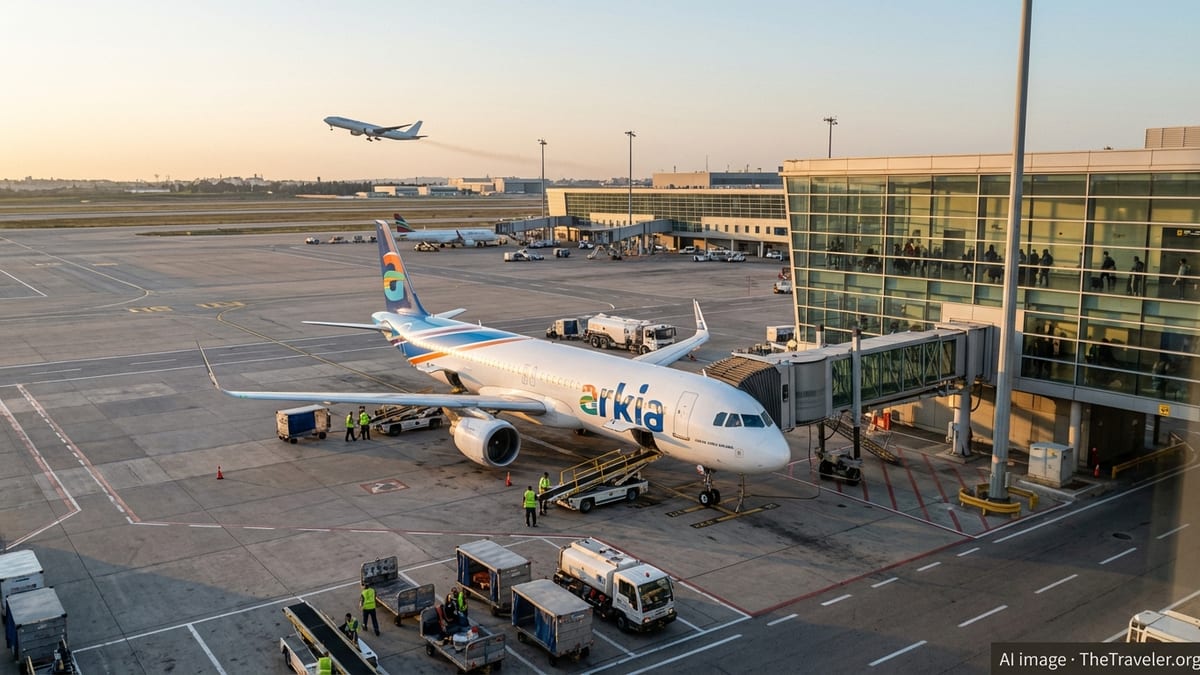
New Routes Turn a Niche Corridor Into a Strategic Link
Recent schedules indicate that Philippine Airlines and other regional carriers are gradually rebuilding and expanding their networks to Israel, including new and resumed services that connect Manila with Tel Aviv through key hubs. Publicly available booking data shows that Philippine Airlines is actively marketing itineraries into Israel for late 2026, reflecting confidence that demand on the corridor will continue to rise following the post-pandemic recovery in Asian and Middle Eastern tourism.
While most journeys between the two countries still involve at least one stop, aviation analysts note that shorter routings over the Middle East and new code-share options have effectively reduced travel time and complexity for both leisure and business travelers. This evolving air bridge supports the ambitions of both governments to move beyond point-to-point visitor flows and toward a more integrated economic relationship.
Industry commentary also highlights how improved air access helps diversify source markets for the Philippine tourism industry, which has been working to broaden its reach beyond traditional East Asian and North American travelers. For Israel, deeper connectivity into Southeast Asia supports tourism diversification at a time when global visitor flows are being reshaped by geopolitical and economic factors.
Tourism Recovery Sets the Stage for Deeper Connectivity
Tourism’s rebound in the Philippines has created fertile ground for new and expanded services to Israel. Official tourism data shows that the Philippines welcomed more than 5.45 million international visitors in 2023, surpassing its target for the year as global travel reopened and airlines restored capacity. The Department of Tourism has reported that momentum continued into 2024, with foreign arrivals and receipts tracking above earlier projections as the country promotes beach, dive, cultural, and faith-based tourism.
Israel, for its part, remains a significant long-haul pilgrimage and niche leisure destination for Filipino travelers, particularly for faith-oriented tours and diaspora links. Conversely, Israeli tourists have shown growing interest in Southeast Asian beach and adventure destinations, including the Philippines’ established hotspots such as Palawan, Cebu, and Siargao. As connectivity improves, tour operators in both markets are packaging multi-stop itineraries that pair historical and religious sites in Israel with island and nature experiences across the Philippine archipelago.
Sector observers point out that tourism flows tend to follow air capacity: when airlines commit seats and frequencies, demand generally grows over time. The Philippines–Israel corridor is now seen as entering that phase, where rising passenger numbers are beginning to justify more ambitious aviation and tourism partnerships.
Trade and Investment Flows Ride on Stronger Air Links
Beyond tourism, the air bridge underpins a broader economic story. Philippine and Israeli trade agencies report that two-way goods trade reached about 532 million US dollars in 2023, roughly steady from the previous year but still significantly higher than pre-pandemic levels. Recent official clippings from Philippine government briefings further indicate that total trade in 2024 remained in the 400 to 500 million dollar range and that Israel ranks among the Philippines’ top 40 trading partners by value.
Israeli exports to the Philippines are concentrated in machinery, electrical and mechanical equipment, vessels, and specialized industrial products, while Philippine exports to Israel include electronics, optical instruments, and selected food and agricultural items. Economic reports compiled by Israel’s trade promotion authorities show that machinery and electrical equipment alone account for nearly half of Israeli exports to the Philippines, underscoring the technology-heavy character of the relationship.
Investment links are also deepening. A bilateral agreement on the promotion and protection of investments, which entered into force in March 2024, seeks to provide clearer rules and safeguards for investors on both sides. Trade and industry briefings in 2025 and 2026 highlight growing Israeli interest in Philippine opportunities in agriculture, water management, cybersecurity, semiconductors, and so-called “blue economy” projects, with multiple Israeli business delegations visiting Manila to scout partnerships.
As these trade and investment ties expand, more frequent and reliable air services are increasingly viewed as essential infrastructure. Direct and one-stop connections help move business travelers, technical experts, and potential investors quickly between the two countries’ commercial centers, reducing friction for cross-border projects.
Strategic Cooperation Extends Beyond Tourism and Commerce
The evolving air bridge also reflects a wider strategic alignment. In recent years, both governments have framed the relationship as a partnership rooted in innovation, food and water security, and digital transformation. Published coverage of high-level meetings points to joint work on agricultural technology, smart irrigation, disaster resilience, and advanced manufacturing, aligning Israeli strengths in research and development with Philippine priorities in food systems and infrastructure.
Defense and security cooperation, while outside the commercial tourism sphere, has also expanded through training and equipment deals. Analysts suggest that regular people-to-people exchanges supported by tourism and air travel help create a more stable environment for such long-term strategic projects, by building familiarity between business communities, students, and professionals.
At the same time, both sides are exploring ways to integrate their cooperation into broader regional initiatives. Discussions reported by Philippine trade officials in 2026 reference potential collaboration within emerging semiconductor and artificial intelligence ecosystems that link partners in Asia, the Middle East, and the United States. Reliable air connections are seen as a practical enabler for these multi-country supply chains and research networks.
Prospects: From Niche Market to High-Value Corridor
Looking ahead, publicly available government and industry analyses suggest several levers that could further strengthen the Philippines–Israel air bridge. These include potential direct long-haul services, expanded code-share arrangements between flag carriers and regional airlines, and targeted marketing campaigns positioning each country as a gateway to its respective region. Tourism boards and chambers of commerce are increasingly framing the route as a link between Southeast Asia’s consumer markets and Israel’s high-tech ecosystem.
Observers also point to the role of diaspora communities and overseas workers in sustaining demand. Thousands of Filipino workers reside in Israel, particularly in care, hospitality, and service sectors, generating steady two-way travel for family visits, employment rotation, and personal tourism. As visa policies and labor arrangements are refined, this segment is expected to remain a stable foundation for passenger volumes.
For now, the Manila–Tel Aviv corridor remains small compared with Asia’s largest long-haul routes. However, the combination of surging tourism in the Philippines, Israel’s innovation-driven economy, rising trade volumes, and a more robust legal and investment framework is steadily transforming it into a high-value niche. The gradual build-out of air connectivity is at the heart of this shift, turning a once-remote pairing into one of the more dynamic emerging links between Southeast Asia and the Eastern Mediterranean.
PHL–Israel bilateral trade reaches record growth
DTI advances PH–Israel strategic partnerships