


More news on this day
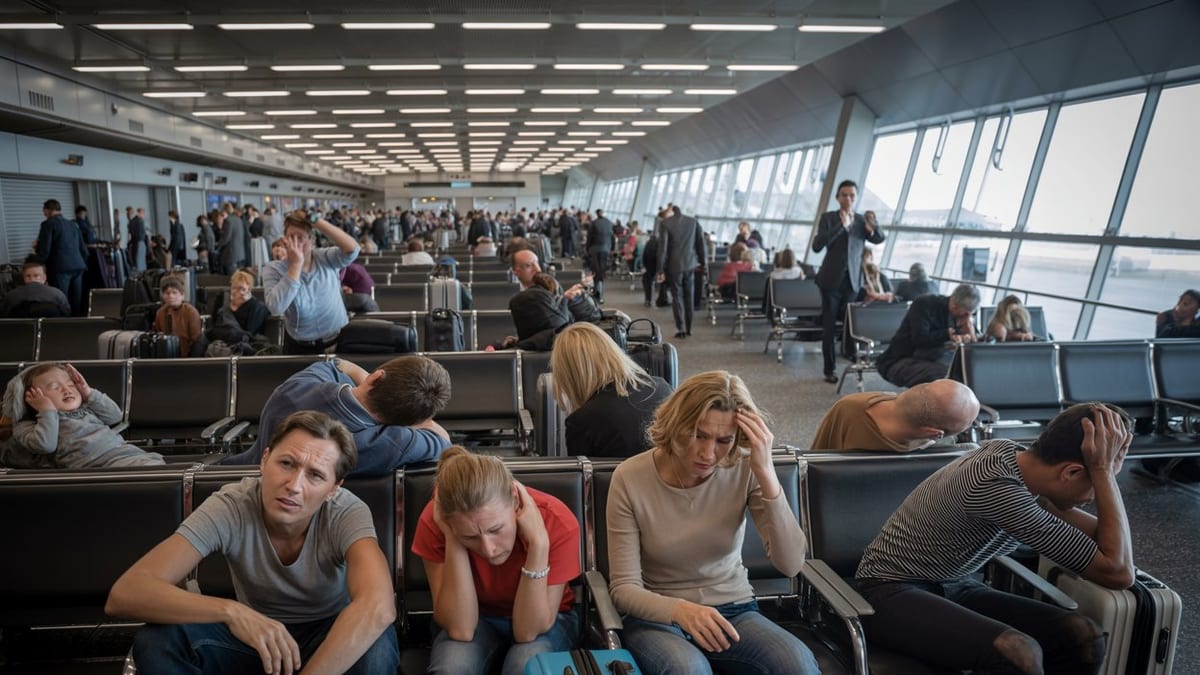
Hundreds of stranded air passengers have been pictured sleeping on terminal floors from London to Boston after a fresh wave of flight cancellations and delays rippled through already stretched aviation networks.
Get the latest news straight to your inbox!
UK air traffic control failure triggers overnight chaos
The latest disruption has been most visible in the United Kingdom, where a technical problem affecting the national air traffic control system led to the cancellation of more than 1,700 flights over two days. Publicly available flight-tracking data shows that services to and from major hubs including London Heathrow, Gatwick and Manchester were among the worst affected, creating a cascade of missed connections and overnight strandings.
Images and eyewitness accounts shared with broadcasters and on social media on 8 and 9 September show passengers lying on thin blankets or directly on the floor at Heathrow, with families clustered around power outlets and luggage piled beside improvised beds. Australian travelers heading to Iceland described being given snacks, water and later the news that their flight would not depart, leaving them to camp out in the departures hall overnight while they waited for rebooking options.
Additional reports compiled by UK media indicate that some travelers were unable to secure nearby hotel rooms as demand surged, pushing more people to remain in terminals. With aircraft and crews out of position, airlines have warned that knock-on delays and cancellations are likely to persist for several days, prolonging uncertainty for those still trying to reach their destinations.
On online forums, passengers have questioned why a single technical fault could paralyze such a large segment of the country’s aviation system, reviving long-running debates over investment in backup capacity and contingency planning. Travel analysts note that while air traffic control failures are rare, the scale of modern peak-season schedules leaves little margin to absorb major outages once they occur.
Strandings stretch from North America to Asia
The scenes in the UK mirror disruptions unfolding elsewhere as the busy late-summer travel period exposes weak points across global aviation. In Boston, local television coverage from late July showed JetBlue passengers sleeping on cots at Logan International Airport after rolling delays turned into late-night cancellations. Travelers described being handed basic camp beds in the terminal and told to wait until morning for news of onward flights.
In Asia, the impact of severe weather has been equally disruptive. In Hong Kong, regional media reported that Typhoon Noul forced the overnight stranding of around 2,000 passengers at the city’s main airport in late July, after airlines canceled or rescheduled dozens of services. With winds too strong for flying and limited hotel availability nearby, many travelers were left to sit or sleep in gate areas until conditions improved.
Operational issues have also played a role. In India, coverage from New Delhi highlighted a recent case in which passengers on a domestic SpiceJet service spent the night in the terminal after a technical and air-conditioning problem contributed to long delays on a flight to Pune. Travelers described queuing for hours, facing incomplete information and ultimately resting in seating areas as they waited for an alternative departure.
Industry observers point out that such episodes are not isolated, but part of a pattern of strain across hubs as carriers push to restore or exceed pre-pandemic capacity. Staffing shortfalls in ground handling, tight aircraft utilization and congested airspace can quickly combine with storms or technical failures to create extended knock-on disruption for passengers well beyond the original incident.
Limited recourse for passengers facing overnight stays
For those left sleeping on floors or cots, the immediate question is often what assistance they are entitled to receive. Consumer advocates note that rules vary sharply by region, airline and the cause of disruption, creating a patchwork of protections that many travelers only discover after plans have unraveled.
In the United Kingdom and European Union, passenger-rights regulations generally require airlines to provide meals, refreshments and hotel accommodation when cancellations or long delays are within the carrier’s control. However, when disruptions stem from circumstances categorized as extraordinary, such as certain air traffic control failures or severe storms, compensation and even accommodation obligations may be more limited, depending on the circumstances and airline policies.
In North America, widely publicized operational meltdowns in recent years have prompted closer scrutiny of what support airlines offer during mass cancellations. Government portals now compare carriers on practices such as providing hotel rooms, ground transport or meal vouchers, but there is no single, uniform standard. As a result, some passengers in Boston and at other US hubs this summer have reported receiving overnight hotel stays, while others at different airports or on different airlines have found themselves relying on thin airport blankets or their own travel funds.
Travel specialists suggest that, in the absence of universal rules, passengers should document their delays, keep receipts and check both local regulations and airline contracts of carriage for potential reimbursement. They also emphasize the importance of early communication with carriers via apps and call centers, though many travelers say that long hold times and overloaded digital systems remain a persistent obstacle during major disruption events.
Growing scrutiny of aviation resilience
The recurring images of families camped on terminal floors have intensified questions about the resilience of aviation systems as demand surges. Recent analyses by airport operators and industry groups show that passenger volumes in many regions are at or above 2019 levels, even as some workforces and infrastructure have not fully scaled back to match that growth.
In Europe and the Middle East, reports on earlier disruption waves this year highlighted how geopolitical tensions, diversions and airspace closures can compound routine summer pressures. Airlines and airports in busy connecting hubs have acknowledged that a small number of delayed flights can quickly ripple outward, creating bottlenecks that last well into subsequent days.
In the United States, local and national coverage has similarly chronicled a “summer of delays,” with thunderstorms, extreme heat and software glitches all cited as contributing factors. At some airports, ground-handling staff and flight attendants have also described their own overnight stays in terminals when schedules unravel, underscoring how crews and customers alike are affected when the system breaks down.
Analysts argue that addressing these vulnerabilities will require investment in both technology and staffing, from modernizing air traffic control systems and outage safeguards to rebuilding reserve crews and improving real-time passenger communication. Without such changes, they warn, passengers can expect more nights spent on terminal floors whenever workloads peak or a critical system fails.
How travelers can reduce the risk of being stranded
While no itinerary is completely immune to disruption, travel planners and consumer advocates point to steps that can help passengers reduce the likelihood of an unplanned night in the terminal. Booking earlier departures, avoiding tight connections through known congestion hotspots and steering clear of the last flight of the day during peak seasons are among the most frequently cited strategies.
Some experts also recommend building flexibility into travel plans, such as allowing an extra day when connecting to cruises, tours or important events, and considering travel insurance policies that explicitly cover weather-related delays or missed connections. Others suggest keeping a small “airport overnight kit” with a change of clothes, basic toiletries and any essential medications in carry-on luggage in case checked bags become inaccessible during a disruption.
For those already caught up in the latest wave of cancellations, the focus remains on rebooking and rest. As airlines across multiple regions work through backlogs created by air traffic control failures, storms and equipment problems, industry data indicates that it may take several days for schedules to normalize. Until then, the rows of temporary beds and makeshift sleeping spots scattered across terminals serve as a visible reminder of how quickly modern air travel can grind to a halt.
Latest UK air traffic control disruption coverage
Australians stranded overnight at Heathrow report